
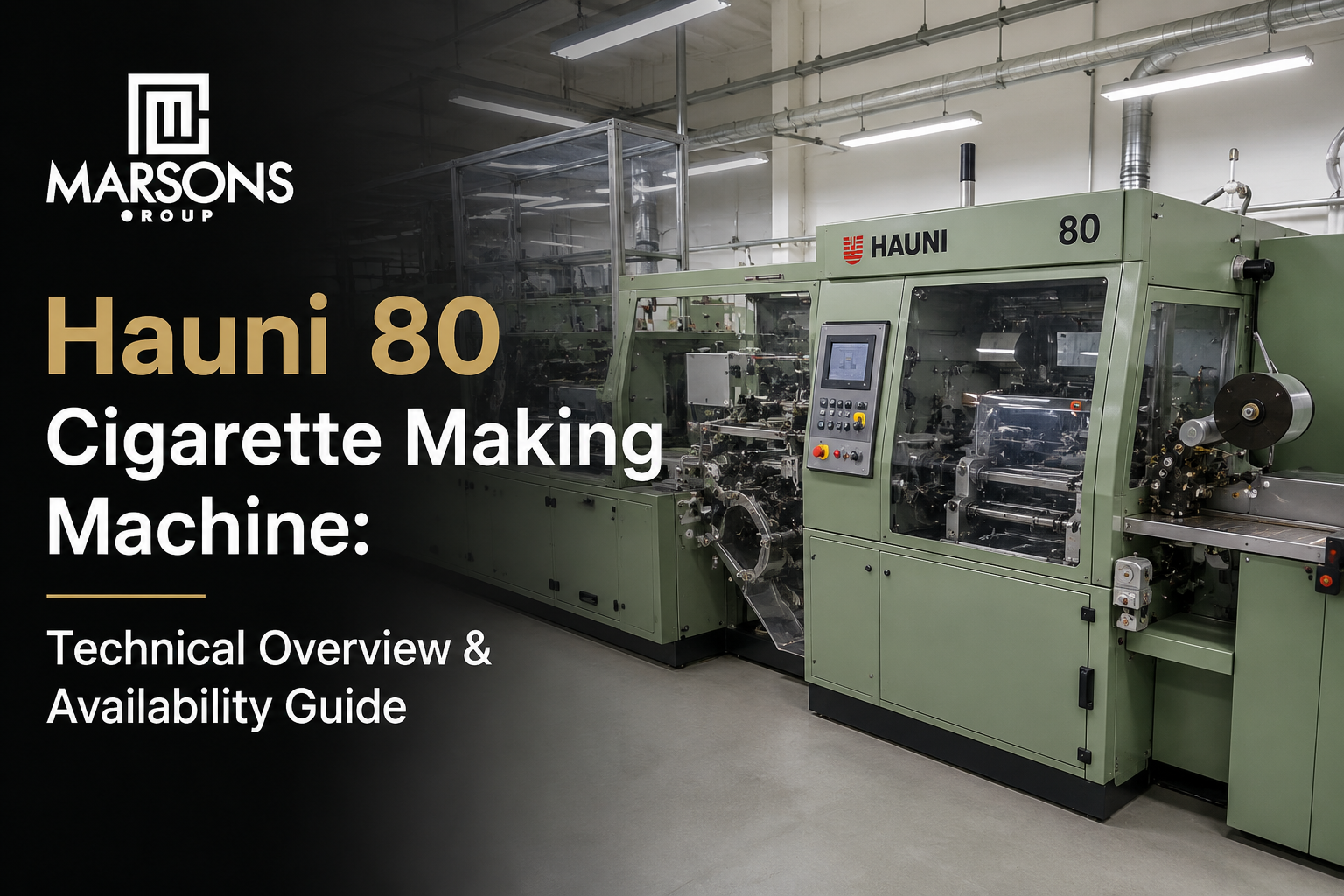
There is a certain kind of machine that never really disappears from the market no matter how many newer models come out. The hauni 80 cigarette machine is one of them. It has been in commercial tobacco production for long enough that most experienced technicians have worked with one at some point, and it keeps showing up in searches from manufacturers across Pakistan, Africa, the Middle East, and Southeast Asia. It produces reliable output, it is well understood mechanically, and for facilities that do not need the absolute highest throughput available, it delivers exactly what the production floor requires without unnecessary complexity. This guide covers what the machine is, how it performs technically, and where to find one if you are actively in the market.
What the Hauni 80 Actually Is?
The hauni 80 cigarette machine is a high-speed cigarette rod maker. It takes cut tobacco, forms it into a continuous rod, applies the cigarette paper, cuts the rod to the correct length, and feeds the finished cigarettes forward to the filter attachment or tray filler. The Hauni 80 handles this with the kind of mechanical precision that comes from a design refined over many years of real commercial use across multiple markets.
It is part of the broader Hauni Protos lineup, which also includes the hauni protos 70 and the protos90. Each machine shares the same fundamental engineering approach but targets a different output range. The hauni protos 70 sits at the lower end for facilities that need reliable production at moderate volume. The protos90 represents the high-output end, designed for facilities pushing maximum throughput through a single line. The Hauni 80 sits between them, offering a strong balance of speed, consistency, and mechanical manageability that makes it a practical choice for a wide range of commercial operations.
Technical Overview
Output on the hauni 80 cigarette machine reaches up to approximately 8,000 cigarettes per minute under good operating conditions. For mid to large scale facilities, that rate is more than sufficient to keep a full packing line supplied without the making side becoming the production constraint.
Rod forming quality is one of the areas where this machine genuinely stands out. The tobacco feed system, garniture assembly, and tongue and tape components work together to produce rods with consistent density and uniform dimensions across the full production run. That consistency translates directly into draw resistance uniformity in the finished cigarette, which affects how the product performs in market and whether it meets specification requirements consistently.
The cutting mechanism produces clean rod ends with minimal waste. Ragged or inconsistent cuts create problems in both filter attachment efficiency and finished cigarette appearance, and the Hauni 80 handles this well when properly maintained. Electrically, the machine runs on standard three-phase industrial supply, meaning integration into most existing facilities does not require significant infrastructure changes or major additional investment.
How Does It Compare Within the Protos Family?
The hauni protos 70 is the entry point of the family, working well for facilities producing at regional scale or running multiple SKUs with frequent format changeovers. For manufacturers growing and starting to feel the ceiling of what a hauni protos 70 can deliver, the Hauni 80 is the natural upgrade path within the same equipment family without switching to a completely different manufacturer.
The protos90 is the step above. It runs at higher speeds and is built for facilities where maximum throughput from a single line is the priority. The tradeoff is greater mechanical complexity and higher maintenance demands. For manufacturers who do not yet need that level of output or whose technical team is not yet ready to manage a protos90 comfortably, the Hauni 80 offers serious production capacity without the added operational complexity.
The choice between these three machines almost always comes down to volume requirements and technical capability on the floor. Getting that match right before purchase determines whether the machine serves the facility well over the long term or creates more problems than it solves.
Availability in the Market
Most hauni 80 cigarette machines currently available are used or rebuilt units. New production has been succeeded by more recent Hauni equipment, which is why used units appear on the market regularly at price points accessible to a wider range of manufacturers than brand-new high-end equipment.
When evaluating a unit, condition matters more than model reputation. Ask for running hours and service history. Request a video of the machine at or near full output speed and inspect the rod quality carefully. Consistent dimensions, clean cuts, and uniform density across a sample tell you the machine is performing well. Any variation at full speed is worth investigating before committing to a purchase.
Spare parts availability for the Hauni 80 is generally good. Confirm parts availability and lead times with your supplier before finalizing any purchase, particularly for the garniture, tongue, tape components, and cutting knives, which are the highest-wear items in normal operation.
Buying a Cigarette Manufacturing Machine in Pakistan
For manufacturers in Pakistan, the local support question deserves specific attention. A well-commissioned hauni 80 cigarette machine running in a properly configured facility is a productive, reliable piece of equipment. One that arrives without proper setup support and sits in adjustment for weeks is an expensive frustration. Choosing a supplier who provides on-site commissioning is not optional for a machine of this complexity. It is what separates a successful installation from a difficult one that costs time and money to correct.
For manufacturers wanting to compare the Hauni 80 against other making machines currently available, the cigarette making machines page on the Marsons Group website covers the full range with specifications and gives a clear picture of what each machine offers for different production requirements.
Working With Marsons Group
Marsons Group has been supplying tobacco machinery since the 1960s. They work with manufacturers evaluating a cigarette manufacturing machine in Pakistan and across global markets, providing both the equipment and the full support structure behind it. Installation and commissioning, technical training for operators and maintenance staff, spare parts supply, and ongoing after-sales assistance are all part of how they work with every client from the point of purchase onward.
Conclusion
The Hauni 80 sits in a practical sweet spot within the Protos family. It delivers serious production output with a mechanical profile that is well understood and maintainable by experienced technicians. When considering the ROI analysis of automation vs manual operations in tobacco processing, machines like the Hauni 80 often stand out for their ability to increase productivity while keeping maintenance and operational costs manageable. For facilities that have outgrown what a Hauni Protos 70 can offer but are not yet ready for the complexity of a Protos 90, it is the right machine at the right point in the growth curve. Find the right unit from the right supplier and it will serve your production line well for years.