Setting up a cigarette manufacturing facility involves more than purchasing individual machines. Equipment compatibility, factory infrastructure, installation, and production testing all influence whether the facility can operate efficiently. This is where a turnkey production line becomes an important consideration. Instead of managing each equipment purchase separately, manufacturers can work with a supplier to establish an integrated production system. However, the term turnkey does not always mean that every factory requirement is included in the quoted price. For businesses evaluating manufacturing equipment, Marsons Group offers Tobacco Machinery for Sale covering different production requirements. Understanding what a turnkey package includes, and what it may exclude, helps buyers plan their investment and avoid unexpected expenses.
What Does a Complete Cigarette Production Line Package Include?
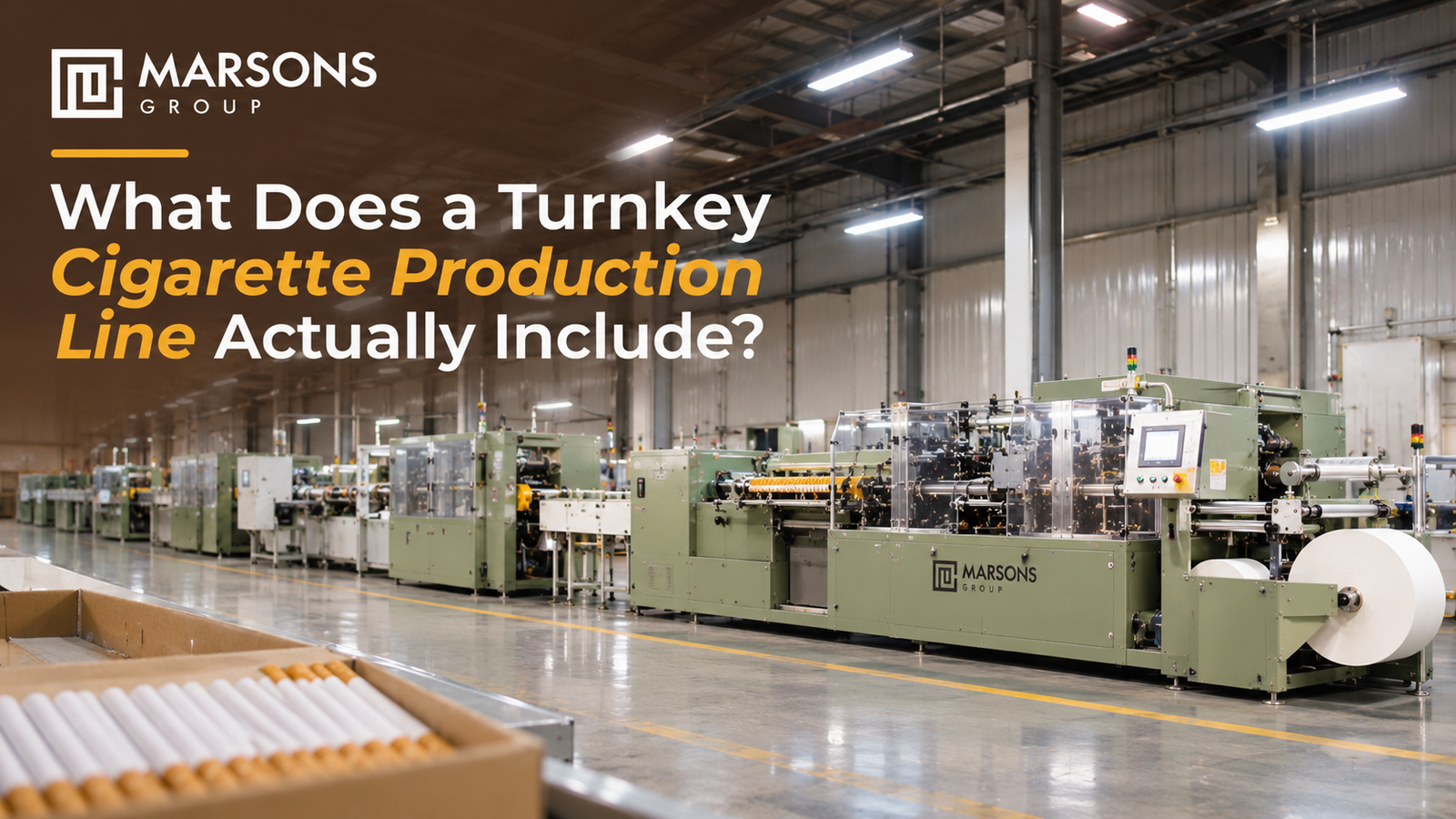
A complete cigarette line package generally brings together the equipment needed to manufacture, assemble, and package cigarettes. Depending on the project scope, this may include tobacco preparation machinery, cigarette makers, filter production equipment, filter attachment units, packing machines, and wrapping systems. Supporting components such as conveyors, inspection equipment, and production controls may also be necessary. However, the exact configuration depends on the starting materials, required output, and finished packaging format. Some suppliers provide a complete production arrangement, while others offer interconnected machinery without factory construction or utility infrastructure. Buyers should request a detailed equipment list identifying each machine, its function, rated capacity, and included accessories before accepting a quotation.
Tobacco Processing and Preparation Equipment
Tobacco preparation is an important stage in cigarette manufacturing, but it is not automatically included in every turnkey package. Depending on the production arrangement, preparation equipment may be required for handling, conditioning, cutting, and processing tobacco before it reaches the cigarette making machines. Other facilities may purchase tobacco that has already undergone the necessary preparation. These two approaches have significantly different equipment and infrastructure requirements. Manufacturers should therefore confirm whether the proposed line begins with raw tobacco or prepared cut tobacco. This distinction affects the total investment, factory layout, material handling arrangements, and operating responsibilities. Clearly defining the starting point prevents misunderstandings about what the supplier is expected to deliver.
Cigarette Making Machines and Filter Production Systems
Cigarette making equipment forms tobacco into continuous rods and cuts them into the required product lengths. For filtered cigarettes, additional systems are necessary to produce or supply filter rods and attach them to the cigarette making output. Filter rod makers and filter attachment units perform different functions, which is why buyers should verify whether both are included. Some production facilities manufacture their own filters, while others purchase prepared filter rods from external suppliers. Specialized products may also require filter combining equipment. A turnkey package should clearly identify which machines are responsible for each operation and whether their production capacities are compatible. Purchasing equipment with mismatched output capabilities can create bottlenecks that reduce the efficiency of the complete line.
Cigarette Packing, Wrapping, and Cartoning Equipment
Manufacturing cigarettes is only one part of the overall production process. Finished products generally require packing, protective wrapping, and secondary packaging before distribution. Depending on the required configuration, equipment may include cigarette packers, overwrapping machines, carton packers, and conveying systems. These machines must operate together to maintain an appropriate production flow. A cigarette maker with a high rated output may provide limited benefits if the downstream packing equipment cannot handle the same volume. Buyers should confirm which packaging formats are supported and whether adjustments or additional components are necessary. The supplier’s quotation should also identify any optional packaging equipment rather than treating it as part of the standard package.
Factory Utilities, Layout Planning, and Production Line Integration
Even a complete set of compatible machines cannot operate without suitable factory infrastructure. Electrical supply, compressed air, ventilation, dust extraction, material handling, and adequate floor space may all be necessary, depending on the equipment configuration. Manufacturers should request installation drawings, equipment dimensions, and utility requirements during the planning stage. Factory layout is particularly important because it affects material movement, maintenance access, and equipment integration. Tobacco dust may also create workplace safety concerns, requiring appropriate hazard assessment and control measures. A turnkey tobacco factory solution may include some infrastructure planning, but this does not mean the supplier will construct the building or install every utility connection. Those responsibilities must be clearly defined in the project agreement.
Installation, Commissioning, and Operator Training
Installation and commissioning help establish whether the supplied equipment can operate as an integrated production system. Depending on the agreement, the supplier may provide installation supervision, mechanical adjustments, control system configuration, and production testing. Factory Acceptance Testing can be used to verify equipment before shipment, while Site Acceptance Testing evaluates performance after installation. Integrated testing may also be necessary to confirm that connected machines operate together correctly. Operator and maintenance training should be discussed before purchasing because employees need to understand safe operation, routine inspections, and equipment responsibilities. Buyers should confirm whether technician travel, accommodation, training materials, and commissioning support are included in the quotation. These services should be documented rather than assumed.
Quality Control, Testing, and Production Performance Requirements
A turnkey production line should be evaluated according to its ability to produce acceptable finished products consistently. Individual machine speed is important, but it does not establish the actual capacity of the complete system. Equipment performance can be affected by production interruptions, material handling problems, quality rejects, and differences between connected machine capacities. Buyers should establish clear acceptance criteria covering finished output, product specifications, packaging consistency, and performance during agreed test conditions. Inspection and quality control equipment may also form part of the package, depending on the project requirements. A successful commissioning process should demonstrate that the integrated system meets its contractual performance requirements, rather than simply confirming that each machine can operate independently.
What Is Usually Included and Excluded in a Turnkey Factory Package?
The biggest misunderstanding surrounding turnkey machinery is assuming that the term guarantees a fully operational factory without additional investment. In practice, suppliers may define their responsibilities differently. A package may include major machinery, control systems, installation guidance, and initial testing while excluding civil construction, electrical infrastructure, compressors, and other supporting facilities. Shipping, customs duties, taxes, production materials, spare parts, and regulatory approvals may also fall outside the quoted price. Some suppliers offer additional services through separate agreements. Buyers should request a written scope of supply and responsibility matrix identifying exactly what each party must provide. This helps prevent disagreements during installation and reduces the risk of unexpected project expenses.
How Much Does a Turnkey Cigarette Production Line Cost?
The cost of a turnkey cigarette production line depends on production capacity, machinery specifications, automation levels, equipment condition, and the scope of installation services. New machinery may require a different investment from refurbished equipment, while a facility incorporating tobacco preparation and filter manufacturing will generally need more equipment than one using prepared inputs. Buyers must also account for freight, utilities, site preparation, spare parts, regulatory requirements, and working capital. For additional context on machinery investment and factory budgeting, read Cigarette Manufacturing Machine in Pakistan: Complete Factory Setup Cost Guide. Rather than relying on a single advertised equipment price, manufacturers should prepare a complete project budget covering the costs necessary to reach operational readiness.
Turnkey Production Line vs Buying Individual Machines: Which Is Better?
Choosing between an integrated turnkey arrangement and purchasing machines separately depends on the manufacturer’s technical resources, budget, and project requirements. A turnkey approach may simplify supplier coordination by assigning responsibility for equipment compatibility and integration to a lead provider. This can be particularly useful for businesses establishing a new facility without an experienced internal engineering team. Purchasing individual machines may offer greater flexibility when expanding an existing production line or replacing specific equipment. However, buyers may need to manage compatibility, installation schedules, and technical coordination themselves. Neither approach automatically guarantees lower costs or better performance. The appropriate choice depends on the responsibilities included in the contracts and the buyer’s ability to manage the project.
How to Choose a Reliable Full Production Line Supplier
Selecting a full production line supplier requires careful evaluation of technical expertise, equipment capabilities, project experience, and after-sales support. Buyers should request detailed machine specifications, production capacity information, utility requirements, and installation responsibilities. It is also important to verify equipment compatibility and understand whether spare parts and technical assistance will remain available after commissioning. A reliable supplier should explain what the proposed package includes and identify any requirements that remain the buyer’s responsibility. Warranty terms, training arrangements, maintenance documentation, and acceptance testing procedures should be discussed before signing. Comparing complete technical proposals rather than equipment prices alone helps manufacturers identify which supplier can meet their actual project requirements.
Conclusion:
A turnkey cigarette production line can simplify factory planning by bringing multiple manufacturing and packaging systems together under a coordinated project. However, buyers should never assume that every requirement is included simply because the supplier describes the arrangement as turnkey. Machinery selection, infrastructure, installation, commissioning, quality testing, training, and ongoing support all influence the project’s total cost and operational readiness. Before investing, manufacturers should verify the equipment list, production capacity, compatibility, supplier responsibilities, and potential exclusions. A clearly defined scope of work provides a stronger foundation for successful implementation and helps businesses make informed purchasing decisions while reducing avoidable costs and project delays.