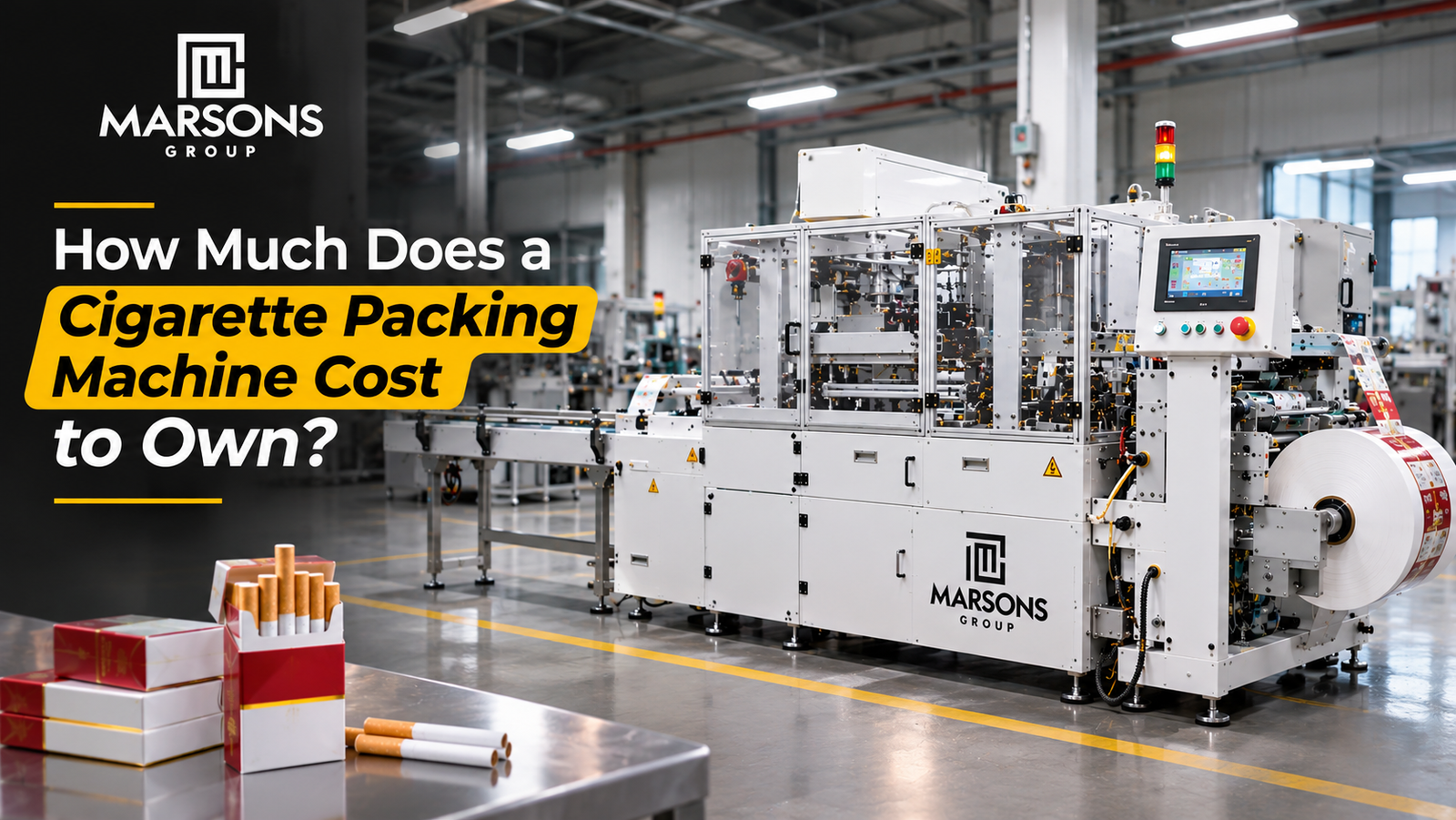
Buying a cigarette packing machine is a significant investment, but the purchase price is only the beginning. Manufacturers must also account for installation, electricity, maintenance, spare parts, labour, and production downtime. These expenses accumulate over time and can significantly affect the overall profitability of the equipment. Understanding the total cost of ownership of a cigarette packing machine helps businesses evaluate machinery based on long term operating value rather than the initial quotation alone. For manufacturers exploring different equipment options, Marsons Group offers Cigarette Packing Machines suited to various production requirements. This guide explains the expenses involved in owning packaging machinery, the factors that influence long term costs, and how to calculate whether a particular machine represents a worthwhile investment.
What Is the Total Cost of Ownership of a Cigarette Packing Machine?
Total Cost of Ownership, commonly called TCO, represents the complete financial commitment associated with purchasing, operating, maintaining, and eventually replacing equipment. Unlike the purchase price, TCO considers expenses throughout the machine’s expected working life. These include installation, utilities, operator labour, maintenance, repairs, downtime, and potential upgrades. The calculation may also account for the equipment’s estimated resale value at the end of the ownership period. For example, a machine with a lower purchase price may require frequent servicing or consume more energy than a higher priced alternative. Evaluating both machines over five years could reveal a different financial outcome. Understanding TCO helps manufacturers compare equipment using consistent financial assumptions rather than focusing exclusively on upfront costs.
How Much Does a Cigarette Packing Machine Cost Initially?
The initial price of a cigarette packing machine depends on its specifications, production capacity, condition, and included features. High capacity equipment with advanced controls may require a greater investment than machinery designed for smaller production volumes. New, used, and refurbished machines also have different pricing considerations. Published equipment guides have referenced indicative prices of approximately US75,000toUS100,000 for selected cigarette packing units, but these figures are not universal market rates or current supplier quotations. The final cost depends on the specific machine and commercial agreement. Buyers should request quotations identifying the equipment model, condition, accessories, supported packaging formats, and included services. This provides a more reliable basis for comparison than advertised prices without detailed specifications.
Key Packing Machine Price Factors That Affect Your Investment
Several packing machine price factors influence the amount manufacturers must invest. Production speed is important because higher output equipment may require more advanced mechanical systems and controls. Packaging format also matters, as machines designed for different pack types may require specialized components or adjustments. Automation features, inspection systems, machine age, and technical condition can further influence pricing. Used equipment should be evaluated through service records, operating history, and the condition of critical components. Buyers should also examine whether change parts, documentation, warranties, and installation support are included. Two machines with similar advertised capacities may have substantially different commercial values when these details are considered. Evaluating the complete equipment configuration helps prevent unexpected expenses after purchase.
Installation, Shipping, and Factory Setup Expenses
Industrial machinery usually requires additional investment before commercial production can begin. Shipping charges may include freight, insurance, customs clearance, and local transportation, depending on the purchasing agreement. Once the equipment arrives, the factory may need electrical connections, compressed air infrastructure, appropriate floor space, and adjustments to existing production systems. Installation and commissioning can also involve technician fees, travel expenses, testing, and operator training. These costs are not automatically included in every equipment quotation. Manufacturers should confirm which responsibilities belong to the supplier and which remain with the buyer. Requesting a quotation covering delivery, installation, and commissioning provides a clearer understanding of the investment required to make the machine operational.
Energy Consumption, Labour, and Daily Operating Costs
Operating expenses continue throughout a packing machine’s working life. Electricity consumption depends on the equipment’s actual power requirements, production schedule, and local energy tariffs. Some machines also require compressed air, which introduces additional electricity and maintenance costs through the factory’s air supply system. Operator wages, routine consumables, and production supervision should also be considered. A machine requiring fewer operators may reduce certain labour expenses, although specialized training or technical support could introduce additional costs. Manufacturers should request utility specifications and estimate operating expenses using realistic working hours. Comparing daily costs against acceptable finished output provides a more useful financial measure than assessing energy consumption or staffing requirements independently.
Maintenance, Spare Parts, and Equipment Servicing Expenses
Regular maintenance is essential for maintaining the reliability of cigarette packing machinery. Depending on the equipment, servicing may involve lubrication, mechanical adjustments, inspections, replacement of worn components, and control system checks. Parts such as sealing jaws, film cutters, rollers, and folding mechanisms may require attention as operating hours accumulate. Maintenance expenses also depend on spare parts availability and access to qualified technicians. Older machines may require additional inspections or repairs, particularly when their operating history is incomplete. Before purchasing, manufacturers should review recommended maintenance procedures, replacement part requirements, and warranty conditions. A lower purchase price can become less attractive when frequent repairs or long spare parts delivery times increase operating expenses.
Hidden Costs of Packaging Equipment That Buyers Often Overlook
Some of the most significant machinery expenses are not immediately visible in the initial quotation. Unplanned downtime can interrupt production, while packaging rejects increase the cost of materials consumed per acceptable pack. Format changeovers also reduce productive operating time, especially when manufacturers handle multiple packaging configurations. Emergency spare parts deliveries, additional operator training, and unexpected equipment modifications can create further expenses. Businesses may also need to invest in new inspection systems or production line upgrades as requirements change. These hidden costs of packaging equipment should be included in long term financial planning. Manufacturers should examine production records, expected maintenance requirements, and supplier support arrangements to identify expenses that could affect equipment ownership.
How Automation Affects Cigarette Packing Machine Ownership Costs
Automation influences both machinery investment and ongoing operating expenses. More automated equipment may reduce certain manual activities, support consistent packaging operations, and improve production monitoring. However, additional automation can increase the initial purchase price and introduce more complex maintenance requirements. The financial benefit depends on how frequently the equipment operates and whether improved output or reduced manual work justifies the additional investment. For a broader explanation of automated packaging technology, explore The Role of Automation in Cigarette Packing Machines in Modern Manufacturing. Manufacturers should compare automation levels using realistic production demand, labour requirements, maintenance expenses, and finished product quality rather than assuming that the most advanced machine automatically delivers the lowest ownership cost.
Production Downtime, Packaging Waste, and Machine Efficiency
Machine efficiency has a direct influence on the cost of producing acceptable finished packs. A packing machine may have an impressive rated speed but operate below its expected capacity because of stoppages, adjustments, or rejected packaging. Overall Equipment Effectiveness, or OEE, provides a framework for evaluating performance through availability, operating speed, and quality. For example, equipment with a higher maximum output may produce fewer acceptable packs than a slower machine operating more consistently. Downtime can also create repair expenses and disrupt production schedules. Manufacturers should request evidence of sustainable output under realistic operating conditions. When calculating ownership costs, production losses must be measured carefully to avoid counting the same financial impact more than once.
New vs Used Cigarette Packing Machines: Which Offers Better Long Term Value?
New and refurbished cigarette packing machines present different financial considerations. New equipment generally requires a higher initial investment but has no accumulated production wear. Depending on the purchase agreement, it may also include broader warranty coverage or technical support. Used and refurbished machines can reduce upfront costs, making them attractive to manufacturers with limited capital. However, their long term value depends on mechanical condition, maintenance history, spare parts availability, and expected reliability. A properly refurbished machine may provide satisfactory performance, while poorly maintained equipment can introduce substantial repair expenses. Buyers should compare purchase savings against realistic servicing, downtime, and replacement costs. Neither option is automatically more economical over the complete ownership period.
How to Calculate the Total Cost of Ownership Before Purchasing
A practical TCO industrial packing assessment begins by defining an ownership period, such as five years. Manufacturers should calculate the initial equipment and installation investment, then estimate annual operating costs, maintenance expenses, expected repairs, and additional financial losses. Any significant upgrades or component replacements should also be included. The estimated residual value can then be deducted to determine the net ownership cost. A simplified calculation is:
TCO = Initial Investment + Operating Costs + Maintenance and Repairs + Other Ownership Expenses − Residual Value
Businesses can also divide relevant lifetime costs by the expected number of acceptable finished packs to estimate cost per pack. Both calculations should use consistent assumptions and clearly distinguish direct expenses from indirect production losses.
Important Questions to Ask Before Investing in a Cigarette Packing Machine
Before purchasing, manufacturers should request detailed information about the equipment’s operating requirements and expected performance. What is the machine’s rated capacity, and what output can it sustain under normal production conditions? Which packaging formats are supported, and how long do changeovers typically take? Buyers should also ask about electricity consumption, compressed air requirements, maintenance schedules, and spare parts availability. Additional questions should cover installation responsibilities, operator training, warranty coverage, and technical support. If the equipment is used or refurbished, its service history and mechanical condition deserve particular attention. Comparing answers across suppliers helps manufacturers identify differences that may significantly influence ownership costs over several years.
Conclusion:
Understanding the total cost of ownership of a cigarette packing machine allows manufacturers to make purchasing decisions based on financial performance rather than equipment price alone. Installation, utilities, labour, maintenance, spare parts, downtime, and packaging waste all contribute to the overall investment. New and refurbished machinery may offer different advantages depending on production requirements, technical condition, and available capital. Manufacturers should calculate ownership costs over a realistic period and compare those expenses against expected acceptable output. A well informed equipment decision considers reliability, operating efficiency, maintenance requirements, and future production needs. The goal is not simply to purchase the least expensive machine, but to select equipment that offers sustainable value throughout its working life.