Investing in a high speed cigarette box wrapping machine may seem like the obvious choice for manufacturers looking to increase production. However, higher advertised output does not always translate into greater efficiency or better financial returns. Actual machine performance depends on production demand, packaging formats, material quality, and how well the equipment integrates with the rest of the production line. Before making a purchase, manufacturers should evaluate whether the additional capacity will be used consistently. For businesses exploring packaging equipment, Marsons Group offers Cigarette Box Wrapping Machines designed for different production requirements. Understanding the relationship between rated speed, actual output, and operating costs can help buyers choose equipment that matches their manufacturing needs.
How Does a Cigarette Box Wrapping Machine Work?
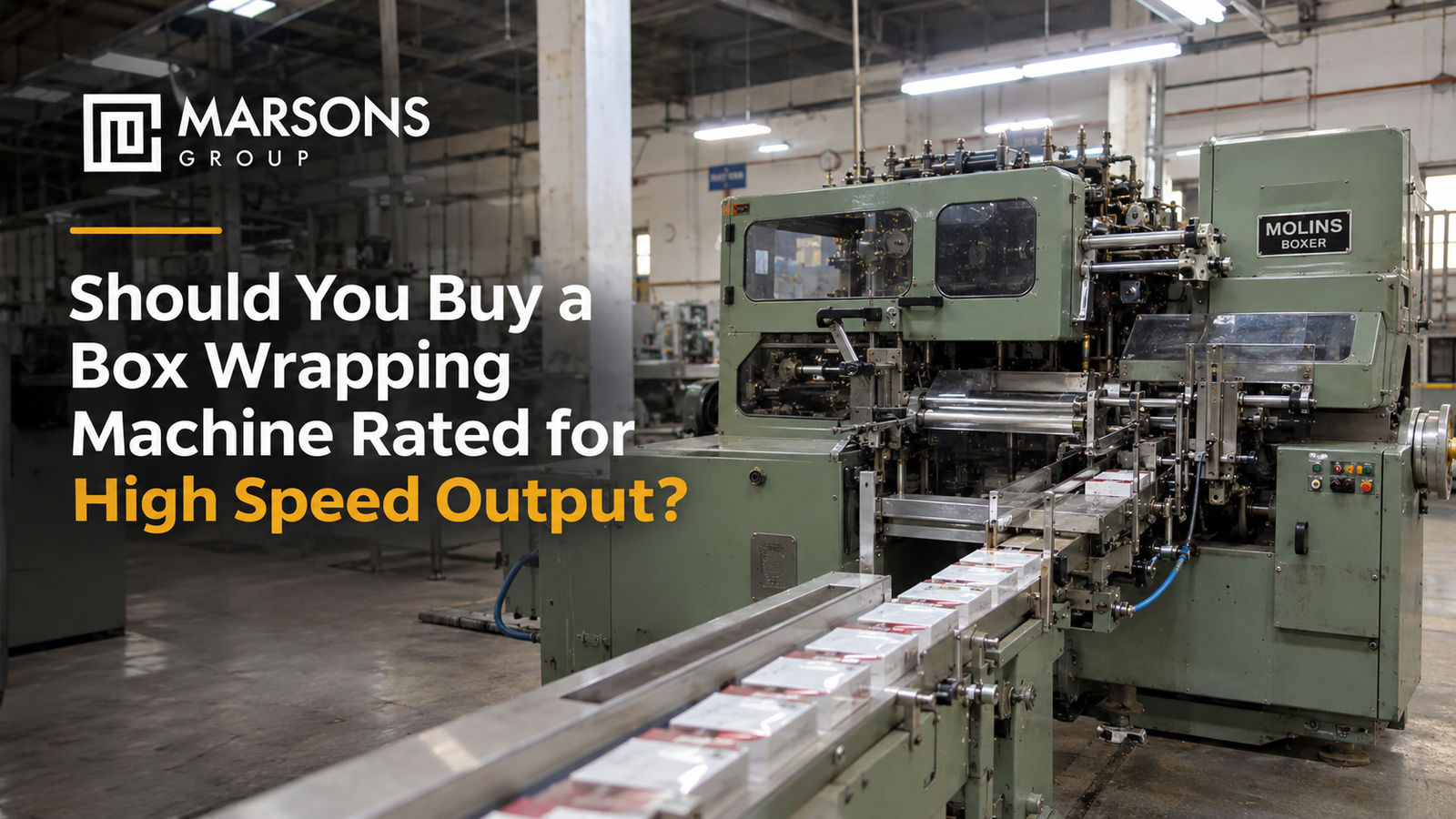
A cigarette box wrapping machine applies a protective film around cigarette packs to create a finished packaging layer. Depending on the equipment configuration, the process may involve automatic feeding, film unwinding, cutting, folding, sealing, and product discharge. Some machines also accommodate tear tape application to support convenient package opening. These operations must remain synchronized to achieve consistent wrapping quality at the intended production speed. The machine’s performance depends on several factors, including film characteristics, pack dimensions, mechanical adjustments, and material feeding accuracy. Although the basic wrapping process may appear straightforward, maintaining reliable operation requires precise coordination between components. Understanding these functions helps manufacturers evaluate which equipment specifications are relevant to their production requirements.
What Does High Speed Output Mean in Cigarette Box Wrapping?
High speed output generally refers to a wrapping machine’s ability to process a relatively large quantity of packages within a specified period. Manufacturers commonly express this capacity in packs per minute, or PPM. However, the term high speed does not represent one universal performance category. Machine capabilities vary according to equipment design, packaging dimensions, and the units being wrapped. For example, equipment handling individual cigarette packs should not be compared directly with machinery processing grouped cartons. Buyers must confirm exactly what the advertised capacity measures. They should also determine whether the stated figure represents a maximum mechanical speed or an output that can be sustained under normal production conditions.
Understanding Wrapping Machine PPM and Actual Production Capacity
A wrapping machine PPM rating indicates how many packs the equipment is designed to process per minute under specified conditions. However, actual production output is usually affected by operating interruptions, speed reductions, rejected packaging, and adjustments. Overall Equipment Effectiveness, commonly called OEE, provides a useful way to evaluate these losses by considering availability, performance, and quality. For example, a machine rated at 300 PPM operating at 60% OEE would produce approximately 180 acceptable packs per planned operating minute. Another machine rated at 220 PPM but operating at 90% OEE could achieve approximately 198 acceptable packs per minute. These hypothetical figures demonstrate why rated speed alone cannot determine which machine offers better production performance.
High Speed vs Standard Speed Wrapping Machines: Key Differences
High speed and standard speed wrapping machines serve different manufacturing requirements. Higher capacity equipment may be appropriate for facilities handling large, consistent production volumes, particularly when the surrounding machinery can support the additional throughput. Standard speed equipment may be more practical for smaller operations or production lines where demand does not justify substantial unused capacity. Manufacturers should also consider operating complexity, maintenance requirements, investment costs, and packaging flexibility. A faster machine may offer limited advantages if frequent stoppages prevent it from reaching its expected output. The development of wrapping technology, discussed in From Manual to Automatic: The Evolution of Cigarette Box Wrapping, provides useful context for understanding how automation has changed production capabilities. Ultimately, equipment selection should reflect operational requirements rather than maximum advertised speed.
Why Pack Format Compatibility Matters When Choosing a Wrapping Machine
Pack format compatibility is an important consideration because cigarette packaging can vary in dimensions, shapes, and presentation requirements. A machine designed for one pack configuration may not automatically accommodate another without adjustments or additional change parts. Before purchasing, manufacturers should confirm supported pack lengths, widths, thicknesses, film specifications, and any applicable carton configurations. A practical pack format compatibility assessment should also examine how securely the equipment handles different packaging dimensions during feeding and wrapping. Buyers should provide technical drawings and representative product samples to verify suitability. Assuming that adjustable machinery supports every packaging format can lead to unexpected modification costs, production difficulties, or limitations when introducing new products.
How Format Changeover Affects Wrapping Speed and Production Efficiency
Manufacturers producing multiple packaging formats must consider how long it takes to switch between configurations. Format changeover in wrapping equipment may involve adjusting guides, changing mechanical components, modifying machine settings, or preparing different film materials. Production may also require testing before the next format can be processed consistently. These activities reduce available operating time, particularly when production runs are short or format changes occur frequently. A machine with a higher rated speed may therefore produce fewer acceptable packs during a shift if changeovers take too long. Buyers should request realistic changeover estimates and determine whether specialized tools or trained personnel are required. Evaluating changeover performance alongside production speed provides a more accurate understanding of operational efficiency.
Film Quality, Wrapping Accuracy, and Packaging Consistency at High Speeds
Increasing machine speed can introduce additional challenges involving film handling, folding accuracy, and sealing performance. Packaging film must move consistently through the equipment without excessive tension, misalignment, or irregular feeding. At higher operating speeds, the time available for particular sealing operations may decrease, making correct material selection and machine adjustment especially important. Poor compatibility between film and equipment can contribute to wrinkles, weak seals, damaged packaging, and increased rejection rates. Manufacturers should therefore evaluate wrapping quality at the intended operating speed rather than relying exclusively on maximum output demonstrations. Testing with actual packaging materials helps establish whether the machine can maintain acceptable finished pack quality during sustained production.
What Are the Operating and Maintenance Costs of High Speed Wrapping Machines?
The purchase price of a wrapping machine represents only part of its total ownership cost. Additional expenses may include installation, electricity, compressed air, maintenance, replacement components, operator training, and packaging material consumption. Higher capacity equipment may also require more demanding maintenance arrangements or specialized technical support, depending on its design. Manufacturers should evaluate how frequently the equipment will operate and whether expected production volumes justify the investment. A machine with significant unused capacity can create unnecessary capital expenditure without improving overall manufacturing results. Packaging waste and rejected output should also be considered because they influence the cost of each acceptable finished pack. Comparing total operating expenses provides a more meaningful basis for equipment selection.
Common Mistakes to Avoid When Buying a High Speed Box Wrapping Machine
One common purchasing mistake is choosing equipment based entirely on its advertised PPM rating. Manufacturers may overlook whether the rest of their production line can supply and receive products at the required speed. Another mistake is assuming that every machine supports different packaging formats without additional adjustments. Buyers may also underestimate changeover time, material compatibility requirements, maintenance expenses, and installation considerations. Short demonstrations conducted under ideal conditions do not necessarily represent normal production performance. Before purchasing, manufacturers should request detailed technical specifications and establish realistic acceptance criteria. Evaluating sustainable output, finished packaging quality, and compatibility with existing equipment helps reduce the risk of investing in machinery that does not meet operational expectations.
How to Calculate Whether Your Production Line Needs a High Speed Machine
Determining the required wrapping capacity begins with calculating the number of acceptable packs needed during a production shift. Manufacturers should then consider planned operating minutes, expected efficiency, and the capacity of connected equipment. For example, a facility targeting 90,000 acceptable packs during an eight hour production period, with an estimated OEE of 75%, would require a nominal capacity of approximately 250 PPM. This calculation provides an initial capacity target rather than a guaranteed production result. Buyers should also account for production growth, changeover frequency, and variations in demand. A machine offering additional capacity may be worthwhile when future requirements justify it, but unnecessarily high specifications can increase costs without delivering meaningful benefits.
Important Questions to Ask Before Purchasing a Cigarette Box Wrapping Machine
Before making a final purchasing decision, manufacturers should request clear answers about the equipment’s capabilities and limitations. What is the maximum rated output, and what production speed can be sustained using the required packaging materials? Which pack dimensions and film types are supported? How long does a typical format changeover take, and what additional components are needed? Buyers should also ask about power requirements, installation space, maintenance procedures, spare parts availability, and technical support. Where possible, equipment performance should be demonstrated using representative product samples under agreed testing conditions. These questions help manufacturers compare machinery based on practical operating requirements rather than marketing specifications alone.
Conclusion:
Purchasing a high speed cigarette box wrapping machine can be a worthwhile investment when production demand, packaging requirements, and line capacity justify the additional output. However, faster equipment does not automatically provide better efficiency or lower operating costs. Manufacturers must consider actual throughput, pack compatibility, format changeover time, film performance, maintenance requirements, and the total cost of ownership. A standard speed machine may be more suitable for operations with moderate demand or frequent packaging changes, while higher capacity equipment can support larger production requirements when properly integrated. The best purchasing decision comes from evaluating realistic production conditions and choosing machinery that delivers consistent performance without unnecessary investment in unused capacity.