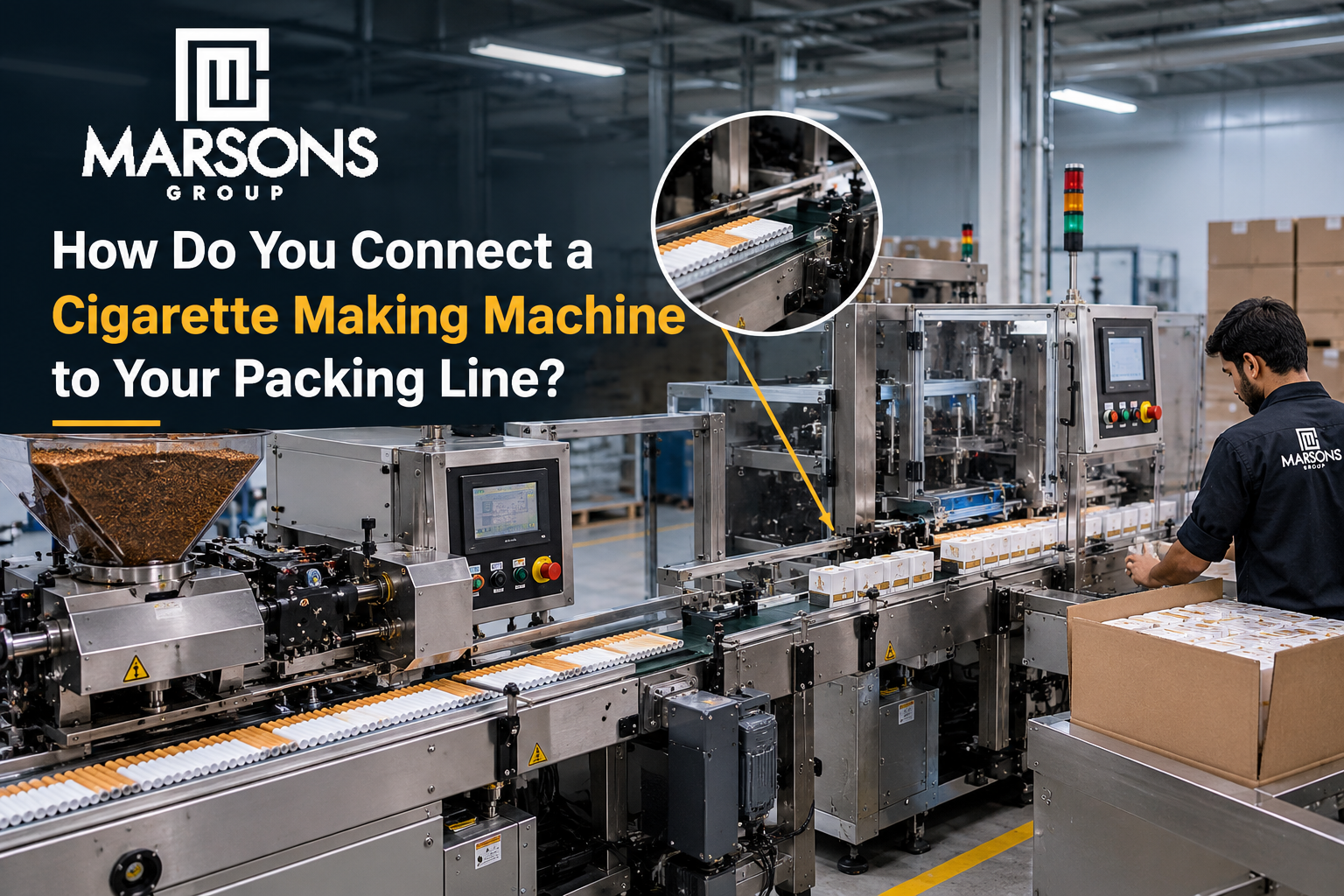
Connecting a cigarette making machine to a packing line is an important step in establishing a coordinated tobacco manufacturing operation. Both machines must work together to maintain consistent product flow, minimize unnecessary stoppages, and support product quality. However, successful cigarette production line integration involves more than installing conveyors between two machines. Manufacturers need to evaluate equipment compatibility, production speeds, transfer systems, automation controls, and safety requirements. Before planning an installation, exploring available Cigarette Making Machines can help manufacturers understand equipment specifications and discuss suitable integration options. This guide explains the main considerations involved in connecting making and packing equipment, the challenges manufacturers may encounter, and the practices that support reliable production line performance.
Why Cigarette Production Line Integration Matters
In cigarette manufacturing, making and packing machines perform separate but closely connected operations. The making machine produces finished cigarette rods, while the packing machine organizes them into packs for subsequent packaging stages. When these processes are properly coordinated, cigarettes can move between machines with fewer interruptions and less unnecessary handling.
Poor integration can cause several operational problems, including product accumulation, inconsistent material supply, equipment stoppages, and increased waste. For example, when the making machine produces cigarettes faster than the packing equipment can process them, excess products must be managed to prevent congestion.
An integrated tobacco production line helps manufacturers coordinate material movement, machine availability, and production requirements. Effective integration also supports production monitoring and makes it easier to identify operational bottlenecks.
The objective is to create a coordinated system in which equipment operates safely and consistently within its intended production capacity.
Check Machine Compatibility Before Connecting Making and Packing Machines
Before connecting making and packing machines, manufacturers should evaluate whether the equipment can operate together without significant mechanical or operational conflicts. Compatibility involves more than checking machine dimensions or available factory space.
Start by reviewing the technical specifications of both machines, including rated production capacity, supported cigarette dimensions, electrical requirements, operating conditions, and available control interfaces. Equipment from different generations or manufacturers may require additional engineering to establish reliable communication and material transfer.
The arrangement of the production floor also matters. Transfer routes must account for available space, maintenance access, product handling requirements, and operator safety.
Manufacturers should request technical documentation and discuss compatibility with qualified equipment specialists before installation.
For additional guidance on evaluating equipment suppliers and technical support, read the Cigarette Machine Manufacturer Guide for Modern Tobacco Production to understand the factors worth considering before selecting machinery for a production facility.
Understand the Transfer System Between Making and Packing Machines
The transfer system connects the cigarette making machine to the packing equipment and manages the movement of cigarettes between these production stages. Selecting an appropriate system is important because cigarettes must be handled carefully to minimize physical damage and maintain consistent product flow.
One common arrangement uses a direct conveyor or mass flow transfer system to move cigarettes toward the packing machine. This approach can work effectively when the equipment operates at compatible speeds and interruptions are limited.
Another arrangement incorporates a buffering system to temporarily manage cigarettes when production speeds differ or one machine stops. Tray fillers and tray unloaders are examples of equipment used for this purpose.
A tray filler can collect cigarettes when downstream equipment is temporarily unavailable, while a tray unloader can supply stored cigarettes when required.
The appropriate arrangement depends on production capacity, factory layout, equipment compatibility, and expected operating conditions.
How Line Balancing Improves Production Efficiency
Line balancing is an essential consideration when connecting cigarette making and packing machines. It involves coordinating the effective operating capacities of connected equipment to maintain a practical and consistent production flow.
For example, if a making machine produces cigarettes faster than the packing machine can handle them, products may accumulate between the two stages. If the packing machine operates faster than cigarettes are supplied, it may experience interruptions caused by insufficient material.
A buffering system can help manage temporary differences in production rates, but it cannot permanently compensate for a significant difference in sustained machine capacity.
Effective line balancing requires manufacturers to evaluate actual operating performance rather than relying exclusively on advertised maximum machine speeds.
Factors such as planned maintenance, equipment availability, changeovers, and product handling limitations should also be considered.
Careful capacity planning helps manufacturers identify bottlenecks and establish realistic expectations for overall production line performance.
Integrating Control Systems, Sensors, and Safety Features
Mechanical compatibility is only one part of successful cigarette production line integration. Connected machines also need appropriate control systems to communicate their operating conditions and respond to interruptions.
Industrial controllers and sensors may be used to monitor cigarette flow, detect accumulation, identify material shortages, and communicate equipment status. Depending on the machinery, these systems can help coordinate starting, stopping, and controlled responses to operational faults.
Some modern industrial equipment supports standardized communication approaches such as PackML and OPC UA. These frameworks can help establish consistent machine status information and support communication between compatible automation systems.
However, not all cigarette manufacturing machines support the same control architecture. Integration requirements should therefore be evaluated using the technical documentation for the equipment involved.
Safety remains essential. Guarding, emergency stopping, electrical protection, and safe maintenance access should be assessed by qualified personnel in accordance with applicable machinery safety standards and local requirements.
Maintaining Product Quality Across an Integrated Tobacco Production Line
Maintaining cigarette quality during transfer is an important part of production line integration. Even when making and packing machines operate correctly, unsuitable handling arrangements can affect the condition of cigarettes moving between them.
Excessive pressure, uncontrolled accumulation, abrupt changes in material flow, or poorly maintained transfer equipment may contribute to damaged cigarette rods, displaced filters, or other handling defects.
Manufacturers should therefore evaluate how the transfer system supports consistent product movement while minimizing unnecessary mechanical stress.
The condition of conveyors, guides, trays, and other contact surfaces also influences handling performance. Regular inspection and cleaning can help identify wear, contamination, and alignment problems before they affect product quality.
Quality monitoring should continue throughout the transfer process rather than focusing only on the output of individual machines.
A properly coordinated production line supports consistent handling standards and allows operators to identify potential quality issues before cigarettes enter the final packing process.
Common Challenges When Connecting Cigarette Making and Packing Machines
Connecting making and packing machines can introduce technical difficulties, especially when manufacturers combine equipment from different suppliers or production generations.
One common challenge is mismatched operating capacity. When production speeds differ substantially, the transfer system may struggle to maintain a stable supply without appropriate buffering or production planning.
Communication compatibility presents another challenge. Older machines may use different controllers or signaling arrangements, requiring specialist assessment before they can operate as part of a coordinated system.
Physical layout restrictions can also complicate integration. Limited floor space, unsuitable transfer routes, or insufficient maintenance access may affect equipment placement and long-term reliability.
Product handling problems, frequent interruptions, and inconsistent sensor readings can further reduce operational efficiency.
Addressing these issues begins with a thorough technical assessment. Manufacturers should review equipment documentation, investigate existing operational limitations, and involve qualified integration specialists before making significant modifications.
Testing and Commissioning Your Integrated Production Line
Testing and commissioning are necessary to confirm that connected making and packing equipment functions as a coordinated system under expected operating conditions.
Before beginning full production, qualified personnel should verify that the transfer equipment, machine communication, protective devices, and operational controls meet the approved installation requirements.
Commissioning should include controlled evaluations of material movement, equipment availability, product handling, and responses to planned interruptions. These assessments help identify problems that may not be visible when machines are operated independently.
Manufacturers should also examine how the system behaves during normal startup, controlled stopping, temporary material shortages, and downstream equipment interruptions.
Performance observations should be documented and compared against agreed acceptance criteria, including production capacity and product quality requirements.
A structured commissioning process supports safer operation and provides maintenance teams with useful information for future troubleshooting.
Final acceptance should only take place after relevant safety and operational requirements have been verified.
Best Practices for Long Term Performance and Maintenance
Once a cigarette making machine has been connected to its packing line, ongoing maintenance becomes important for preserving reliable operation.
Manufacturers should establish inspection schedules covering conveyors, transfer mechanisms, sensors, mechanical components, and electrical control equipment. Maintenance activities should follow equipment documentation and appropriate hazardous energy isolation procedures.
Monitoring operational performance can also help identify developing problems. Useful indicators include equipment downtime, product rejection rates, transfer interruptions, and the frequency of blocked or starved machine conditions.
Operators should receive appropriate training to recognize unusual equipment behavior, report recurring faults, and follow established safety procedures.
Maintenance records can provide valuable insights into recurring failures and help production managers determine when equipment servicing or further technical assessment is required.
Regular communication between production, quality assurance, and maintenance teams also supports more consistent operations.
A proactive maintenance approach helps manufacturers address minor issues before they develop into larger production disruptions.
Final Thoughts
Connecting a cigarette making machine to a packing line requires careful planning, compatible equipment, and a clear understanding of production requirements. Successful integration depends on selecting an appropriate transfer system, balancing machine capacities, coordinating control systems, and maintaining safe operating conditions.
Manufacturers should also prioritize product handling quality, structured commissioning, and ongoing maintenance to support reliable long-term performance. Evaluating these factors before installation can help reduce avoidable complications and establish a more coordinated manufacturing process.
Marsons Group provides cigarette manufacturing machinery and technical support services for industrial production requirements. Manufacturers planning a new installation or evaluating existing equipment can discuss compatibility, available machinery, and integration requirements with experienced technical specialists before proceeding.
A well-planned production line is built around equipment compatibility, operational reliability, and the ability to maintain consistent performance throughout the manufacturing process.