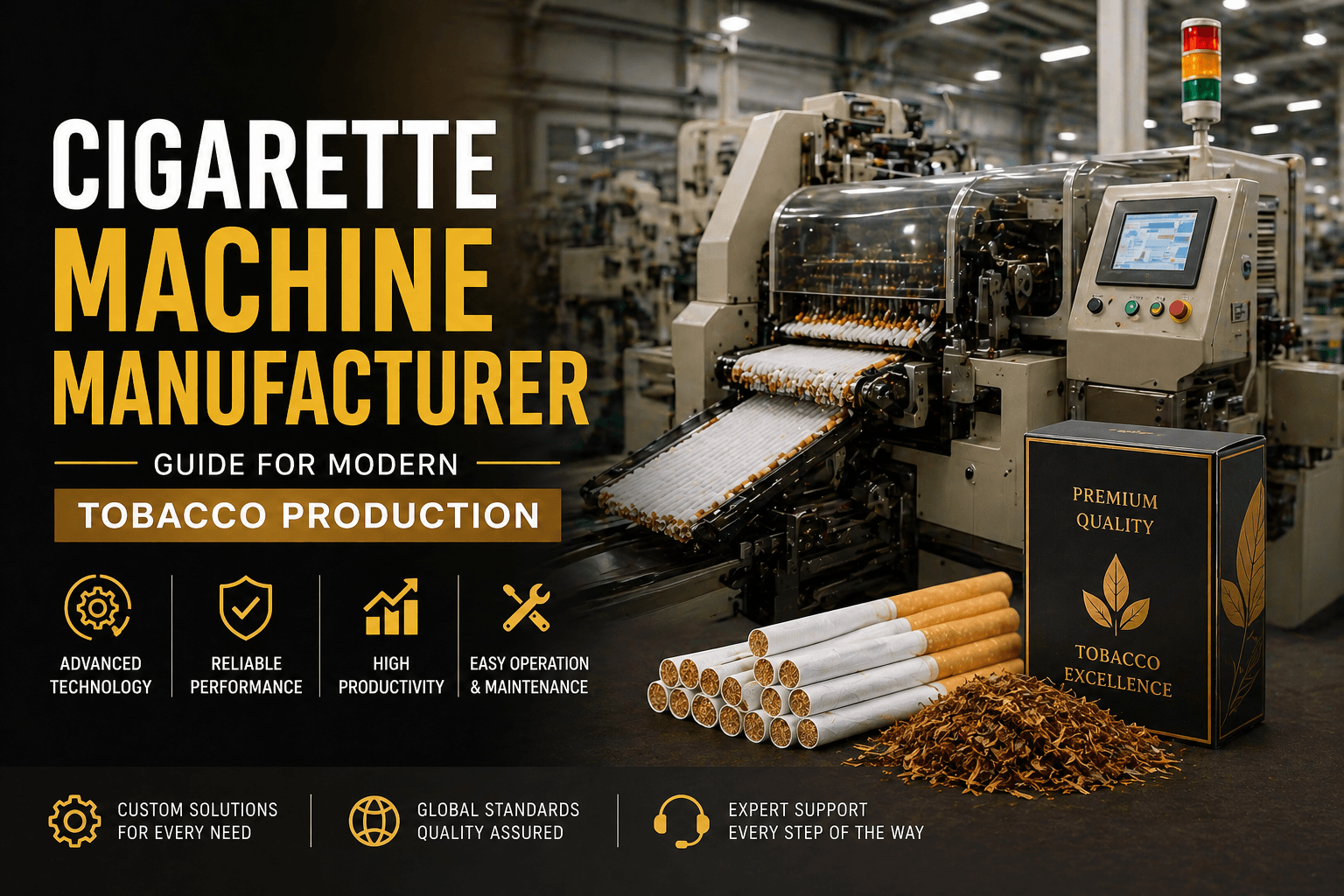
Most people who run tobacco production facilities have been through the same frustrating experience at least once. You find a supplier, everything looks good on paper, the machine arrives, and then somewhere down the line things start going wrong. The after-sales support disappears, spare parts take weeks to arrive, and you are left managing a problem that should never have been yours to deal with. Picking the right cigarette machine manufacturer is not just a purchasing decision. It is a decision that shapes how your entire production runs for years, and getting it wrong is a costly lesson that most facilities can only afford to learn once.
The Industry Has Changed, But the Basics Still Matter
Tobacco manufacturing has gone through a lot of changes over the past few decades. Regulations have tightened in most markets. Quality expectations from retailers and distributors have gone up. Production volumes have increased. And the machinery required to keep up with all of this has become more sophisticated.
But through all of that, the fundamentals of what makes a good machinery partner have not really changed. You still need equipment that works reliably. You still need a supplier who understands the industry. And you still need someone who is going to be around when something needs attention.
What has changed is that there are now more options in the market than ever before. That makes the selection process both easier and harder at the same time. Easier because you have choices. Harder because not every option is what it appears to be.
What to Actually Look for in a Manufacturer?
When manufacturers start evaluating suppliers, they often focus almost entirely on machine specs. Speed, output per hour, compatibility with existing lines. Those things matter, but they are not the whole picture.
Experience in the industry is one of the first things worth looking at. A cigarette machine manufacturer that has been operating for decades has seen how the industry shifts. They have built machines for different markets, dealt with different regulatory requirements, and worked through the kinds of problems that newer suppliers have not encountered yet. That accumulated knowledge shows up in how their machines are built and how their teams respond when issues come up.
Range of equipment is another consideration. Production facilities rarely need just one type of machine. You might need cigarette making machines, packing machines, filter machines, and processing equipment all working together on the same floor. Working with a supplier who covers the full range means your equipment is designed to work together, and your support relationship is consolidated in one place rather than spread across multiple vendors.
Then there is the support question. This is where a lot of manufacturers learn hard lessons. A machine that runs well for the first six months and then becomes impossible to service is not a good investment. Ask specific questions before you buy. What does after-sales service actually look like? How quickly can spare parts be sourced? Is there on-site installation and technical assistance available? A reliable cigarette manufacturing machine company will have clear, confident answers to all of these.
New Equipment vs. Rebuilt Machines
One of the more practical decisions manufacturers face is whether to invest in brand-new equipment or go with rebuilt and refurbished machinery.
Brand-new machines offer the latest specs and come with full manufacturer warranties. For large facilities with the capital to invest, this is often the preferred route. But the upfront cost is significant, and for manufacturers in emerging markets or those setting up for the first time, it is not always realistic.
Rebuilt machines, when sourced from a reputable supplier, offer a genuine alternative. A well-rebuilt machine from an experienced manufacturer can deliver reliable, high-volume output at a fraction of the cost of new equipment. The key word there is reputable. A rebuilt machine is only as good as the work that went into rebuilding it, which is why the manufacturer behind it matters enormously.
Marsons Group has built a significant part of its business around supplying both new and rebuilt tobacco machinery to manufacturers across multiple continents. Their clients range from large established producers to newer facilities looking to get up and running without overextending on capital.
Understanding the Full Production Line
Modern tobacco production is not a single-step process. It involves a sequence of machines that each handle a specific part of production, and they need to work together properly.
Starting from the raw material side, tobacco processing machines handle the preparation of the leaf before it ever reaches the making line. Green leaf threshing equipment separates the leaf from the stem. Cutting and blending equipment prepares the tobacco blend. From there, cigarette making machines form and cut the cigarettes themselves. Then the packing line takes over, handling everything from filling and wrapping to sealing and overwrapping. Finally, box wrapping machines take care of the outer carton packaging.
Each stage needs to be calibrated to work with the others. Output speeds need to match. Formats need to be compatible. A good cigarette machine manufacturer does not just sell you individual machines. They help you think through how the whole line fits together. You can get a clear picture of the full range of equipment Marsons Group offers by browsing their machines for sale page.
The Global Dimension
Tobacco production is a genuinely international industry. Raw materials come from one region, equipment from another, and the finished product often ends up in markets across multiple continents. This means the manufacturer you work with needs to have real experience operating across different markets and regulatory environments.
Suppliers who only understand one market tend to struggle when their clients operate across borders. Documentation requirements, certification standards, import and export considerations all vary by region. A manufacturer who has worked across Africa, Europe, South Asia, Southeast Asia, and the Americas brings a practical understanding that a purely local supplier simply cannot offer.
Why the Relationship Matters More Than the Transaction?
The manufacturers who build the best long-term production operations are almost always the ones who treat supplier relationships as partnerships rather than one-time purchases.
A good machinery partner stays involved after the sale. They follow up on installation. They make sure the line is running the way it should. When something needs attention, they respond. That kind of relationship does not happen automatically. It is built over time, and it requires consistent follow-through from the supplier side.
Marsons Group has operated this way since the 1960s. Their after-sales support and technical assistance is not an optional add-on. It is built into how they work with every client. If you want to understand exactly what that looks like in practice, their services page covers it in detail. For manufacturers who have dealt with suppliers who disappear after the sale, that kind of commitment is not a small thing.
Conclusion
Picking a cigarette manufacturing machine company is one of the more consequential decisions a production facility will make. The right choice sets you up for years of reliable output. The wrong one creates problems that are expensive and time-consuming to fix. Focus on experience, range, support capability, and the quality of the relationship on offer. The specs matter, but they are only part of the story. And if you are at the stage of actively evaluating options, Marsons Group is worth a serious look.