
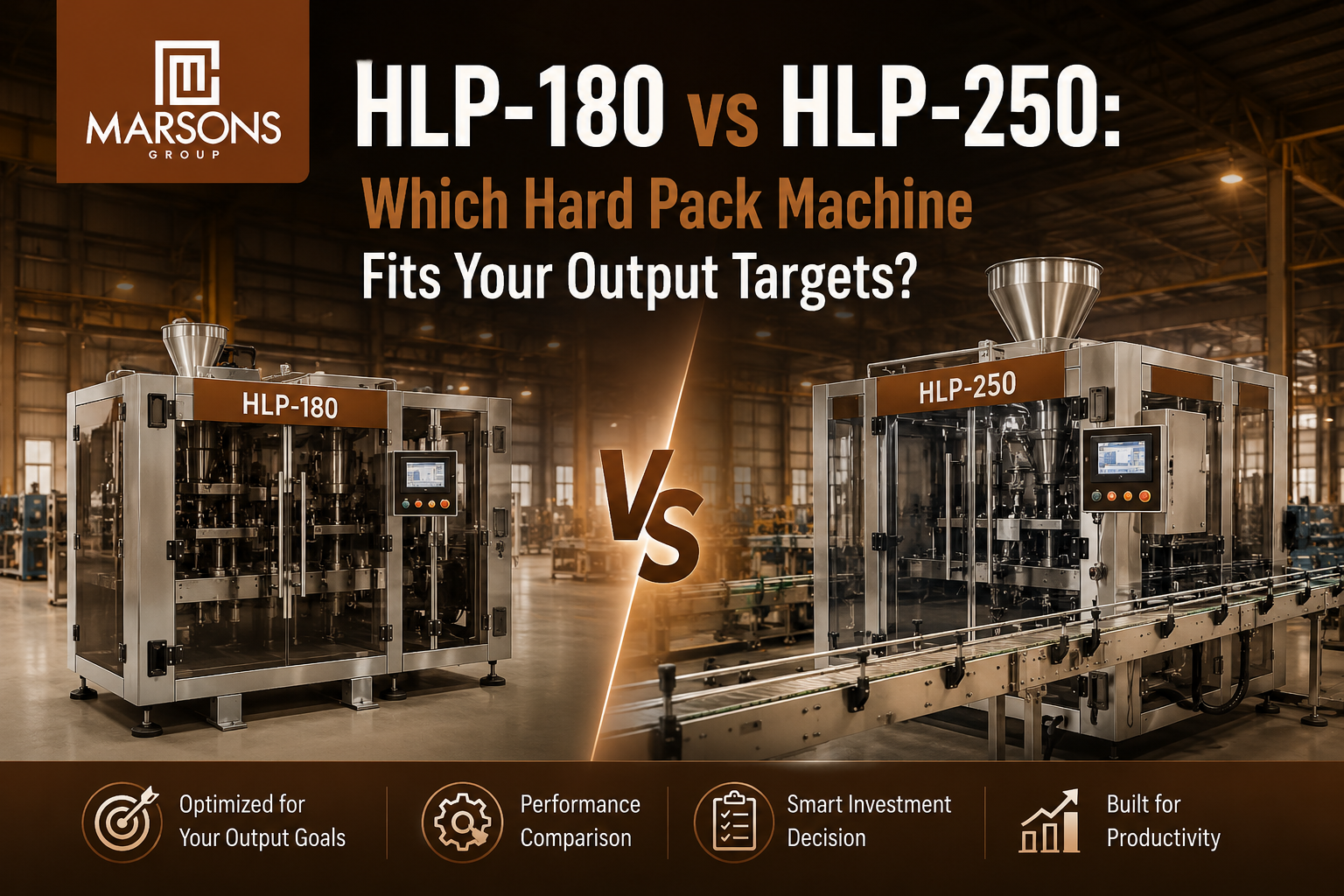
There is a moment every tobacco manufacturer knows well. Production is running, orders are coming in, and somewhere in the back of your mind you start wondering whether your current packing line can actually keep up with where the business is heading. That question almost always leads back to the same two machines: the HLP 180 and the HLP 250.
Both are hard pack legends in this industry. Both have been running in factories across Asia, Europe, Africa, and the Americas for decades. And both get recommended so often that buyers sometimes assume they are basically the same machine. They are not. The differences between them are real, and getting this decision wrong in either direction will cost you, whether that means paying for capacity you never use or watching your packing line become the bottleneck that holds everything else back.
This blog breaks down exactly where these two machines differ, which one fits which operation, and what to keep in mind if you are currently looking for an HLP packing machine for sale.
Where Do Both Machines Come From?
The HLP 180 and HLP 250 both trace back to Hauni, the German engineering company that shaped modern tobacco machinery more than any other manufacturer. HLP stands for hard pack, and the number tells you the rated output in packs per minute. The HLP 180 cigarette machine runs at approximately 180 packs per minute while the HLP 250 pushes closer to 250 packs per minute under optimal conditions.
Both machines handle the same core process: foil wrapping, inner frame insertion, outer cardboard shell folding, and final sealing in one continuous automated sequence. The mechanical DNA is shared, which is exactly why they get compared so often. But shared DNA does not mean identical performance, and the gap between 180 and 250 packs per minute is more significant than it looks once you factor in everything that comes with it.
Start With Your Output Targets
Every conversation about these two machines should begin with one honest question. What does your production line actually need to produce right now, and where is it realistically heading in the next two to three years?
If your output requirements sit comfortably within the range of the HLP 180 cigarette machine, there is no reason to go bigger. Buying excess capacity sounds like smart future-proofing until you realize you are paying more upfront, managing a more complex machine, and running it well below its designed capability every shift. Machines that never operate near their intended speed can develop their own problems because they were engineered to perform under proper load.
On the other hand, if your production is already pressing against 180 packs per minute or you are running extended shifts with tight delivery windows, the HLP 250 makes a stronger case. That extra headroom means the machine is not working at its ceiling constantly, which generally shows up as better pack consistency and fewer stress-related mechanical issues over time. The right machine is not the most powerful one available. It is the one that genuinely matches your numbers.
Complexity, Operators, and Real-World Performance
Speed and simplicity rarely travel together in manufacturing. The HLP 250 is a faster machine, and that speed brings tighter tolerances, more demanding timing adjustments, and a higher bar for the people responsible for keeping it running day to day.
The hlp 180 is still a precision piece of equipment, but it is generally considered more manageable for teams that are building their experience with HLP series machinery. Changeovers are less involved, fault diagnosis is more straightforward, and the learning curve for operators is considerably less steep.
This matters more than most buyers anticipate when they are in purchasing mode. A machine your team can set up confidently, run consistently, and maintain without constant specialist intervention will deliver better real-world results than a faster machine that loses hours every week to unplanned stops and adjustment issues. If your technical team is experienced with HLP equipment and your volumes justify it, the HLP 250 is an excellent machine. If you are still developing that expertise, the HLP 180 cigarette machine is the smarter starting point.
Facility Space and Infrastructure
Floor space and electrical infrastructure do not make for exciting reading, but they have derailed more than a few machine purchases that looked right on every other metric.
The HLP 250 is physically larger and draws more power than the hlp 180. If your production floor is already stretched for space or your electrical setup has limits, this becomes a real constraint rather than a minor inconvenience. The hlp 180 fits more naturally into tighter layouts and places fewer demands on existing infrastructure, making it the more practical fit for manufacturers operating within established buildings rather than purpose-built facilities.
Sourcing, Cost, and What the Market Looks Like
A large portion of manufacturers sourcing either of these machines are looking at rebuilt or refurbished units, and that is completely standard practice in the tobacco machinery industry. Both machines are available through specialist suppliers with enough regularity that buyers have genuine options.
If you are searching for an HLP 180 for sale, you will generally find more choices than you will for the HLP 250. The installed base of the hlp 180 is larger globally, which means more units enter the market when facilities upgrade or consolidate, and spare parts availability for the hlp 180 is correspondingly strong. The HLP 250 commands higher prices in the used market because of its output capability and higher original investment. For operations where budget is a genuine consideration, the HLP 180 for sale frequently represents better overall value once you account for purchase price, operational demands, and ongoing parts costs. When searching for an hlp packing machine for sale, the priority should never be finding the cheapest listing. It should be finding a unit that has been properly assessed, rebuilt to a real standard, and sold by a supplier who stands behind it.
Why Marsons Group?
Marsons Group has been working in tobacco machinery since the 1960s, supplying and rebuilding equipment for manufacturers across Pakistan, Indonesia, the UAE, Africa, Europe, and beyond. Their team works directly with both the HLP 180 and HLP 250 and has the hands-on experience to tell you honestly which machine fits your operation rather than simply pointing you toward whatever is in stock.
Their range of cigarette packing machines comes backed by technical support, installation assistance, and spare parts access, meaning the relationship does not end when the machine leaves the warehouse.
Conclusion
The hlp 180 is the right choice for mid-scale operations that need reliable hard pack performance at a manageable cost and complexity level. The HLP 250 belongs in higher-volume facilities where throughput genuinely demands it and the technical capability exists to run it well.
If you are looking for an HLP 180 for sale, comparing both models, or simply trying to figure out which hlp packing machine for sale fits your line, get in touch with Marsons Group at marsonsgroup.com and get a straight answer based on your actual situation.