Tobacco manufacturing involves several interconnected stages that transform harvested tobacco leaves into finished products. Understanding these stages is important for manufacturers planning production facilities, evaluating equipment, or improving existing operations. The distinction between primary vs secondary tobacco processing lies mainly in how raw tobacco is prepared and how that prepared material is manufactured into finished products. Each stage requires specialized equipment, quality control measures, and operational planning. Manufacturers evaluating their equipment requirements can explore Tobacco Processing Machines to understand available machinery options and identify suitable solutions for their facilities. This article explains the differences between primary and secondary processing, the machinery involved, and how both stages contribute to a coordinated tobacco manufacturing operation.
Understanding Primary vs Secondary Tobacco Processing
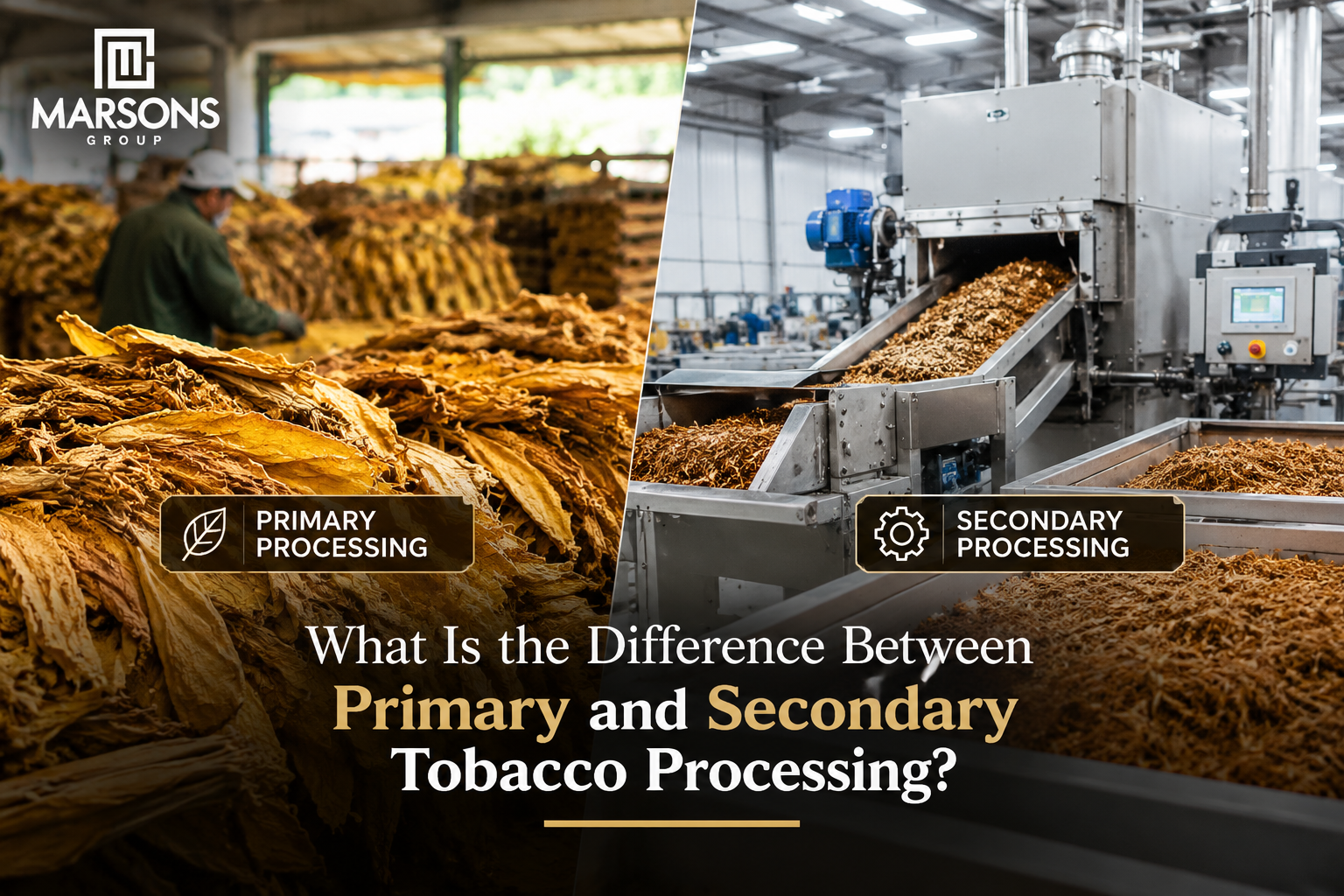
Primary and secondary tobacco processing are two major stages in industrial cigarette manufacturing. Although they operate as part of the same production system, their functions, equipment, and quality requirements are different.
Primary tobacco processing focuses on preparing tobacco leaves and related materials for manufacturing. It includes activities such as conditioning, blending, cutting, drying, and moisture management. The objective is to produce a consistent tobacco blend suitable for the next stage of production.
Secondary tobacco processing generally involves transforming prepared tobacco into cigarettes and packaging them for distribution. This stage uses specialized machinery to form cigarette rods, attach filters, inspect products, and complete packaging operations.
The terminology may vary slightly between factories and technical references, particularly regarding final blending and drying operations. However, the central distinction remains that primary processing prepares the tobacco material, while secondary manufacturing creates and packages the finished product.
What Is Primary Tobacco Processing and How Does It Work?
Primary tobacco processing is the stage where tobacco materials undergo preparation before entering cigarette manufacturing equipment. The process commonly begins with conditioned or redried tobacco leaves that have already undergone certain agricultural and preliminary processing activities.
Depending on the factory arrangement, tobacco may pass through conditioning systems that adjust moisture levels and improve its suitability for handling. Different tobacco materials are then prepared and combined according to the required blend specifications.
Cutting equipment processes the tobacco into the desired physical form, while drying and moisture adjustment systems help maintain appropriate material characteristics. Some production arrangements also incorporate additional blending and flavoring operations.
The complete sequence differs according to tobacco type, equipment configuration, and manufacturing requirements.
The primary processing department ultimately supplies prepared tobacco material to the secondary manufacturing line. Maintaining consistent material quality at this stage is important because variations can affect downstream handling, machine performance, and finished product characteristics.
What Is Secondary Tobacco Processing and How Does It Work?
Secondary tobacco processing takes place after the tobacco material has been prepared for cigarette manufacturing. At this stage, the focus shifts from raw material preparation to forming, inspecting, and packaging finished cigarettes.
Prepared tobacco is supplied to cigarette making machines, where it is formed into continuous rods and enclosed in cigarette paper. The rods are divided into individual sections, and filters are attached where required by the product design.
Once cigarette formation is complete, the products move through inspection and packaging operations. Packing machines arrange cigarettes into the required quantities, while additional equipment handles wrapping, cartoning, and preparation for distribution.
Secondary manufacturing relies on consistent material supply and coordination between different machines. Interruptions in one part of the line can affect subsequent operations, making production planning and equipment compatibility important considerations.
Quality checks are also necessary throughout this stage to identify manufacturing defects and packaging inconsistencies.
Key Differences Between Primary and Secondary Tobacco Processing
The main difference between primary and secondary processing is the material being handled and the intended manufacturing outcome. Primary processing works with tobacco leaves, stems, and prepared tobacco materials, while secondary processing uses the resulting blend to manufacture finished cigarettes.
Primary operations concentrate on material conditioning, blend consistency, moisture management, and physical preparation. Secondary operations emphasize cigarette formation, product dimensions, filter attachment, inspection, and packaging.
The equipment requirements also differ significantly. Primary processing typically involves conditioning cylinders, blending systems, cutting machines, dryers, and material handling equipment. Secondary manufacturing requires cigarette makers, filter attachment machinery, inspection systems, packing machines, and wrapping equipment.
Quality control priorities change between the two stages, although both require consistent monitoring.
Understanding these differences helps manufacturers organize production departments, assess equipment requirements, and identify where operational problems originate. It also supports more informed decisions when upgrading machinery or planning a new manufacturing facility.
Understanding the Complete Tobacco Factory Process Flow
A tobacco factory process flow describes how materials move through the different manufacturing stages, from incoming tobacco preparation to completed product packaging. Understanding this sequence helps manufacturers evaluate how departments depend on one another.
The process generally begins with tobacco materials that have undergone harvesting, curing, and preliminary leaf processing. These materials enter the primary processing department for conditioning, preparation, blending, cutting, and moisture adjustment.
The resulting prepared tobacco is then transferred to secondary manufacturing, where cigarette making machines convert it into cigarette rods and finished cigarettes. Inspection and packing operations follow before products move toward storage and distribution.
The transition from leaf to blend is especially important because the physical characteristics of prepared tobacco influence subsequent manufacturing operations.
Factory arrangements may differ depending on production capacity and equipment design. Some facilities maintain separate preparation departments, while others use more closely integrated material handling and manufacturing systems.
What Machines Are Used in Primary and Secondary Tobacco Processing?
Both processing stages rely on specialized industrial machinery designed for different material handling and production requirements.
Primary processing equipment generally includes tobacco conditioning machines, cutters, blending systems, drying equipment, and storage or conveying arrangements. These machines support the preparation of tobacco materials and help maintain consistency throughout the processing department.
Depending on the facility, additional machinery may be used for stem preparation, tobacco recovery, or earlier leaf processing activities.
Secondary manufacturing requires equipment for cigarette formation, filter attachment, product inspection, packing, wrapping, and cartoning. These machines operate within coordinated production systems where material supply and equipment availability influence overall performance.
Manufacturers should evaluate machinery based on technical specifications, production requirements, maintenance accessibility, and compatibility with existing equipment.
Selecting suitable machines for each stage can simplify operational planning and support consistent manufacturing processes. Equipment decisions should also account for installation requirements, spare parts availability, and long-term technical support.
How Quality Control Differs Between the Two Processing Stages
Quality control plays an important role throughout tobacco manufacturing, but the characteristics being monitored differ between primary and secondary processing.
During primary processing, quality assessments typically focus on tobacco moisture content, blend consistency, material cleanliness, and physical preparation characteristics. Variations in these properties may influence how prepared tobacco behaves during subsequent manufacturing operations.
Secondary processing requires additional attention to finished cigarette specifications. Inspection systems may evaluate cigarette dimensions, filter attachment, product integrity, and packaging quality.
Manufacturers also need procedures for identifying defective materials, documenting nonconformities, and maintaining traceability between production stages.
A consistent quality management approach helps teams recognize whether a problem originates during raw material preparation or finished product manufacturing.
Regular equipment inspection, documented quality criteria, and appropriately trained personnel are important in both departments. Effective monitoring supports production consistency and helps reduce avoidable material losses.
The Role of Automation in Modern Tobacco Processing
Automation has changed how industrial tobacco processing facilities monitor materials, coordinate equipment, and manage production operations. Both primary and secondary departments can use automated systems, although their applications differ according to manufacturing requirements.
Primary processing automation may support moisture monitoring, material movement, blending control, and process data collection. Secondary manufacturing automation typically focuses on machine coordination, production monitoring, product inspection, and packaging operations.
Automated monitoring can provide greater visibility into production conditions and help operators identify inconsistencies. However, automation does not automatically guarantee better financial performance.
Manufacturers should evaluate equipment investment, production volumes, maintenance expenses, workforce requirements, and expected operational improvements before making significant changes.
For a closer examination of financial considerations, read ROI Analysis of Automation vs Manual Operations in Tobacco Processing to understand how manufacturers can compare capital investment with operating costs and potential efficiency improvements.
Common Challenges in Primary and Secondary Tobacco Processing
Both processing stages present operational challenges that can affect manufacturing consistency, equipment reliability, and production costs.
Primary processing facilities often deal with variations in incoming tobacco materials, inconsistent moisture levels, equipment wear, and material handling difficulties. Changes in raw material properties can require additional quality assessments and process adjustments.
Secondary manufacturing faces different concerns, including equipment interruptions, inconsistent material feeding, mechanical defects, and packaging errors. Because several machines may operate as one production system, problems at individual stations can influence overall line performance.
Maintenance planning is important across both departments. Worn components, inadequate cleaning, or delayed servicing can contribute to unexpected equipment stoppages.
Workplace safety also requires attention. Tobacco dust can create combustible dust hazards under certain conditions, making appropriate dust control, housekeeping, and risk assessment essential.
Addressing these challenges requires trained personnel, documented procedures, suitable machinery, and regular operational reviews.
Final Thoughts
Understanding primary vs secondary tobacco processing helps manufacturers recognize the different functions involved in industrial cigarette production. Primary processing prepares tobacco materials through conditioning, blending, cutting, and related operations, while secondary manufacturing transforms prepared tobacco into finished cigarettes and packaged products.
Although these departments perform different tasks, their performance is closely connected. Material consistency, equipment compatibility, quality monitoring, and maintenance practices influence how effectively the complete manufacturing facility operates.
Manufacturers planning new installations or equipment upgrades should evaluate both stages rather than treating them as independent operations.
Marsons Group supplies tobacco processing and manufacturing machinery for different industrial requirements, including equipment associated with primary preparation and cigarette production. Businesses reviewing their facilities can discuss machinery specifications, compatibility, and technical support requirements before making an investment.
A coordinated manufacturing operation depends on understanding each processing stage and selecting equipment appropriate to its intended function.