
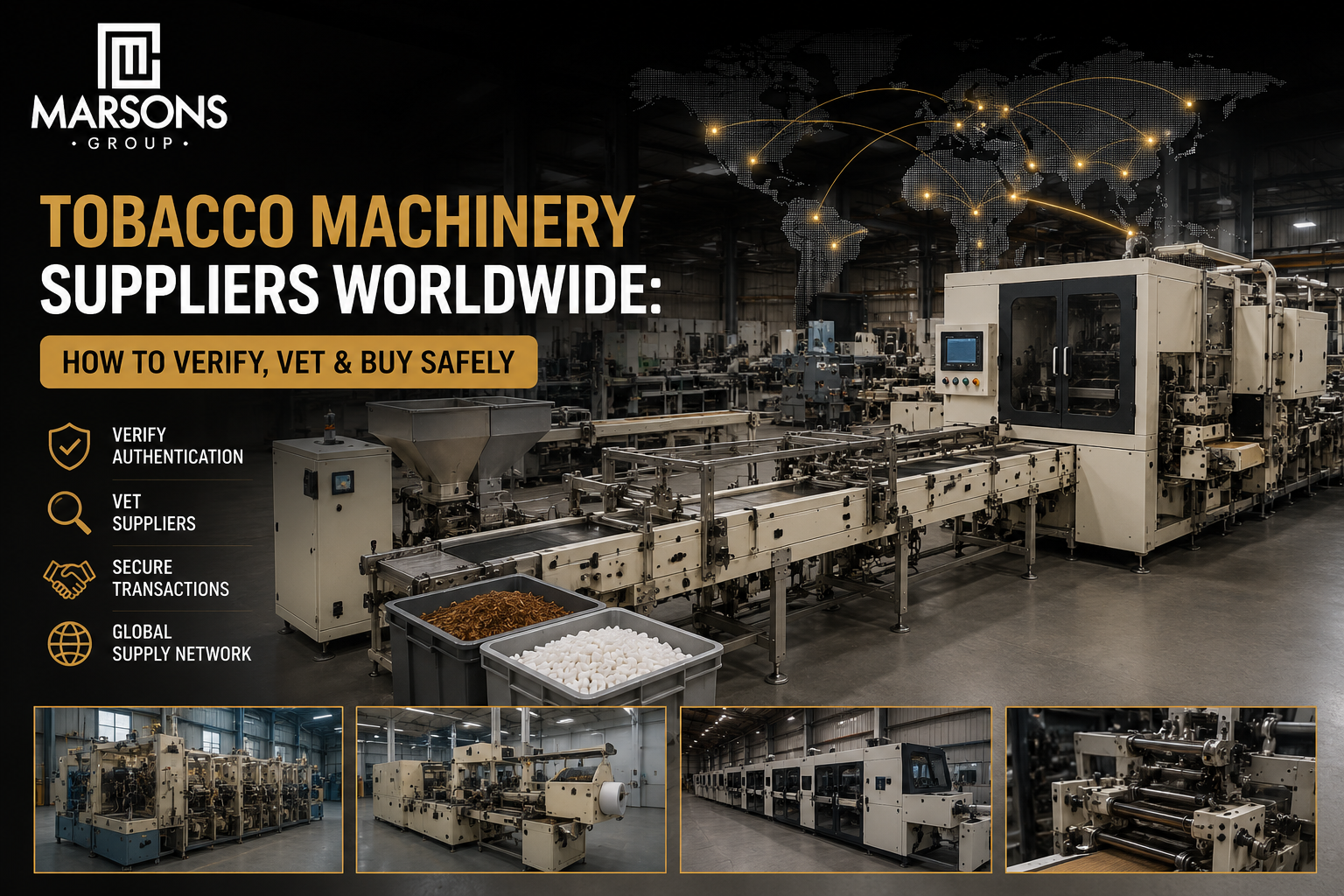
Sourcing equipment for cigarette or tobacco production is not a purchase you make on instinct. A single machine can represent a six or seven figure investment, and the wrong decision can stall production for months. With so many tobacco machinery suppliers operating across Asia, Europe, and the Americas, buyers need a clear, repeatable process for separating genuine manufacturers from resellers, brokers, and outright frauds. This guide walks through exactly how to verify, vet, and buy tobacco processing equipment safely, so your next purchase strengthens your operation instead of putting it at risk.
Understanding the Global Tobacco Machinery Market
The market for cigarette-making, filter, and packaging equipment spans a wide range of players, from long-established European engineering firms to fast-growing manufacturers in China, India, and Southeast Asia. Buyers today can choose between fully automated high-speed lines producing thousands of cigarettes per minute and smaller semi-automatic setups suited to boutique or regional producers. This diversity is good for competition and pricing, but it also means due diligence has become non-negotiable. A supplier’s location, size, and years in business all affect lead times, spare parts availability, and after-sales support, so understanding the landscape before you start requesting quotes puts you in a far stronger negotiating position.
Why Choosing the Right Tobacco Machinery Suppliers Matters
Choosing a supplier is not just a procurement decision, it is a long-term operational commitment. A machine bought from an unreliable vendor can lead to unplanned downtime, inconsistent product quality, and costly rework, all of which erode margins faster than the equipment’s price tag ever suggested. Beyond the financial risk, working with a supplier that cannot provide proper documentation exposes buyers to compliance issues, particularly when importing into regulated markets. Selecting the right partner protects your production timeline, your regulatory standing, and your reputation with distributors and retailers who expect consistent output.
Key Factors to Verify Before Buying from Tobacco Machinery Suppliers
Before signing any contract, confirm the fundamentals. Start with business registration: a legitimate manufacturer will have a verifiable business license, a registered scope that actually includes machinery manufacturing, and a physical factory address that can be checked independently rather than just a sales office. Ask for proof of relevant certifications, since ISO 9001 for quality management is recognized in more than 160 countries and is a reasonable baseline expectation for any serious manufacturer. If your equipment is destined for the European Union, request the Declaration of Conformity behind any CE marking, as CE compliance for machinery is typically a manufacturer self-declaration rather than a government-tested approval, so the supporting documentation matters more than the mark itself.
Also verify production capacity claims against reality. If a supplier states they can produce dozens of machines a month, ask how many workers and assembly lines support that figure, and request evidence such as photos, videos, or a live walkthrough of the shop floor.
How to Vet a Cigarette Machine Manufacturer
Vetting goes a step further than basic verification. Once you have shortlisted a cigarette machine manufacturer, ask for references from existing clients, ideally in a market or production scale similar to your own, and actually contact them rather than relying on testimonials posted on the supplier’s own website. Review their quality standards in detail: how they inspect components, what testing they perform before shipment, and whether they offer a warranty backed by a written service agreement.
Where possible, commission an independent factory audit through a third-party inspection firm rather than relying solely on the supplier’s own claims. If an in-person visit is not feasible, insist on a live, unedited video tour of the production floor, not pre-recorded footage. A manufacturer confident in its operations will rarely hesitate to show you exactly how machines are built, tested, and packed for shipment.
New Tobacco Machinery for Sale vs Used Equipment: What to Consider
When comparing new tobacco machinery for sale against used or refurbished units, the decision usually comes down to budget, production scale, and risk tolerance. New equipment typically comes with full warranties, updated automation features, and manufacturer-backed technical support, which reduces the likelihood of unexpected breakdowns in the first years of operation. It also tends to be more energy efficient, which lowers long-term operating costs.
Used machinery, on the other hand, can offer meaningful upfront savings and faster availability, particularly for smaller operations testing new product lines. The trade-off is a higher chance of hidden wear, outdated control systems, and limited access to spare parts if the original manufacturer no longer supports that model. Whichever route you choose, insist on maintenance records, an equipment inspection report, and clarity on what remains under warranty before finalizing payment.
Common Challenges in Cigarette Production and How Machines Solve Them
Even with the right supplier, production teams regularly face recurring technical issues, and understanding these challenges helps buyers ask sharper questions during the sourcing process. Inconsistent tobacco weight and rod density are among the most frequent problems, often caused by irregular feeding or moisture imbalance, and both directly affect burn rate and customer experience. Modern lines address this through automated weight control systems and density sensors that adjust tobacco flow in real time rather than relying on manual correction.
Jamming, misalignment, and unplanned downtime are equally common, particularly in high-speed automatic lines running at several thousand cigarettes per minute. Quality inspection is another persistent pain point, since manual checks struggle to catch minute defects consistently at scale. For a deeper breakdown of these issues and the engineering responses behind them, our article on Common Challenges in Cigarette Production and How Machines Solve Them covers the mechanics in more detail. In short, automated inspection, real-time monitoring, and precision cutting systems have become standard features precisely because they reduce waste, improve consistency, and protect profit margins at scale.
Red Flags to Watch Out for When Buying from a Tobacco Machine Company
Some warning signs should stop a deal in its tracks. Be cautious of any tobacco machine company that pressures you toward full upfront payment before any inspection, insists on wiring funds to a personal rather than a registered business account, or repeatedly changes bank details mid-negotiation. Pricing that sits dramatically below the rest of the market is another common tactic, often signaling substituted components or a vendor that has no intention of delivering. Reluctance to allow factory visits, unannounced audits, or live video walkthroughs should also raise concern, as legitimate manufacturers generally welcome the scrutiny because it works in their favor.
Mismatched documentation is a quieter but equally serious red flag. If the company name on invoices, certificates, or business licenses does not match the entity you are communicating with, treat it as a reason to pause and dig deeper before any money changes hands.
Best Practices for a Safe and Secure Purchase
Protect yourself with structure, not just caution. Use a detailed purchase contract that specifies technical specifications, delivery timelines, payment milestones, and warranty terms in writing, rather than relying on informal email exchanges. Where the order size justifies it, engage a third-party inspection service to verify the machine before shipment, and stagger payments so a meaningful portion is only released after successful testing or delivery. Keep a paper trail of every certification, communication, and invoice, since this documentation becomes essential if a dispute or customs issue arises later.
Ready to move forward with a trusted partner? Explore verified Tobacco Machinery for Sale and take the next step toward a safer, more reliable equipment purchase.
Conclusion
Buying from tobacco machinery suppliers worldwide does not have to be a gamble. By verifying registration and certifications, vetting manufacturers through references and factory audits, understanding the trade-offs between new and used equipment, and staying alert to common red flags, buyers can make confident, well-informed purchasing decisions. A structured, careful approach protects your investment today and sets your production line up for reliable performance for years to come.