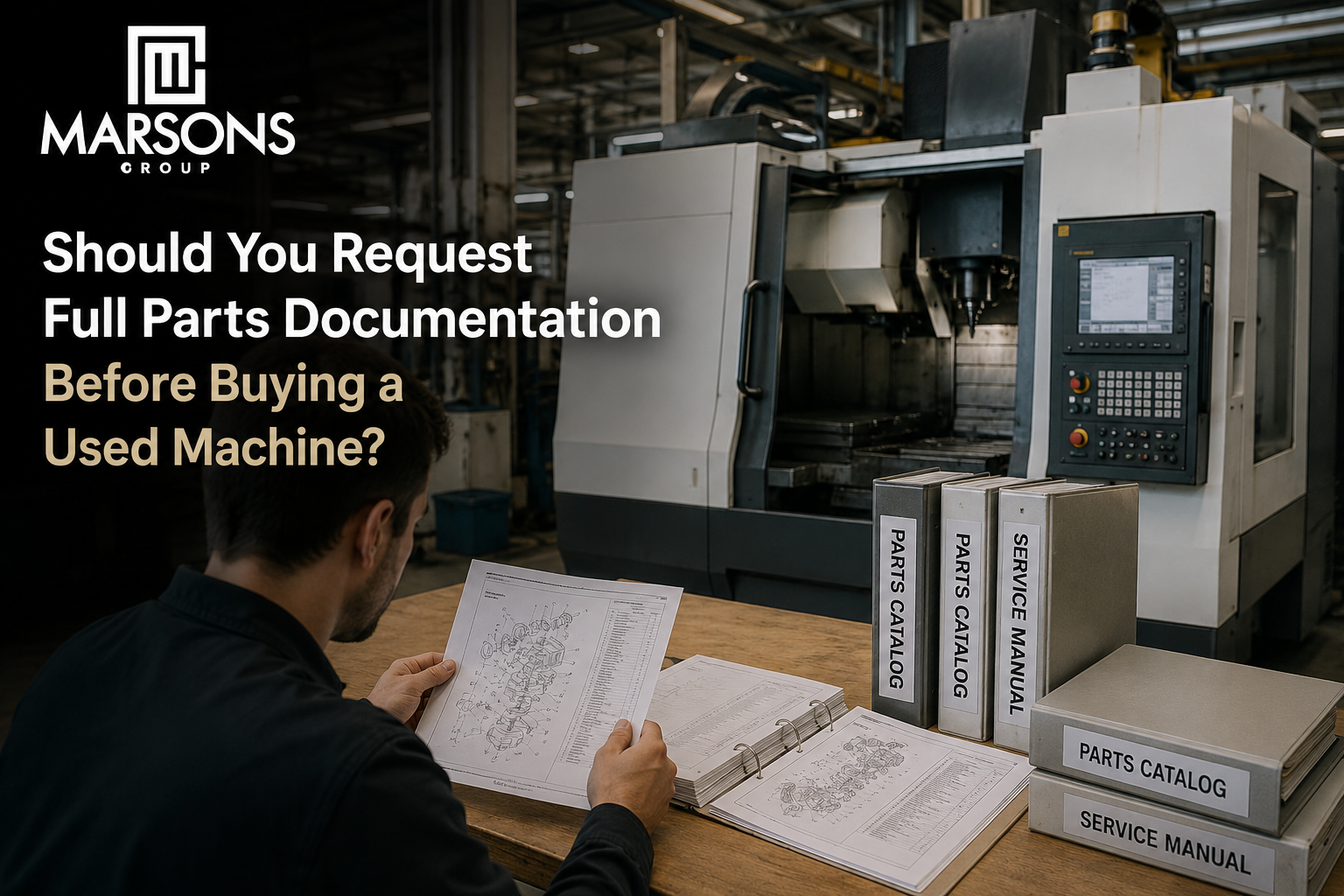
Buying a used machine can be one of the smartest financial decisions a manufacturing business makes, provided the equipment comes with more than just a lower price tag. Too many buyers focus on inspecting moving parts, checking hour meters, and negotiating price, while overlooking one of the most valuable assets a seller can hand over: documentation. If you are sourcing components for an older or discontinued model, working with a trusted supplier of Tobacco Machinery Spare Parts can make this process far easier, but that only works well if you know exactly what parts your machine needs in the first place. Before you sign off on any used machine, requesting full parts documentation should be a non-negotiable step in your due diligence process, not an afterthought.
This article explains why documentation is just as important as the machine’s physical condition, what a complete documentation package should include, and how it directly supports long-term spare parts management once the equipment is running on your production floor.
Why Documentation Matters More Than the Machine Itself
It’s easy to assume that a machine in good working condition is a safe investment. However, a machine without proper documentation is essentially a mystery box. You may not know which components are original, which have been replaced with aftermarket substitutes, or how to source a replacement part when something eventually fails. Sellers who maintain organized machine manual parts numbers, technical drawings, and service logs are typically sellers who maintained the equipment properly in the first place. Documentation, in other words, is often a proxy for how well a machine was actually cared for.
Without it, buyers inherit not just a machine, but an ongoing guessing game. Every future repair becomes slower and more expensive, because technicians must reverse-engineer specifications instead of referencing verified records.
What Full Parts Documentation Actually Includes
A complete documentation package goes well beyond a single operator’s manual. Serious buyers should expect and request the following before finalizing any purchase.
Machine Manual Parts Numbers Explained
The original equipment manual should list every replaceable component along with its manufacturer-assigned part number. These machine manual parts numbers are the foundation of future maintenance, because they allow your team to order the exact component required rather than relying on guesswork or visual matching. Without this list, even simple repairs can turn into extended troubleshooting exercises, especially on machines with multiple generations of design changes.
Technical Drawings, Schematics, and Service History
Beyond the parts list, ask for wiring diagrams, mechanical schematics, and any available maintenance or service history. These documents reveal how the machine was configured, what modifications, if any, were made, and how frequently it was serviced. A machine with consistent, well-documented service intervals is generally a lower-risk purchase than one with sparse or missing records, regardless of how clean it looks on the outside.
The Role of Spare Parts Management in Long-Term Machine Ownership
Once a used machine is installed, its documentation becomes the backbone of your spare parts management strategy. Effective spare parts management depends on knowing exactly which components your equipment uses, how critical each part is to production, and how quickly a replacement can be sourced. Without accurate documentation, none of this is possible with any real confidence.
Maintenance teams rely on documented part numbers and specifications to build bills of materials, set safety stock levels for critical components, and classify parts by criticality. Skipping this step at the point of purchase creates a downstream burden: your team ends up manually identifying unlabeled parts, calling multiple suppliers for confirmation, and often overstocking components “just in case” because they can’t confirm exact specifications. Requesting documentation before you buy isn’t just due diligence, it’s the first step in building a functional spare parts management system for that machine.
Risks of Buying a Used Machine Without Proper Documentation
Purchasing a used machine without documentation exposes your operation to several avoidable risks. First, you lose the ability to verify whether the machine’s components are genuine, compatible, or already near the end of their service life. Second, any future breakdown becomes significantly harder to diagnose, since technicians have no baseline reference for original specifications. Third, undocumented machines often carry hidden costs, including emergency sourcing, custom fabrication, or paying a premium to reverse-engineer parts that should have been clearly identified from the start.
There’s also a compliance dimension. In regulated industries, missing documentation can complicate safety audits, warranty claims, or resale value down the line. A machine that can’t prove its own history is a harder asset to insure, finance, or eventually sell.
How Part Number Cross Reference Simplifies Sourcing and Maintenance
Even with original documentation in hand, manufacturers occasionally discontinue parts, rebrand suppliers, or update specifications over time. This is where a part number cross reference becomes essential. A reliable cross reference allows your team to match an original manufacturer’s part number with equivalent, compatible, or updated alternatives from other suppliers, without guessing at fit or function.
When you receive full documentation at the time of purchase, cross-referencing becomes far more accurate, because you’re working from verified original part numbers rather than approximations. This reduces the risk of ordering the wrong component, shortens procurement lead times, and gives your maintenance team confidence that a substitute part will actually perform as expected.
Special Considerations for Buying Used Tobacco Machinery
Tobacco and cigarette manufacturing equipment presents a particularly strong case for demanding full documentation. Machines from established brands typically run continuously across multi-shift production lines, and even a short unplanned stoppage can be costly. Components such as garniture tapes, filter rod cutters, suction rollers, and paper feed belts wear at different rates and must be replaced on precise schedules to avoid quality issues or downtime.
Why Parts Documentation for Tobacco Machinery Is Non-Negotiable
Buying used tobacco machinery without complete parts documentation tobacco machinery buyers need is a significant gamble. These machines often use highly specific components engineered to exact tolerances, and even minor deviations in a replacement part can affect product consistency or trigger mechanical failure. A single incompatible or low-grade component can disrupt an entire production line, not just the machine it was installed on.
Before purchasing a used tobacco machine, request the original manual, a full parts list with manufacturer part numbers, and any service records from the previous operator. This information not only protects your investment but also gives your maintenance team a reliable starting point for sourcing genuine or cross-referenced replacements going forward.
Questions to Ask the Seller Before You Buy
Before committing to any used machine, buyers should directly ask sellers: Can you provide the original operator and parts manual? Are there documented service and maintenance records? Have any major components been replaced, and if so, with OEM or aftermarket parts? Is a part number cross reference available for commonly replaced components? A seller who can answer these questions clearly and provide supporting paperwork is signaling transparency. One who cannot should raise concerns about the machine’s true condition and history.
How Proper Documentation Protects Your Investment Long-Term
Full documentation doesn’t just simplify your first year of ownership, it protects the machine’s value for as long as you operate it. Well-documented equipment is easier to maintain, easier to insure, and easier to resell when the time comes. It also shortens the learning curve for new technicians, who can rely on manuals and schematics instead of institutional knowledge that may walk out the door when an employee leaves. This is closely tied to what we cover in The Importance of High-Quality Tobacco Machinery Spare Parts in Production Lines, where consistent component quality is shown to directly affect uptime and product consistency across an entire line.
Conclusion:
A used machine is only as valuable as the information that comes with it. Requesting full parts documentation before you buy isn’t excessive caution, it’s a practical safeguard that supports accurate spare parts management, faster repairs, and long-term operational reliability. Whether you’re purchasing general industrial equipment or specialized tobacco machinery, insist on manuals, part numbers, and service history upfront. It’s a small request that can save significant time, money, and downtime for years to come.