
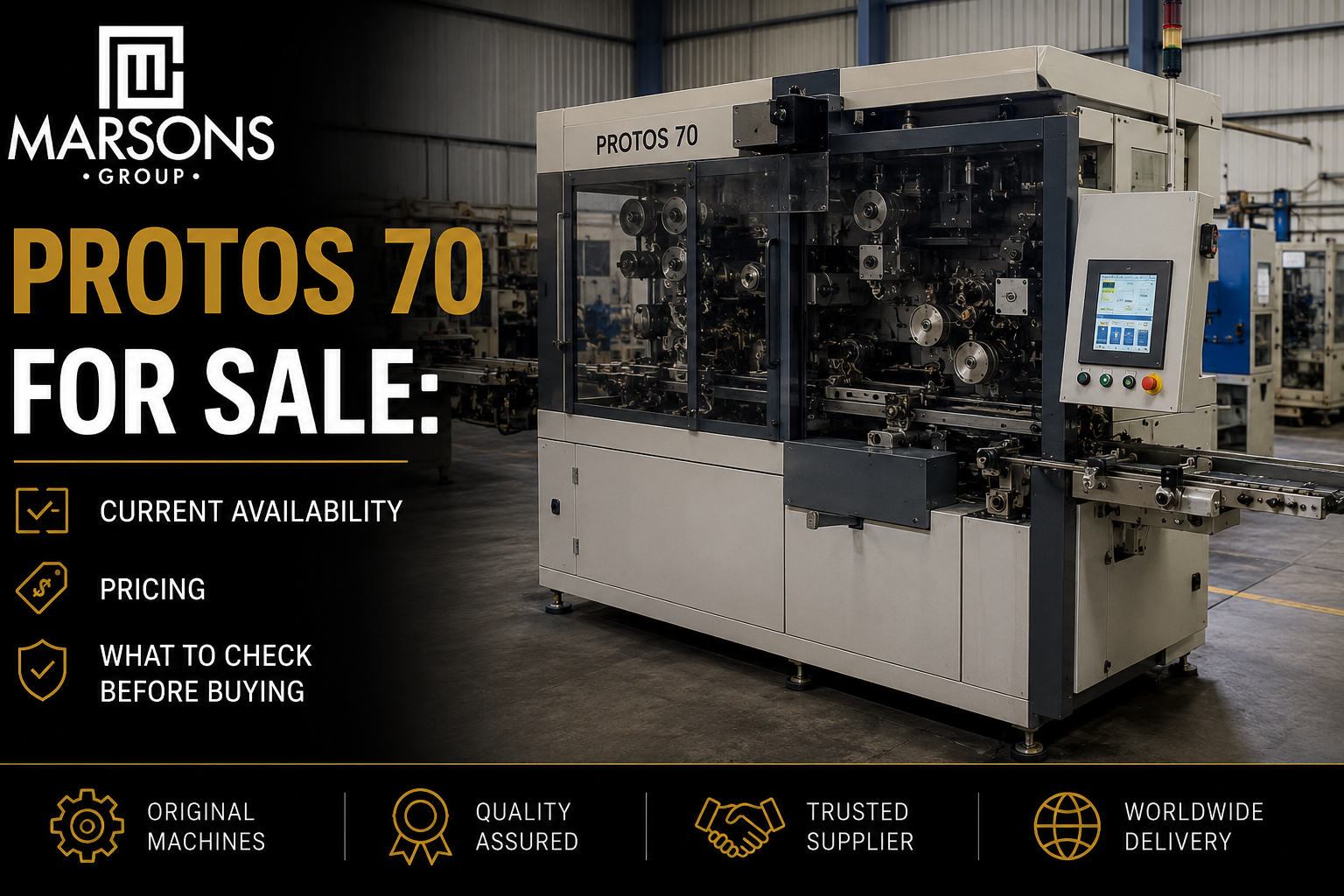
For manufacturers evaluating a Protos 70 Cigarette Making Machine for sale, the decision usually comes down to balancing proven reliability against the total cost of getting a decades-tested industrial machine running at full capacity. The Protos 70 remains one of the most widely deployed cigarette makers in the world, and understanding what drives its availability, pricing, and pre-purchase checklist can save buyers from costly surprises. This guide walks through what the machine actually offers, where it’s currently available, and exactly what to inspect before committing.
What Is the Hauni Protos 70 Cigarette Making Machine?
The Protos 70 is a high-speed cigarette maker produced by Hauni, now operating under Körber Technologies, a German manufacturer that has dominated the global tobacco machinery sector since the mid-20th century. As part of the broader Protos family, the Protos 70 sits as the accessible entry point into Körber’s high-speed production ecosystem, offering serious industrial output without the premium price tag of flagship models like the Protos 80 or M5.
The machine combines three integrated units: the S7000 cigarette rod maker, the M8000 filter tip attachment module, and the F80 automatic tray filler. Together, these form the tobacco rod, attach the filter, and load finished cigarettes into trays ready for packing. Its widespread global installation base across North America, Europe, Asia, and South America has made it a familiar, well-understood machine among technicians and spare parts suppliers, which matters significantly for long-term maintainability.
Key Specifications and Technical Capabilities
The Protos 70 produces up to 7,000 cigarettes per minute in regular diameter format, and approximately 6,000 cigarettes per minute for slim and super slim formats. It accommodates cigarette circumferences from 17mm to 28.3mm and cigarette diameters between 5.4mm and 8mm, with total cigarette length, filter plus tobacco rod, ranging from 65mm to 110mm.
Power consumption is distributed across its three core units: roughly 50kW for the S7000 rod maker, 20kW for the M8000 filter attachment, and 15kW for the F80 tray filler. The complete unit weighs approximately 10,800kg, with a footprint reaching about 3,000mm in length. These specifications place the Protos 70 comfortably in the medium-to-high production tier, fast enough for serious commercial output, while remaining more compact and less capital-intensive than the higher-tier Protos 80 or M5 configurations designed for 14,000+ cpm operations.
Current Availability: Where to Find a Protos 70 for Sale
Because the Protos 70 has been in service for decades across major tobacco-producing regions, current availability is driven almost entirely by the secondary and refurbished equipment market rather than new manufacturing. Buyers searching for a Protos 70 for sale will typically find listings through specialized tobacco machinery brokers, industrial equipment marketplaces, and dedicated suppliers who source, recondition, and resell decommissioned units from factories upgrading to newer lines.
Pricing on the open market for a used, functioning Protos 70 has been observed in the range of roughly $665,000 to $700,000, though this varies significantly based on condition, age, included ancillary equipment, and whether the machine has been professionally tested before sale. Given the scale of this investment, buyers should expect to work directly with brokers rather than relying purely on online marketplace listings, since machine condition and documentation matter far more than headline price at this level.
Protos 70 Cigarette Maker: New vs. Refurbished Options
Since the Protos 70 is no longer in active new production, virtually every unit available today falls into the refurbished or used category. This isn’t necessarily a drawback, a professionally reconditioned Protos 70 Cigarette Maker, backed by a reputable supplier with proper testing and warranty terms, can deliver performance close to factory-new specifications at a meaningfully lower cost than investing in a current flagship model.
The key differentiator between refurbishment tiers is depth of work performed. Cosmetic refurbishment covering cleaning, repainting, and basic part replacement is very different from a full mechanical overhaul involving servo motor testing, sensor recalibration, and replacement of wear components in the rod maker and filter attachment units. Buyers should always request a clear breakdown of exactly what refurbishment work was completed, rather than accepting vague assurances that a machine is “fully reconditioned.”
What Drives Protos 70 Pricing?
Several factors shape where a specific unit lands within the pricing range. Machine age and total operating hours are primary drivers, since components like the cutting knives, servo drives, and tray filler mechanisms wear over sustained high-speed use. Included ancillary equipment, spare parts kits, documentation, control software licenses, also affects value significantly, as does whether the unit has been pre-tested and commissioned versus sold strictly as-is.
Geographic location and shipping logistics add another layer of cost that buyers often underestimate. Import duties, freight for a roughly 10-ton machine, and in-country installation support can add substantially to the sticker price. When comparing a hauni protos 70 for sale from different suppliers, it’s important to request a like-for-like quote breakdown, separating machine cost, testing and certification, spare parts inclusion, and delivery, rather than comparing headline numbers that may hide very different scopes of inclusion.
What to Check Before Buying a Hauni Protos 70 for Sale
Before finalizing a purchase, request full maintenance and service history, including records of any major component replacements or overhauls. Ask whether the machine was running in a comparable production environment, cigarette format, circumference, and length, to your own requirements, since reconfiguration between formats can involve additional cost and downtime.
Confirm spare parts availability and pricing from the supplier or a third-party parts network, since the Protos 70’s long service history means an established aftermarket exists, but not all sellers maintain the same access. It’s also worth reviewing broader industry guidance on Top Features to Look for in a Cigarette Manufacturing Machine in 2026, particularly around digital controls, sensor integration, and automation level, to judge how a specific Protos 70 unit’s condition and retrofit options compare against current production standards before finalizing your decision.
Common Issues and Longevity Considerations
Like any high-speed mechanical system with decades of installed units in the field, common wear issues on the Protos 70 tend to center on the cutting and forming components in the rod maker, along with sensor drift in units that haven’t been recalibrated regularly. Modular design helps here, Hauni engineered the machine so individual components can be accessed and replaced without extensive production downtime, which has contributed to its long service life across so many factories worldwide.
Longevity ultimately depends on maintenance discipline more than raw machine age. A well-maintained Protos 70 with documented servicing can outperform a newer but poorly maintained alternative. Buyers should factor ongoing maintenance costs and technician availability into their total cost of ownership calculation, not just the upfront purchase price.
Is the Protos 70 Still a Good Investment in 2026?
For manufacturers operating at medium-to-high production scale without the budget or need for 14,000+ cpm output, the Protos 70 remains a genuinely solid investment. Its enormous installed base means parts, technicians, and documented know-how are far more accessible than for newer, less common machines, and refurbished units offer a meaningful cost advantage over investing in current flagship equipment.
The tradeoff is accepting a machine architecture that, while robust, doesn’t include the latest sensor density or AI-driven predictive maintenance features found on the newest Körber platforms. For many manufacturers, particularly those prioritizing reliability and cost-efficiency over cutting-edge automation, that tradeoff remains well worth it.
Conclusion
A Protos 70 Cigarette Making Machine for sale represents a proven, well-understood investment for manufacturers who want reliable mid-to-high volume production without flagship pricing, provided the purchase is approached with proper due diligence on condition, maintenance history, and total landed cost. Working with a transparent, experienced supplier makes the difference between a smooth installation and unexpected downtime down the line.
To compare current inventory and specifications across models suited to your production needs, browsing available Cigarette Making Machines is a practical starting point for factories ready to move forward.