
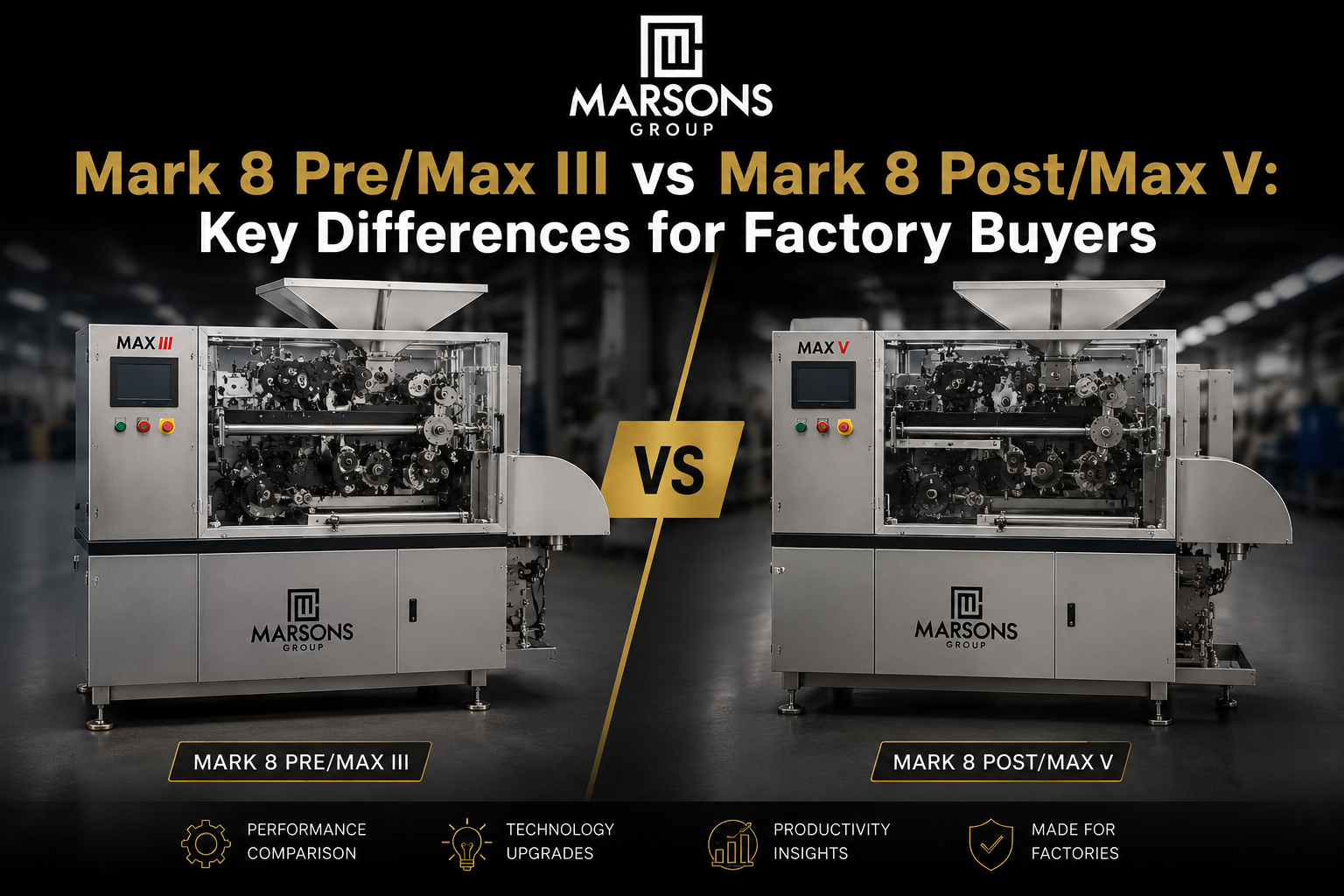
Walk into any tobacco machinery forum or supplier listing page and you will eventually run into a naming convention that confuses even experienced buyers. Mark 8 Pre, Mark 8 Post, Max III, Max V. These names get used somewhat interchangeably across different sellers, and that creates real confusion for manufacturers trying to figure out which machine they are actually looking at. This blog breaks down the genuine differences between the Mark 8 Pre/Max III and the Mark 8 Post/Max V, helps clarify how related models like the max s cigarette machine fit into the picture, and gives factory buyers a practical framework for evaluating what is actually being sold before any money changes hands.
Why Does Naming Get Confusing?
The Molins Mark 8 making machine went through several generations of development over its commercial lifespan. Different markets and different sellers ended up referring to the same or closely related machines using different naming conventions, sometimes pairing the Molins model designation with the equivalent designation used by other regional distributors or rebuilders. This is part of why you will see a Mark 8 Pre / Max III cigarette machine for sale listed under multiple naming variations depending on the seller and region.
Understanding that these are not arbitrary names but actual generational and configuration differences is the first step to buying the right machine. The Pre and Post designations generally refer to where a specific unit sits in the production timeline of the Mark 8 series, with associated mechanical and performance differences that matter in practice, not just on paper.
What Sets the Mark 8 Pre/Max III Apart?
The Mark 8 Pre/Max III represents an earlier configuration within the Mark 8 development line. It is a proven, well-understood machine that has been running in commercial tobacco facilities for a long time, which means the mechanical quirks, common failure points, and maintenance requirements are extremely well documented across the industry.
For manufacturers evaluating a Mark 8 Pre / Max III cigarette machine for sale, the appeal is usually straightforward. These units tend to be more accessible from a pricing standpoint because of their age and the broader availability of used units in the secondary market. The mechanical layout is also generally considered more approachable for technicians who are newer to high-speed making machines, since the design has had more time to be studied, documented, and worked on by the wider technician community.
The tradeoff is output speed and certain refinement details that came with later generations. For facilities that do not need the absolute highest throughput available in the Mark 8 family, this is not necessarily a disadvantage at all. It can actually be the more practical choice when matched correctly to production needs.
What Sets the Mark 8 Post/Max V Apart?
The mark 8 Post/Max V represents a later configuration in the same development line. It generally reflects refinements made over the production run of the Mark 8 series, which can include improvements to output consistency, mechanical reliability in certain components, and in some cases modest gains in output speed depending on the specific configuration being discussed.
Buyers searching for a Mark 8 Post/Max V are often manufacturers who already have experience with an earlier Mark 8 variant and are looking to upgrade within the same general equipment family, rather than switching to a completely different manufacturer. The learning curve for technicians moving from a Pre to a Post configuration tends to be manageable because the fundamental mechanical principles remain consistent across both versions.
Where does Max S Fits Into the Picture?
The max s cigarette machine often comes up in the same searches and supplier conversations as the Mark 8 Pre and Post variants, and for good reason. It exists within a closely related family of high-speed cigarette making machines that share design lineage and many mechanical principles with the Mark 8 series.
For manufacturers comparing options, the max s cigarette machine can represent either an alternative configuration or, depending on the specific seller and region, another naming convention applied to a closely related machine. This is exactly the kind of situation where asking direct, specific questions about the actual machine specification matters more than relying on the model name alone.
When you see a Mark 8/ Max S cigarette machine for sale listing, treat the name as a starting point for inquiry rather than a complete specification. Ask the seller to confirm the exact configuration, the output speed it actually achieves, the rod diameter ranges it supports, and what generation of components it is running.
Practical Differences That Actually Matter
Setting the naming confusion aside, here are the factors that genuinely affect how these machines perform on a factory floor.
Output speed varies between configurations, and this is the first thing to confirm regardless of which name is being used in a listing. Ask for the actual rated output in cigarettes per minute and, where possible, ask for evidence of sustained output during real production runs rather than relying on a spec sheet figure alone.
Mechanical condition matters more than generation in many cases. A well-maintained Mark 8 Pre / Max III cigarette machine for sale can outperform a poorly maintained Post/Max V unit in actual production despite being an earlier configuration. Running hours, service history, and the condition of high-wear components like the garniture, tongue, and cutting mechanism tell you far more than the model name does.
Parts compatibility is another genuine practical consideration. Components are not always interchangeable between Pre and Post configurations, or between the Mark 8 line and the max s cigarette machine family, even when they look superficially similar. Confirm parts compatibility with your supplier before assuming you can source generic Mark 8 parts for any unit you buy.
What to Check Before Buying Either Configuration?
Whatever specific machine you end up evaluating, the buyer checklist stays largely consistent. Request full running hours and service documentation. Ask for a video of the machine running at or near rated speed and inspect the rod output for consistency in density, diameter, and cut quality. Confirm exactly which generation and configuration you are buying, in writing, rather than relying on verbal assurances about Pre versus Post status.
Ask specifically about spare parts availability for the exact configuration you are purchasing, since this is where Pre and Post differences become very practical very quickly once the machine needs servicing. A supplier who can speak confidently and specifically to these distinctions is demonstrating genuine product knowledge rather than simply repeating whatever terminology appeared in their own sourcing documentation.
For manufacturers who want to see the broader range of making machines available for comparison, the cigarette making machines page on the Marsons Group website lists current inventory across multiple models and configurations, which is useful context when you are trying to understand where a specific Mark 8 variant fits relative to other options on the market.
Working With Marsons Group
Marsons Group has been supplying tobacco machinery internationally since the 1960s, which means they have handled enough Mark 8 family equipment across enough markets to speak clearly to the real differences between Pre and Post configurations and related models like the max s cigarette machine. Rather than relying on whatever naming convention happens to be circulating in a particular market, their team can clarify exactly what configuration a specific unit represents before you commit to a purchase.
Their support extends to installation, commissioning, spare parts supply matched correctly to the specific machine configuration, and ongoing technical assistance after the sale, which matters considerably when buying equipment in a category where naming alone can be genuinely misleading.
Conclusion
The differences between the Mark 8 Pre/Max III and the Mark 8 Post/Max V are real, but they are not always reflected accurately in how machines get listed and described across the secondary market. Whether you end up with a Mark 8 Pre / Max III cigarette machine for sale or a Mark 8 Post/Max V, the actual condition of the specific unit and the clarity of the supplier you are working with will determine far more about your production outcomes than the generational label ever will. When searching for Reliable Tobacco Making Machines for Sale for Your Factory, it is important to focus on verified specifications, maintenance history, and supplier transparency rather than relying solely on model designations. Ask the right questions, confirm the actual specification in writing, and you will be in a strong position regardless of which configuration ends up on your factory floor.