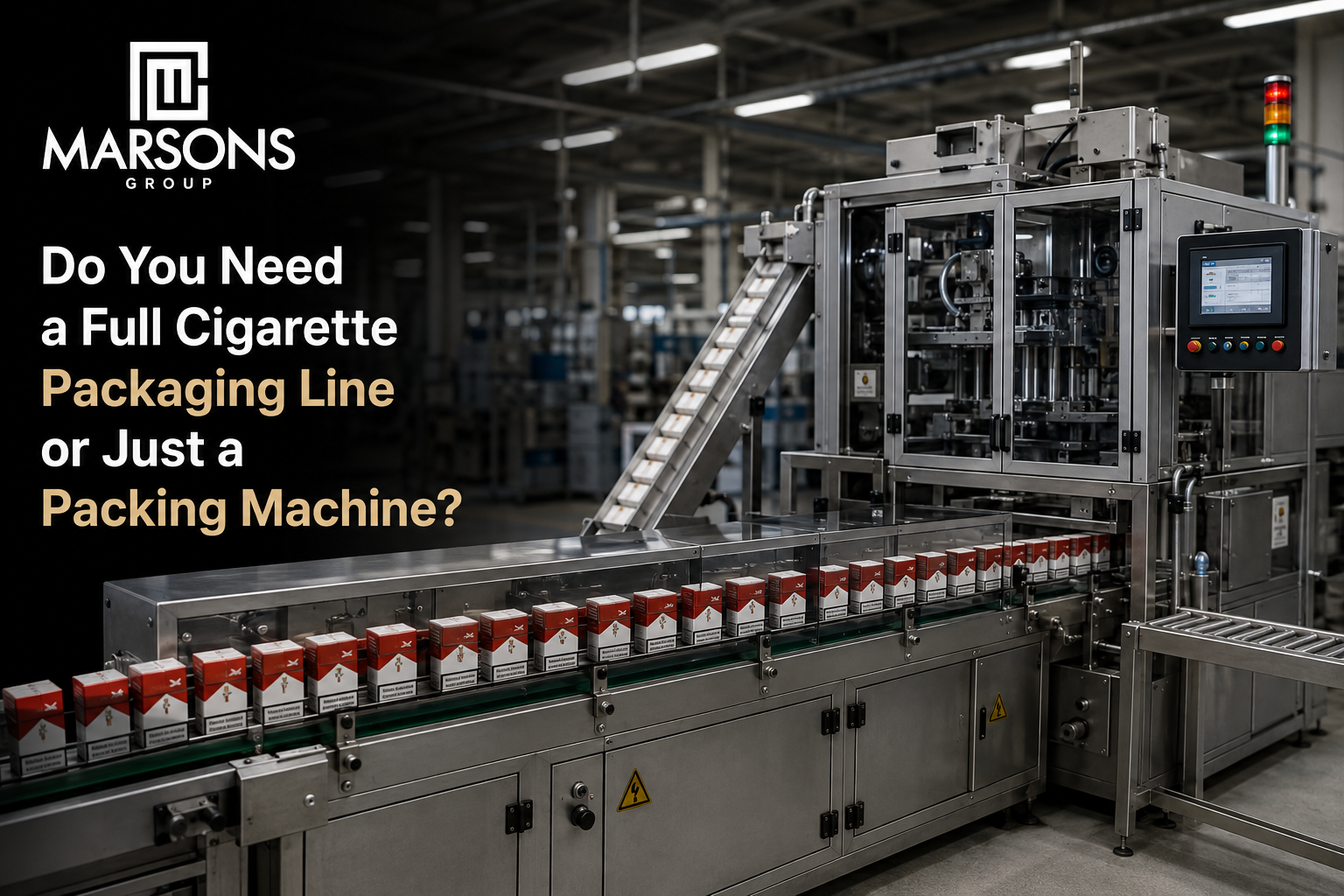
Deciding how to invest in packaging equipment is one of the most consequential choices a cigarette manufacturer will make. Get it right, and you build a production setup that scales smoothly with demand. Get it wrong, and you either overspend on capacity you don’t need or bottleneck a business that’s ready to grow. If you’re currently comparing standalone equipment options, browsing a supplier’s range of Cigarette Packing Machines is a useful starting point, but the real decision goes deeper than picking a single unit. It comes down to understanding whether your operation genuinely needs a complete packaging line or whether a well-chosen packing machine can carry the workload on its own.
This article breaks down the difference between the two approaches, the factors that should guide your decision, and how to evaluate manufacturers so you invest in the right equipment the first time.
Understanding the Difference: Packing Machine vs. Full Packaging Line
A standalone packing machine performs one core function, typically wrapping or sealing cigarette packs, on its own. Operators often move product manually between this machine and other stages of production, such as cartoning or case packing. A full packaging line, by contrast, connects multiple stages, feeding, packing, wrapping, stamping, cartoning, and case packing, into a single synchronized system controlled through shared automation and monitoring.
The distinction matters because it affects everything downstream: labor requirements, floor space, throughput consistency, and how easily your operation can adapt to new formats. Neither option is inherently better. The right choice depends entirely on your production volume, product variability, and long-term growth plans.
What a Standalone Packing Machine Can (and Can’t) Do
A single packing machine can handle a genuinely high volume of product on its own, particularly modern models capable of producing well over 200 packs per minute. For smaller manufacturers, contract packers, or businesses running shorter production cycles, this is often more than sufficient. Standalone machines are also easier to relocate, reconfigure, or replace independently, which reduces overall investment risk if your production needs shift.
What a standalone machine can’t do is eliminate manual handling between stages. If your packs still need to be manually transferred to a cartoning unit, wrapped separately, or case-packed by hand, you’re introducing labor dependency and potential inconsistency at each handoff point. For manufacturers running multiple shifts or scaling toward higher, more predictable output, this manual bridge between stages eventually becomes the limiting factor on total line efficiency.
What a Complete Packaging Line Actually Involves
A true packaging line synchronizes every stage of the packing process so that product moves continuously from filling through final case packing without manual intervention. This isn’t simply about owning more machines. It’s about integrating them so that speed, sensors, and controls work together as one coordinated system.
Core Components of Industrial Packaging Equipment
A typical cigarette packaging line includes the packer itself, a cellophane overwrapper, a tax stamp applicator, a cartoner, and a case packer, connected by conveyors and centralized PLC controls. This is the essence of industrial packaging equipment: individual machines built to function as a single, continuous production system rather than isolated units. Each component must be matched in speed and format capability so the line runs without bottlenecks at any single stage.
How Cigarette Packaging Line Design Affects Output and Flexibility
Thoughtful cigarette packaging line design accounts for more than raw speed. It considers changeover time between pack formats, maintenance access, floor layout, and how easily the line can be expanded later. A poorly designed line can hit its rated speed on paper while still underperforming in practice due to frequent stoppages, awkward changeovers, or insufficient buffer capacity between stages. Getting the design right at the outset saves significant cost and disruption later.
Key Factors That Determine Which Option You Need
Production Volume and Growth Plans
Your current and projected output should drive this decision more than anything else. If you’re running high, consistent volumes across multiple shifts, a full line typically delivers better long-term efficiency. If your production is smaller, seasonal, or still finding its footing, a standalone machine offers a lower-risk entry point that can be expanded into a full line later as demand grows.
Budget, Floor Space, and Labor Considerations
A full packaging line requires a larger upfront investment, more floor space, and integration planning, but it reduces ongoing labor costs and manual handling errors over time. A standalone machine costs less initially and requires a smaller footprint, but relies more heavily on manual labor between production stages. Weigh the total cost of ownership, not just the purchase price, when comparing the two paths.
When a Single Packing Machine Makes More Sense
A standalone machine is often the smarter choice for new entrants, smaller manufacturers, or operations still validating product-market fit. It allows you to establish reliable production without committing significant capital to infrastructure you may not yet need. It’s also a practical option if your formats or packaging styles change frequently, since a single machine can be more easily adjusted or repurposed than a fully integrated line.
When a Full Packaging Line Is the Smarter Investment
Once your production volume becomes consistent and predictable, and manual handling starts limiting your output, a full packaging line becomes the more strategic investment. It reduces labor dependency, improves consistency across every pack produced, and positions your operation to scale without proportional increases in staffing. For established manufacturers running multiple shifts, the efficiency gains typically outweigh the higher initial cost within a reasonable payback period.
Choosing the Right Packaging Machine Manufacturer
Whichever direction you choose, the manufacturer you partner with matters as much as the equipment itself. A reputable packaging machine manufacturer should offer proven engineering expertise, the ability to customize configurations to your specific formats, responsive technical support, and a track record of reliable after-sales service. Ask potential suppliers about lead times for spare parts, availability of local service support, and whether their equipment can be expanded or upgraded as your needs change. A manufacturer who understands your growth trajectory, not just your current order, is a far better long-term partner than one offering the lowest price alone.
The Growing Role of Automation in Packaging Decisions
Automation continues to reshape how manufacturers approach this decision. Modern lines increasingly include PLC-based controls, real-time production monitoring, and predictive maintenance features that reduce downtime and improve consistency. The Role of Automation in Cigarette Packing Machines in Modern Manufacturing is becoming a defining factor in equipment decisions, as manufacturers weigh not just current output needs but how much operational visibility and control they want going forward. Even standalone machines now often include automated fault detection and touchscreen controls, narrowing the technological gap between the two approaches while still leaving the core integration decision up to the buyer.
Making the Final Decision: Questions to Ask Before You Invest
Before committing, ask yourself: What is our current and projected production volume over the next three to five years? How much manual labor are we currently relying on between packing stages? Do our formats change often enough that flexibility matters more than raw speed? What floor space and budget do we realistically have available? Answering these questions honestly will point clearly toward the right equipment path for your specific operation.
Conclusion:
There’s no universally correct answer to whether you need a full packaging line or a standalone packing machine. The right choice depends on your current production volume, growth trajectory, budget, and how much manual handling you’re willing to manage. Evaluate your real production needs honestly, choose a manufacturer who can support you at every stage, and invest in equipment that matches where your business is heading, not just where it stands today.