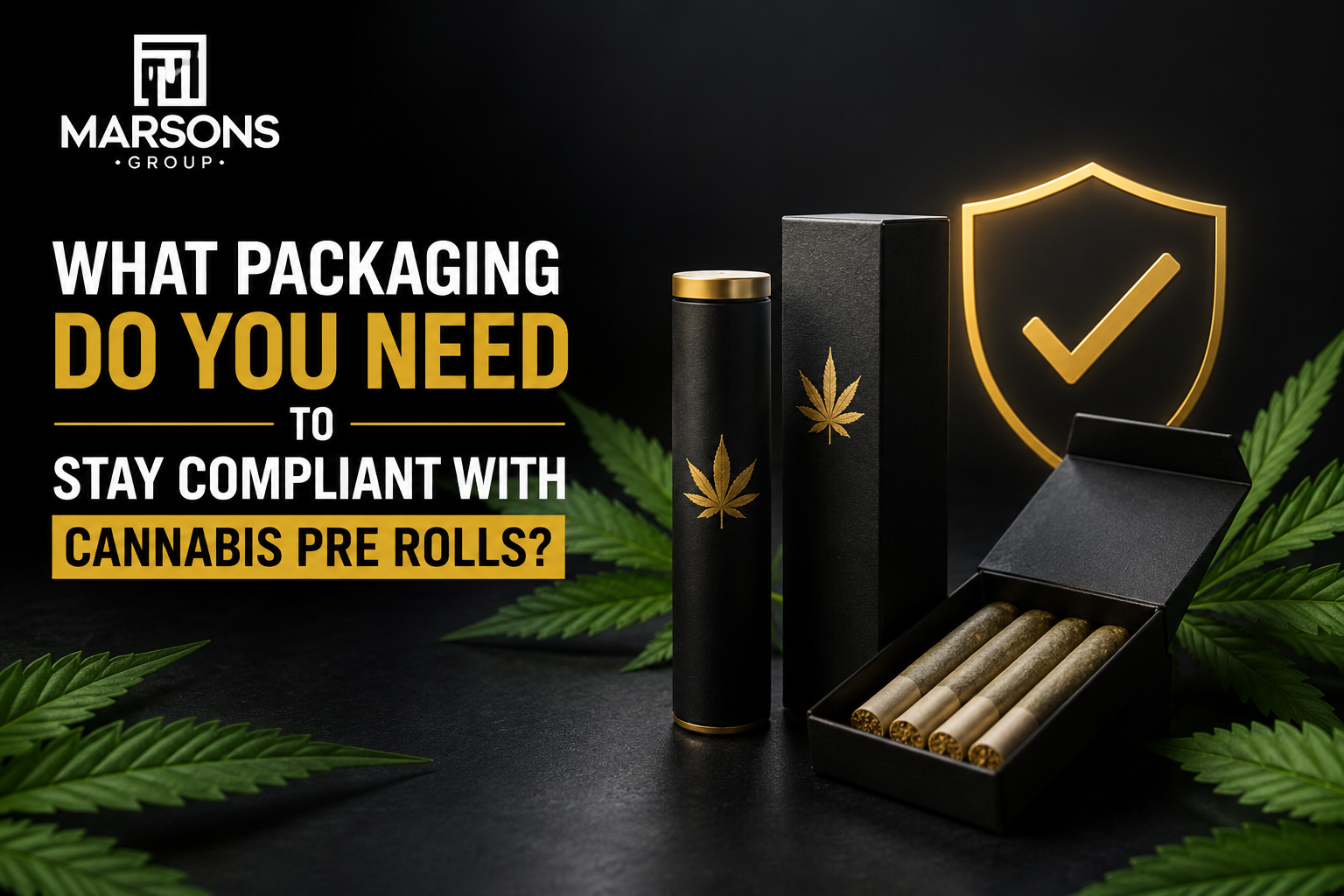
Cannabis pre rolls are one of the fastest-growing categories at dispensary counters, but they’re also one of the most tightly regulated when it comes to packaging. A single non-compliant tube or bag can trigger product recalls, retail rejections, or costly fines long before the product ever reaches a consumer. For brands and manufacturers, understanding pre roll packaging requirements isn’t optional; it’s the foundation of a sellable, shelf-ready product.
This guide breaks down exactly what compliant pre roll packaging looks like in 2026, from child-resistant standards to labeling rules and the equipment that makes compliance repeatable at scale.
Why Compliant Pre Roll Packaging Matters
Packaging is often the last thing brands think about and the first thing regulators check. Every state cannabis authority requires pre rolls to be sold in packaging that protects children, prevents tampering, and clearly communicates potency and health warnings to the consumer. Get any one of these elements wrong, and a batch can be pulled from shelves regardless of how well the product itself was made.
Beyond the legal risk, packaging directly affects freshness, shelf life, and brand perception. A poorly sealed tube lets moisture and air degrade the flower, while non-compliant labeling can delay retail listings for weeks. Treating pre roll packaging as a compliance-first design decision, not an afterthought, protects both your license and your bottom line.
Dispensary Packaging Requirements: What Regulators Expect
Dispensary packaging requirements vary by state, but most licensing authorities converge on a few non-negotiable standards. Products must be opaque so contents aren’t visible from outside, clearly labeled with cannabinoid content and government warning statements, and free of any imagery that could appeal to minors. Many states also require a universal cannabis symbol printed on the packaging itself.
At the point of sale, dispensaries typically must place purchased products into a certified child-resistant exit bag before the customer leaves the store, even if the pre roll is already in its own compliant tube. This “double compliance” layer means brands need to design packaging that works both as primary product packaging and as part of a broader retail compliance chain. Manufacturers who understand these dispensary-level expectations upfront avoid costly repackaging or rejected shipments later.
Cannabis Pre Roll Child Resistant Packaging Explained
Cannabis pre roll child resistant packaging is arguably the single most scrutinized requirement in the entire category. Federal guidance under the Poison Prevention Packaging Act sets the baseline, requiring packaging to be significantly difficult for children under five to open while remaining usable for adults. States have layered their own testing protocols on top of this baseline, and 2026 has brought some of the strictest standards yet.
Several states have moved beyond simple push-and-turn caps toward full third-party certified testing involving both child and senior test panels. Slide-lock tubes, once a common solution, have been banned outright in some states because they no longer meet updated child-resistance thresholds. Exit bags that once relied on printed warnings and a resealable zipper are now required to carry full CR certification in a growing number of markets.
For brands, this means CR packaging can’t be assumed compliant just because it looks similar to a previous approved design. Every material and closure mechanism needs documented, lab-verified testing on file, and that documentation needs to be refreshed periodically or whenever the design changes.
Essential Components of Compliant Pre Roll Packaging
Child-Resistant Containers
The tube or container itself is the first compliance checkpoint. Push-and-turn caps, squeeze-and-turn closures, and locking hinged lids are the most widely accepted mechanisms across state markets. Multi-pack pre rolls add an extra layer of complexity, since the entire container must remain child-resistant even after the first use, a detail that trips up many first-time packaging buyers.
Accurate Labeling & Warnings
Labels must include potency information, serving size, batch or lot numbers, and state-mandated warning statements in a specified minimum font size. Some states also restrict the placement and size of branding relative to compliance text, and packaging that leaves too little room for these elements often has to be redesigned entirely before it can go to market.
Tamper-Evident Seals
Tamper-evident features, such as shrink bands, foil seals, or heat-sealed closures, reassure both regulators and consumers that a product hasn’t been opened or altered before purchase. These seals are increasingly required alongside, not instead of, child-resistant closures, meaning packaging often needs to satisfy both standards simultaneously.
Cannabis Compliance Packaging Equipment You Need
Meeting these standards consistently, batch after batch, is nearly impossible to do by hand at any real production volume. This is where cannabis compliance packaging equipment becomes essential rather than optional. Automated capping and sealing machines apply CR closures with consistent torque, ensuring every tube passes the same standard a lab-tested sample did. Print-and-apply labeling systems reduce human error on warning text, font size, and batch coding, details regulators check closely during inspections.
Tube loading, weigh-filling, and induction sealing equipment also plays a role in compliance indirectly, by keeping product weight and moisture levels consistent enough to match what’s declared on the label. Investing in the right equipment early doesn’t just speed up production; it turns compliance into a repeatable, documented process rather than a manual checklist that’s easy to get wrong under deadline pressure.
How Automation Streamlines Compliance
Automation does more than increase output; it removes the variability that leads to compliance failures in the first place. When filling, rolling, and packaging are handled by calibrated machinery instead of manual labor, batch weights stay consistent, seals are applied uniformly, and labeling errors drop sharply. For operations scaling beyond a few thousand units a month, this consistency is often what separates a smooth inspection from a costly recall.
If you’re evaluating how these systems actually function on a production floor, our breakdown of a Cannabis Cigarette Machine: How It Works & Why You Need One walks through the mechanics of automated rolling and packaging in more detail, including how it integrates with downstream labeling and sealing equipment.
Choosing the Right Packaging Solution for Your Brand
Not every operation needs the same packaging setup. Craft producers running smaller batches may prioritize flexible, lower-minimum-order tubes and semi-automatic labeling, while multi-state operators typically need fully integrated lines that can fill, roll, seal, and label thousands of units per hour without compromising on compliance. What matters most is choosing equipment and materials that have documented CR certification, can adapt to state-specific labeling requirements, and scale with your production goals rather than forcing a redesign every time you enter a new market.
For brands looking to consolidate rolling and packaging into a single, compliant production step, exploring a Hemp Cigarette Making Machine is a practical next move. It’s built to handle consistent filling and rolling while keeping your output ready for compliant downstream packaging.
Final Thoughts
Pre roll packaging sits at the intersection of regulation, product quality, and brand trust. As child-resistant standards tighten and dispensary packaging requirements grow more detailed, brands that treat packaging as a compliance system, backed by the right materials and the right equipment, will spend less time fighting rejected batches and more time building a product people trust to buy again. Getting the packaging right isn’t just about passing inspection; it’s about proving, every time, that your operation takes safety as seriously as your customers do.