
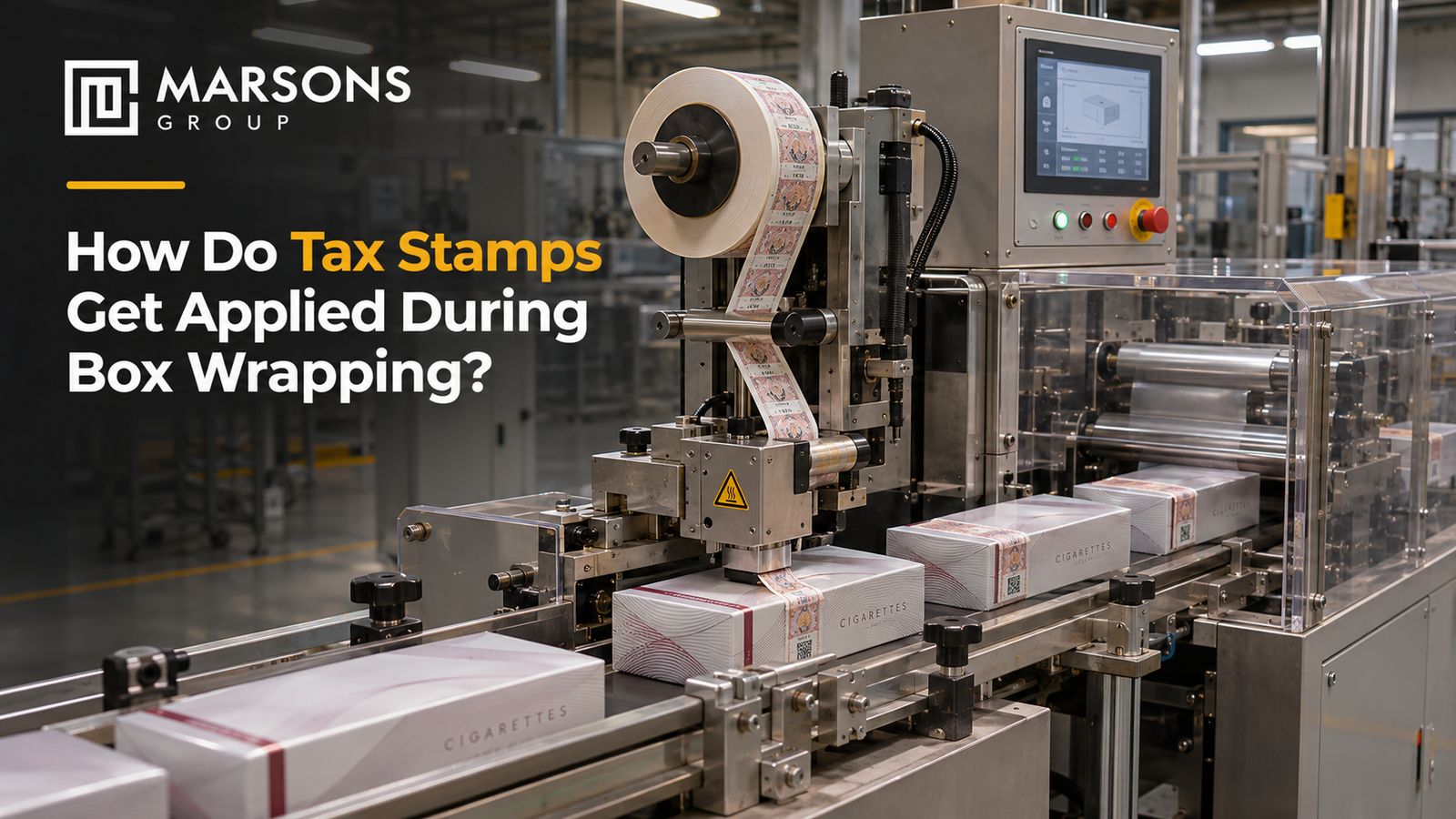
Tax stamps are an important part of cigarette packaging in markets where governments require official excise markings or product identification. However, their application is often confused with tear tape, the narrow strip used to open protective wrapping film. Although both processes may operate within the same packaging line, they serve different purposes and require different equipment. Understanding how a tear tape machine works alongside tax stamp application systems can help manufacturers evaluate machinery compatibility and regulatory requirements. For businesses exploring automated packaging solutions, Marsons Group offers Cigarette Box Wrapping Machines for different production configurations. This guide explains how tax stamps are applied, how wrapping equipment integrates with stamp applicators, and which technical and compliance factors manufacturers should consider.
What Are Cigarette Tax Stamps and Why Are They Required?
Cigarette tax stamps are official markings used by government authorities to support excise administration, product identification, and measures against illicit tobacco trade. Depending on the country, these markings may include security features, unique identification codes, or other information required by tax authorities. In Pakistan, for example, the Federal Board of Revenue operates a Track and Trace System that uses Unique Identifying Marks on applicable cigarette packages. Other markets have their own requirements concerning the appearance, placement, and verification of excise markings. Tax stamps should not be treated as ordinary packaging decorations because they serve regulatory functions. Manufacturers must confirm which requirements apply to the intended destination market before selecting equipment or approving packaging designs.
How Does a Tear Tape Machine Work in Cigarette Packaging?
A tear tape machine applies a narrow opening strip to the protective film used around cigarette packs. The strip allows the outer wrapping to be opened by pulling the tape along its intended path. In an automated system, tear tape is typically supplied from a roll and attached to the moving wrapping film through a suitable bonding process. The film then passes through the remaining wrapping operations. Accurate tape positioning is necessary to ensure consistent packaging and convenient opening. However, tear tape application has a different purpose from tax stamp application. A tear tape system does not automatically dispense, position, or verify official excise markings. Manufacturers should also confirm whether tear tape is permitted under the packaging regulations of their destination market.
Is Tax Stamp Application Part of the Wrapping Machine or a Separate Process?
Tax stamp application may be integrated into a wrapping machine or performed through a dedicated applicator connected to the packaging line. The arrangement depends on machine design, pack format, production capacity, and regulatory requirements. Some packaging configurations apply stamps before the protective film is wrapped around the pack, while others require a different sequence to satisfy local rules. Dedicated applicators may include stamp feeding, positioning, inspection, and rejection functions. Manufacturers should not assume that an automatic wrapper includes these capabilities as standard. When evaluating a tax stamp box wrapper arrangement, it is important to establish which functions are built into the equipment and which require additional machinery. This distinction can affect installation costs, line integration, maintenance, and overall production efficiency.
Step by Step: How Tax Stamps Are Applied During Cigarette Box Wrapping
In a typical automated arrangement, finished cigarette packs enter the stamp application station through a controlled feeding system. The equipment positions each pack so the applicator can place an authorized stamp at the required location. Stamps are supplied through a dedicated feeding mechanism and applied using a method compatible with the packaging material and stamp specifications. After application, an inspection system may check whether the marking is present, positioned correctly, and readable where required. Packs that fail inspection are separated according to the approved rejection procedure. Accepted packs continue through the remaining packaging operations. The precise sequence varies between machines and jurisdictions, so manufacturers must verify whether stamping occurs before or after the outer wrapping stage.
How Wrapping Machines and Tax Stamp Applicators Work Together
Successful stamp application depends on accurate coordination between the wrapping equipment and the applicator. Packs must arrive at the stamping station in a consistent position, while sensors and machine controls coordinate the timing of each application cycle. The applicator must also operate at a capacity compatible with the surrounding packaging machinery. If its sustainable output is lower than the wrapping line’s production rate, it may create a bottleneck. Mechanical connections, product handling arrangements, and communication between control systems should therefore be evaluated before installation. Wrapping machine stamp integration may also require changes to existing conveyors, guarding, or control settings. Manufacturers should request technical specifications and confirm compatibility through appropriate testing rather than relying solely on advertised machine speeds.
Tax Stamp Placement, Alignment, and Packaging Quality Requirements
Correct stamp placement is essential because different countries establish different regulatory conditions. In Pakistan, applicable unique identification markings are intended to cover the package opening and be destroyed when the package is opened. Canadian excise rules establish different requirements, including conditions concerning visibility, package sealing, and continued attachment. European Union tobacco rules also address unique identifiers, security features, and the visibility of required packaging information. These differences make it inappropriate to apply one universal positioning standard across every market. Manufacturers should verify the correct location, orientation, adhesion, and applicable readability requirements before approving production. Poor alignment or unsuitable placement can create compliance problems even when the stamp itself is genuine.
How Automated Inspection and Track and Trace Systems Verify Tax Stamps
Applying an excise stamp is only one stage of the compliance process. Depending on the applicable regulations, manufacturers may also need to verify the marking and maintain records connecting identification information with production activities. Automated inspection systems can help identify missing, incorrectly positioned, or unreadable markings according to their configured capabilities. Some systems use cameras or sensors to check stamp placement and product identification. Packs that fail inspection may be rejected automatically for further handling. It is important to distinguish between tax stamps, unique identifiers, and security features because their functions differ between regulatory frameworks. A properly configured inspection arrangement supports compliance, but manufacturers must still satisfy the relevant reporting, traceability, and documentation obligations.
Common Problems During Tax Stamp Application and How to Prevent Them
Automated stamp application can experience problems involving pack positioning, stamp feeding, alignment, adhesion, and inspection accuracy. If packs move inconsistently through the station, the applicator may fail to place stamps at the required location. Damaged stamp materials or incorrect machine adjustments can also interrupt production. Sensor faults may cause unnecessary rejection or allow defective packs to continue without appropriate verification. Maintenance teams should inspect the relevant components, review machine settings, and investigate recurring problems before replacing equipment. Regular cleaning, suitable material handling, and documented quality checks can help reduce avoidable interruptions. However, missing or defective regulatory markings must be handled according to applicable procedures rather than treated as ordinary cosmetic packaging defects.
How to Choose a Wrapping Machine Compatible With Tax Stamp Application
Selecting suitable wrapping equipment requires evaluating more than the machine’s rated production speed. Manufacturers should confirm the supported pack dimensions, wrapping film specifications, stamp application requirements, and available space for additional equipment. It is also important to determine whether the wrapper supports a separate applicator or requires modifications to its existing configuration. Production testing with representative packaging materials can help identify potential compatibility issues. The development of automated wrapping systems is discussed further in From Manual to Automatic: The Evolution of Cigarette Box Wrapping. Understanding these developments can help buyers appreciate how integrated packaging operations differ from simpler equipment arrangements. The appropriate machine should support the required packaging process without compromising regulatory compliance or production reliability.
What to Check Before Integrating Tax Stamp Equipment Into Your Production Line
Before installing tax stamp application equipment, manufacturers should review the technical requirements of their existing packaging line. Important considerations include machine capacity, pack orientation, product transfer arrangements, available installation space, and control system compatibility. Buyers should also confirm the stamp dimensions, approved application position, inspection requirements, and procedures for handling rejected products. Where relevant, the system must support the identification and reporting obligations established by the destination market. Installation responsibilities, operator training, maintenance requirements, spare parts availability, and technical support should be discussed with the equipment supplier. A documented acceptance test can help establish whether the integrated system applies and verifies markings consistently under agreed operating conditions. Regulatory approval should be confirmed before commercial production begins.
Conclusion:
Tax stamp application is a regulated packaging activity that requires appropriate equipment, accurate positioning, and reliable verification. Although a tear tape machine and a stamp applicator may operate within the same cigarette packaging line, their functions are fundamentally different. Tear tape provides a means of opening protective wrapping, while tax stamps support applicable excise and product identification requirements. Manufacturers must consider equipment compatibility, application sequence, inspection capabilities, and destination market regulations before integrating these systems. The correct arrangement depends on the packaging format and the requirements of the relevant authorities. Careful equipment selection, technical testing, and appropriate quality controls can help manufacturers maintain consistent packaging operations while meeting their regulatory responsibilities.