
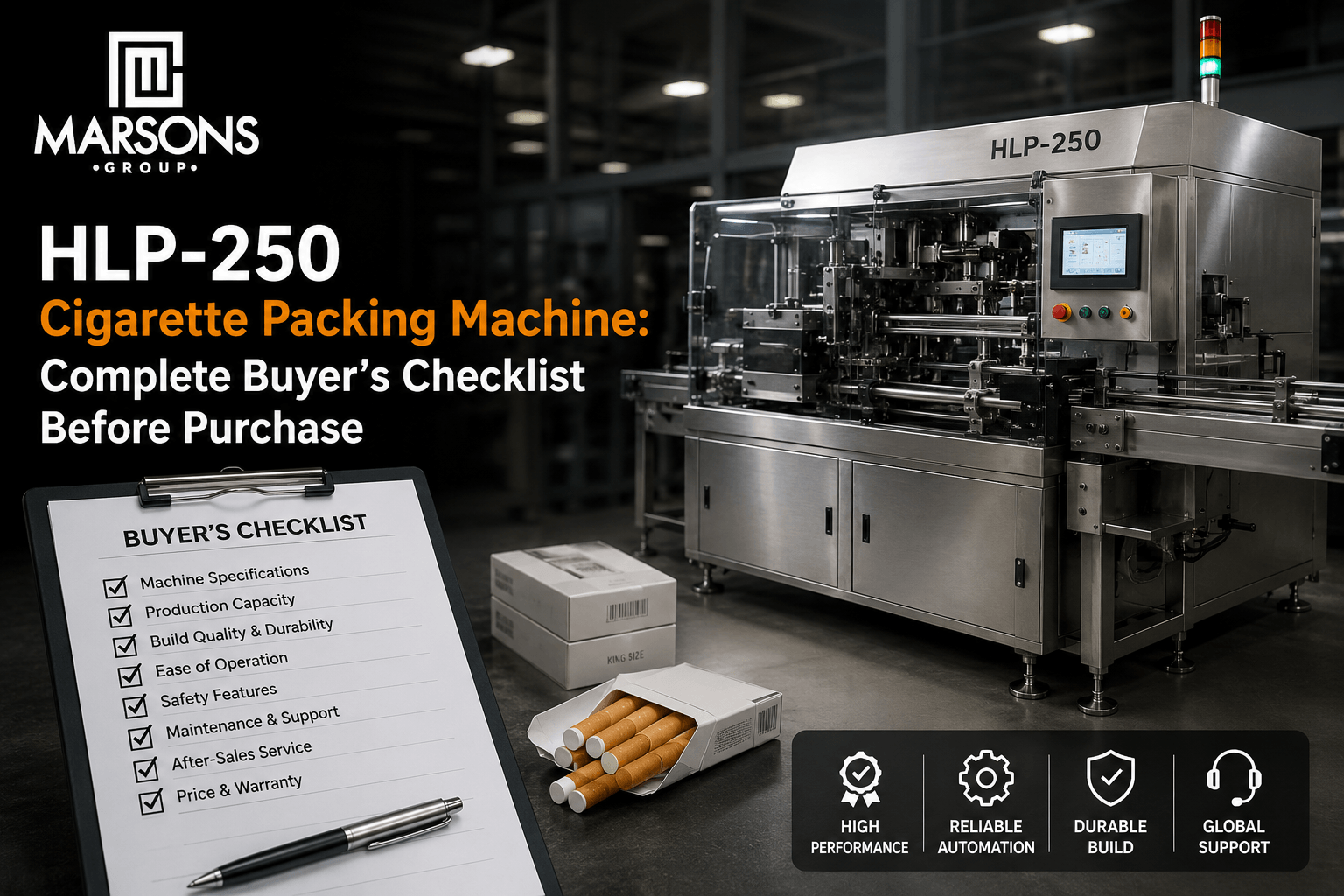
Buying a cigarette packing machine without a proper checklist is how facilities end up with equipment that looks right on paper but causes problems the moment it hits the production floor. The HLP-250 is one of the most proven hard-box packing machines in the industry. But proven does not mean every unit out there is worth buying. Condition varies, specs differ, and seller support ranges from excellent to nonexistent. This is not a generic buying guide. It is a practical walkthrough of everything worth checking before you commit.
Start With the Machine’s Core Function
Before anything else, get clear on what the HLP-250 actually does and whether it matches what your production line needs.
The HLP250 machine is a hard-box cigarette packing machine. It is designed to pack cigarettes into rigid flip-top boxes, which is the standard format for most commercial cigarette brands globally. If your production requires soft-pack format, this is not the machine for that. Knowing this upfront saves a lot of wasted conversations with sellers.
The machine handles the full packing sequence. It takes the cigarette group, wraps the inner foil, applies the outer carton, folds and tucks every panel, applies the revenue stamp where required, and then seals the pack with overwrap film. All of this happens in one continuous automated process.
Check the Output Speed Against Your Actual Needs
Speed is usually the first number buyers look at, and it matters, but context matters more.
The HLP-250 packing machine specs typically put output in the range of around 250 packs per minute under optimal conditions. That is a serious production rate, and for most mid to large scale facilities it is more than sufficient. But optimal conditions in a spec sheet and real-world conditions on your floor are two different things.
Ask the seller what speed the machine realistically sustains during a full production shift. Ask what happens to output rates when the line runs for six, eight, ten hours. A machine that hits peak speed for an hour and then drops off is not the same as one that holds steady throughput all day.
Also consider whether 250 packs per minute is actually what you need right now. Oversizing your packing capacity relative to your making line creates bottlenecks elsewhere and ties up capital in equipment running below its potential.
Inspect the Mechanical Condition Thoroughly
If you are looking at HLP 250 packing machine for sale listings, especially for rebuilt or refurbished units, the mechanical condition of the specific machine you are buying deserves serious attention.
Ask for a full service history if one exists. Find out how many hours the machine has run. Ask which components have been replaced and when. Key wear areas to specifically ask about include the folding mechanisms, the gluing system, the overwrap unit, and the drive components. These are the parts that accumulate wear fastest and are most likely to need attention.
If at all possible, request a video of the machine running at production speed. Reputable sellers will not have any issue with this. If someone is reluctant to show the machine operating, that is worth paying attention to.
For buyers who can arrange it, a physical inspection before purchase is always preferable. Even a few hours on-site with someone who knows cigarette packing equipment can surface issues that are invisible in photos and videos.
Verify Format Compatibility With Your Cigarettes
This is a detail that gets skipped more often than it should, and it causes real problems after purchase.
The cigarette packing machine HLP 250 is set up to run specific cigarette formats. The standard configuration handles king size cigarettes in a 20-stick hard box format, but machines can be configured differently. Before buying, confirm the exact format the machine is currently configured for and whether it matches what you are producing.
If you need to run a different format, find out whether the machine can be reconfigured and what that involves. Some format changes are straightforward and just require a changeover kit. Others require more significant mechanical adjustment. Know what you are walking into before the machine is on your floor.
Also confirm the pack dimensions the machine produces. Different markets have different standard pack sizes, and if you are selling into regulated markets, your pack dimensions need to meet specific requirements.
Ask About Spare Parts Availability
This is one of the most important questions on this entire checklist and one of the most commonly skipped.
The HLP250 machine has been in production for a long time, which is actually a positive thing from a parts perspective. There is an established supply of spare parts in the market, and experienced tobacco machinery suppliers typically carry stock of the most commonly needed components.
But not every seller has equal access to parts. Before you buy, ask specifically which parts the seller can supply and at what lead times. Ask about the availability of the folding tools, the gluing nozzles, the cam followers, and the main drive belts. These are the components you will most likely need at some point, and knowing you can get them quickly when the time comes matters enormously for keeping your line running.
Downtime on a packing line is expensive. A machine that sits idle for two weeks waiting for a part to arrive from overseas is a problem that good pre-purchase questions can help you avoid.
Understand What After-Sales Support Actually Looks Like
There is a difference between a seller who offers support and one who delivers it.
When evaluating any supplier for the HLP-250 packing machine specs or the machine itself, ask direct questions about what happens after the sale. Is installation support available? Will a technician come on-site to commission the machine and train your operators? What is the response time if something goes wrong in the first few months?
These questions reveal a lot about who you are actually dealing with. A supplier who has real after-sales infrastructure will answer these questions confidently and specifically. One who gives vague answers or deflects is telling you something important.
For manufacturers who want a clearer picture of what proper after-sales support looks like in the tobacco machinery space, the cigarette packing machines section on the Marsons Group website outlines both the equipment they supply and the support structure they offer alongside it. It is a useful reference point for understanding what a full-service supplier relationship should look like.
Think About Integration With Your Existing Line
A packing machine does not operate in isolation. It needs to receive cigarettes from your making machine, and its output needs to feed into your wrapping and carton line if you have one.
Before finalizing any purchase, map out exactly how the HLP 250 packing machine for sale you are considering will connect to the rest of your production setup. Check the feed conveyor height and format. Check the output conveyor direction and speed. Confirm that your making machine’s output rate is compatible with the packing machine’s input requirements.
Mismatches here are more common than most buyers expect, and fixing them after installation adds cost and delays production startup.
Conclusion
Run through everything one more time with fresh eyes. Confirm the format compatibility, the mechanical condition, the parts availability, and the after-sales support. Make sure the speed matches your actual production needs, not just your aspirational ones.
The HLP-250 cigarette packing machine is a reliable piece of equipment with a long track record in commercial tobacco production. Buying the right one from the right supplier, with the right support behind it, sets your production line up properly. Rushing the decision or skipping the checklist is where things tend to go wrong.