Cigarette manufacturing is a complex process involving high speed machines that form, filter, and pack cigarettes continuously. Ensuring optimal performance requires regular maintenance to minimize downtime, reduce defects, and extend the lifespan of machinery. Experienced manufacturers like Marsons Group emphasize preventive and systematic maintenance to keep production lines running efficiently.
This guide highlights maintenance best practices for cigarette making and packing machines.
1. Implement a Preventive Maintenance Schedule
Preventive maintenance involves performing regular checks and servicing tasks to prevent unexpected breakdowns.
Key steps include:
- Daily inspection of moving parts for wear and tear
- Lubrication of bearings, chains, and gears
- Checking alignment of rods, belts, and rollers
- Inspecting electrical components and connections
Scheduling preventive maintenance reduces sudden stoppages, improves reliability, and prolongs machine life.
2. Clean Machines Regularly
Tobacco dust, paper residues, and adhesive buildup can negatively affect machine performance. Regular cleaning ensures smooth operation.
Cleaning Guidelines:
- Remove accumulated dust and debris from feed hoppers and cutting units
- Wipe down sensors and electronic components carefully
- Clean adhesive applicators and filter units
- Avoid harsh chemicals that may damage machine parts
Consistent cleaning improves product quality and prevents mechanical issues caused by contamination.
3. Monitor and Adjust Tobacco Weight and Density Systems
Precision is crucial in cigarette production. Weight and density variations can lead to product defects.
Maintenance practices include:
- Calibrating weight control sensors periodically
- Checking compression rollers for wear
- Verifying consistent tobacco feed and moisture levels
- Adjusting systems based on real-time production data
Proper calibration ensures uniform cigarette quality and reduces material waste.
4. Inspect Cutting and Rod Formation Units
Cigarette rods and filters must be cut and formed accurately. Misalignment or worn components can lead to defective products.
Best practices:
- Inspect knives, blades, and cutting mechanisms for sharpness
- Check alignment of rod forming units
- Replace worn components promptly
- Monitor output for irregular lengths or density
Regular inspection keeps production within quality standards and reduces rejects.
5. Maintain Packing Machines for Smooth Operation
Packing machines handle high volumes of cigarettes and require careful attention.
Maintenance tips:
- Check wrapping units for proper tension and sealing
- Inspect cartons and foil feeders for jams or misfeeds
- Lubricate moving parts as per manufacturer recommendations
- Test sensors and actuators for consistent performance
A well-maintained packing line ensures fast, accurate, and defect-free packaging.
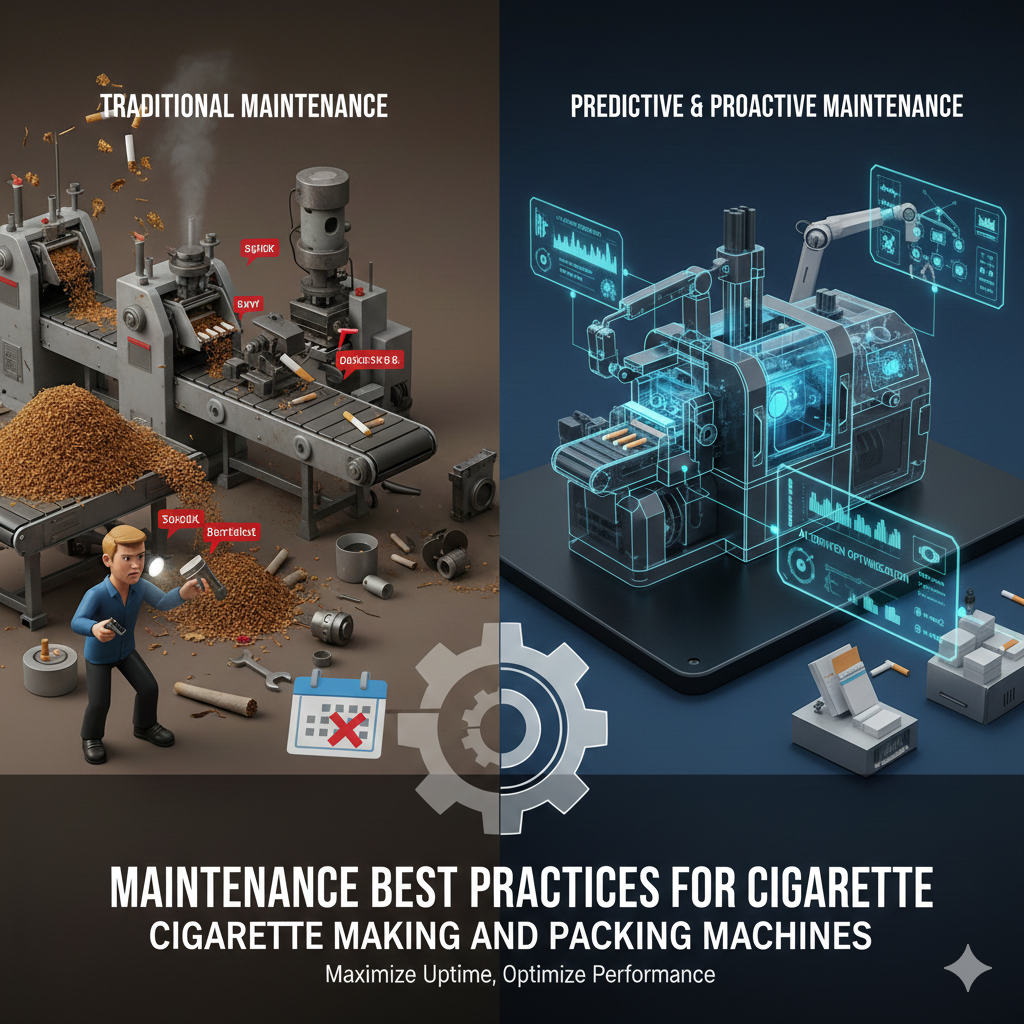
6. Utilize Predictive Maintenance Tools
Modern cigarette machines often include sensors and diagnostic systems that allow predictive maintenance.
Benefits:
- Detect early signs of wear or failure
- Schedule maintenance before breakdown occurs
- Reduce unexpected downtime and costly repairs
- Optimize machine performance through real-time data
Implementing predictive maintenance complements preventive practices for maximum efficiency.
7. Train Operators and Technicians
Even the most advanced machines require skilled personnel to maintain them effectively.
Training should cover:
- Proper machine handling and operation
- Daily inspection routines and minor adjustments
- Lubrication and cleaning procedures
- Troubleshooting common faults
Well-trained staff improve machine longevity and maintain consistent production quality.
8. Keep Detailed Maintenance Records
Documenting maintenance activities ensures accountability and helps identify recurring issues.
Recordkeeping practices:
- Track daily, weekly, and monthly maintenance tasks
- Note parts replaced and services performed
- Monitor downtime and causes
- Use records to plan future maintenance schedules
Accurate records enhance operational efficiency and reduce unplanned stoppages.
Conclusion
Regular and systematic maintenance is essential for cigarette making and packing machines. Implementing preventive maintenance, cleaning routines, proper calibration, predictive monitoring, and staff training ensures high production efficiency, consistent product quality, and extended equipment life.
Partnering with experienced manufacturers like Marsons Group can provide guidance, spare parts, and technical support to maintain your machines at peak performance.
For reliable and efficient cigarette production, contact Marsons Group today to learn how to optimize your maintenance practices and improve factory performance.