Investing in cigarette manufacturing equipment requires careful consideration of production capacity, operating costs, and long term business requirements. One important decision is whether to purchase a cigarette filling machine as a standalone unit or choose an integrated manufacturing system. Both options offer advantages, but the right choice depends on your existing machinery, production workflow, and available budget. While separate equipment may provide operational flexibility, integrated systems can simplify coordination between manufacturing stages. Understanding these differences helps manufacturers avoid unnecessary investments and equipment compatibility problems. For businesses evaluating production machinery, Marsons Group offers a range of Cigarette Making Machines suitable for different manufacturing requirements. This guide examines the benefits, limitations, costs, and practical considerations involved in choosing between standalone and integrated filling equipment.
What Is a Cigarette Filling Machine and How Does It Work?
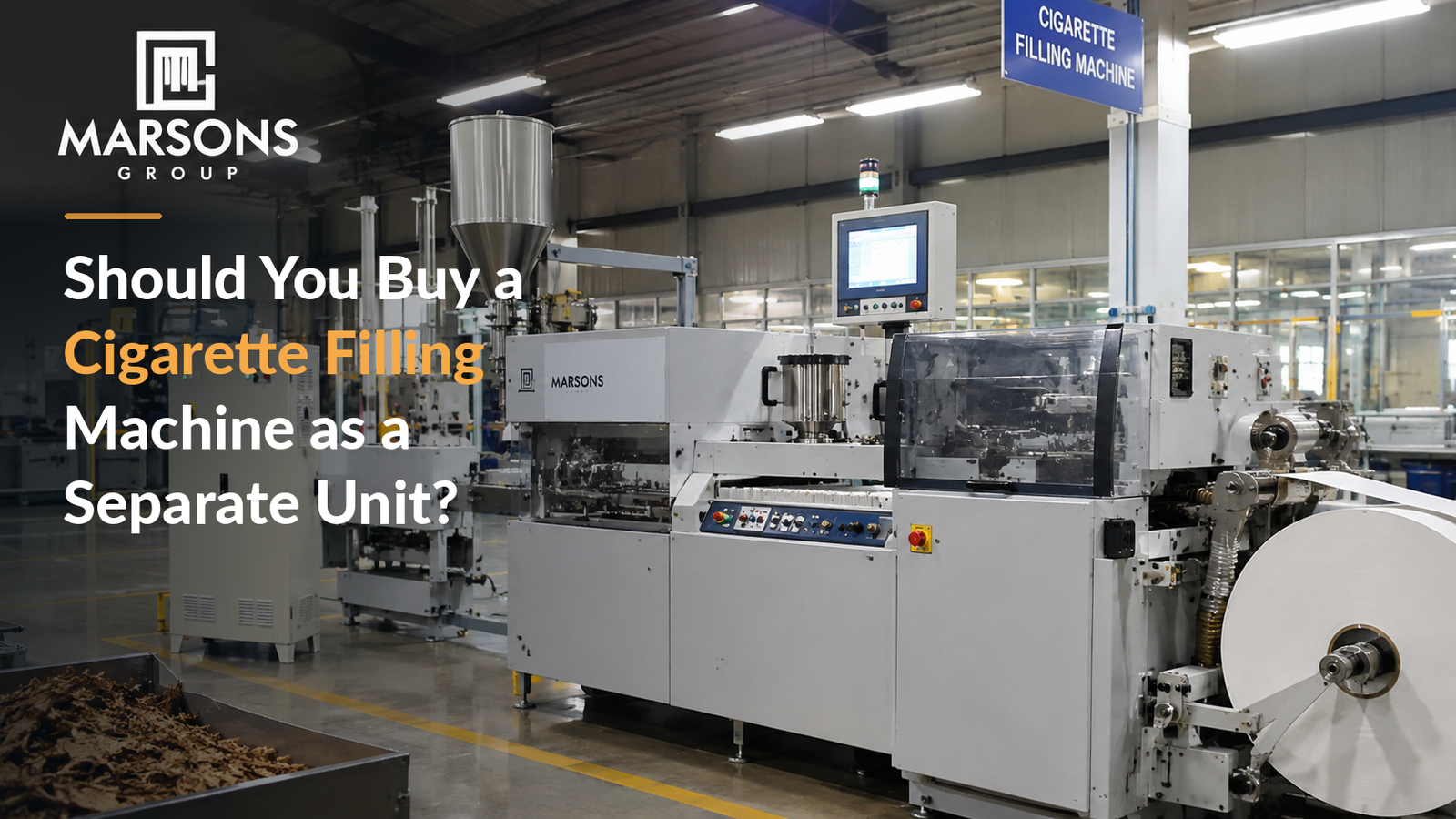
A cigarette filling machine is equipment used to perform a specific filling or material handling function during cigarette production. However, the term can refer to different types of machinery depending on the manufacturing process. Cigarette tube filling machines insert prepared tobacco into empty cigarette tubes, while industrial tray filling machines collect manufactured cigarettes into trays for temporary storage or transportation between production stages. These machines perform different tasks and should not be confused with complete cigarette making systems. Industrial cigarette making equipment typically forms tobacco rods through a continuous manufacturing process. Understanding these distinctions is important because machine selection depends on the exact production activity being performed. Before comparing equipment, manufacturers should identify whether they require tobacco filling, cigarette handling, or a complete production solution.
Understanding Standalone and Integrated Cigarette Filling Systems
Standalone equipment operates as an individual production unit, while integrated systems connect multiple manufacturing functions within a coordinated workflow. A separate filling machine may perform one task independently, allowing manufacturers to manage that stage without replacing other equipment. Integrated configurations, however, combine compatible machinery and automated handling systems to support continuous production. For example, a cigarette making line may incorporate filter attachment equipment and tray filling mechanisms that operate together. The main difference between a standalone vs integrated filling unit involves how production stages are connected, controlled, and maintained. Standalone machines may require additional material transfer arrangements, whereas integrated systems are designed around coordinated operations. Neither configuration is automatically superior because their suitability depends on production capacity, factory layout, and existing equipment.
What Are the Benefits of Buying a Separate Cigarette Filling Machine?
Purchasing a separate cigarette filling machine can offer greater flexibility when upgrading an existing manufacturing facility. Instead of replacing an entire production line, manufacturers may introduce equipment to address a particular operational requirement. This approach can be useful when one production stage needs additional handling capacity or when equipment must be replaced independently. Standalone machinery may also allow businesses to expand gradually rather than committing to a completely new integrated system. Another potential advantage is the ability to maintain or replace individual equipment without modifying every connected production component. However, these benefits depend on machine compatibility and the availability of suitable material handling arrangements. A separate machine is most valuable when it addresses a clearly identified production need rather than adding unnecessary complexity.
When Does an Integrated Filling System Make More Sense?
Integrated filling systems can be more practical for manufacturers establishing new production lines or seeking coordinated manufacturing operations. By connecting compatible equipment, these systems can reduce certain manual handling activities and improve synchronization between production stages. Integrated configurations may combine cigarette making, filter attachment, and tray filling functions within a connected manufacturing arrangement. This can simplify material movement when equipment capacities and operating requirements are properly matched. However, integrated systems may require greater initial investment and more comprehensive installation planning. Maintenance can also affect multiple connected processes when essential components are unavailable. Manufacturers should consider whether their production demand justifies a coordinated system and whether future expansion will remain possible. The decision should reflect operational requirements rather than automation alone.
How Production Capacity and Automation Affect Your Decision
Production capacity is one of the most important considerations when selecting a cigarette filling machine. Manufacturers should evaluate how much equipment can process under realistic operating conditions rather than relying exclusively on advertised maximum speeds. A standalone tray filler may have a higher cigarette handling capacity than the output of the cigarette making equipment supplying it. However, handling capacity and manufacturing output are different measurements and should not be compared directly. The overall production line is generally limited by its slowest essential operation. Automation also affects labour requirements, material movement, and equipment coordination. Before purchasing machinery, manufacturers should determine expected production volumes, available operating hours, and potential bottlenecks. Choosing equipment that matches the complete workflow can help prevent unnecessary capacity imbalances.
Comparing the Costs of Standalone and Integrated Filling Equipment
The cost of standalone and integrated cigarette filling equipment varies according to machine specifications, automation, condition, and installation requirements. A standalone unit may require a smaller initial investment when a manufacturer needs to upgrade only one production stage. However, additional costs may arise from conveyors, electrical connections, control systems, and equipment integration. An integrated system may involve a higher purchase price but could reduce certain material handling requirements. Operating expenses should also be considered, including electricity, labour, maintenance, and replacement components. Manufacturers should request detailed quotations covering installation, commissioning, technical assistance, and spare parts. Comparing total ownership costs rather than purchase prices alone provides a clearer understanding of the financial differences between both configurations.
Maintenance, Spare Parts, and Operational Flexibility
Maintenance requirements play an important role in determining whether standalone or integrated equipment is more suitable. A separate machine may allow technicians to inspect and service individual components without directly dismantling other production equipment. However, a failure in an essential standalone unit can still interrupt the entire manufacturing process if no alternative arrangement exists. Integrated systems may simplify certain operational activities but can require coordinated maintenance across connected machinery. Spare parts availability, technician expertise, and equipment documentation should therefore be evaluated before purchase. Manufacturers should also consider whether replacement components will remain available for older or refurbished equipment. Establishing a preventive maintenance schedule and maintaining critical spare parts inventory can help reduce unexpected interruptions and support more reliable equipment operation.
Key Factors to Consider Before Buying Tobacco Filling Equipment
Selecting appropriate tobacco filling equipment requires examining both technical specifications and operational conditions. Manufacturers should verify machine capacity, supported product dimensions, material compatibility, electrical requirements, and available factory space. If the equipment will connect to an existing production line, compatibility with upstream and downstream machinery becomes particularly important. Control systems, transfer mechanisms, and communication arrangements should also be reviewed. Buyers should evaluate whether the equipment requires specialized installation, operator training, or additional safety measures. Machinery condition deserves attention when purchasing refurbished units, particularly regarding maintenance history and component availability. A detailed technical assessment can help identify potential integration challenges before the equipment arrives. These checks are essential for avoiding unexpected installation expenses and ensuring that the machinery meets its intended operational requirements.
How to Choose the Right Cigarette Filling Machine for Your Factory
Choosing the right cigarette filling machine begins with identifying the exact function your factory needs to perform. A manufacturer requiring tobacco insertion into prepared tubes will have different equipment requirements from a facility needing automated tray handling. Once the intended application is established, compare available machinery according to capacity, compatibility, maintenance requirements, and expected operating expenses. Ask suppliers for technical specifications, equipment condition reports, installation requirements, and details about after sales support. Where practical, request an equipment demonstration or suitable performance verification before purchasing. Manufacturers seeking broader guidance can explore the Cigarette Machine Manufacturer Guide for Modern Tobacco Production to understand important considerations when evaluating equipment suppliers. A structured purchasing process helps businesses select machinery based on actual production needs.
Common Mistakes to Avoid When Investing in Cigarette Filling Equipment
One common purchasing mistake is selecting machinery based entirely on advertised production speed without checking compatibility with existing equipment. A machine may offer impressive handling capacity but provide limited operational value when other production stages cannot support its output. Another mistake is confusing cigarette tube filling equipment with industrial tray fillers or complete cigarette making systems. Manufacturers may also underestimate installation expenses, maintenance requirements, and the availability of replacement components. Purchasing refurbished machinery without reviewing its condition or service history can introduce additional uncertainty. Businesses should avoid assuming that standalone equipment always costs less or that integrated systems automatically improve efficiency. Careful evaluation of production requirements, technical documentation, and total ownership costs can help prevent unnecessary investments.
Conclusion:
Purchasing a separate cigarette filling machine can be a practical investment when manufacturers need greater flexibility, targeted capacity improvements, or an upgrade to an existing production stage. However, integrated systems may offer advantages for facilities requiring coordinated manufacturing operations and continuous material movement. The most suitable option depends on production capacity, equipment compatibility, available capital, and long term operational requirements. Manufacturers should compare both configurations based on complete ownership costs rather than initial machinery prices alone. Installation, maintenance, spare parts availability, and technical support also deserve careful consideration. By evaluating these factors before making a purchasing decision, businesses can select equipment that meets their specific production requirements without creating unnecessary operational complexity.