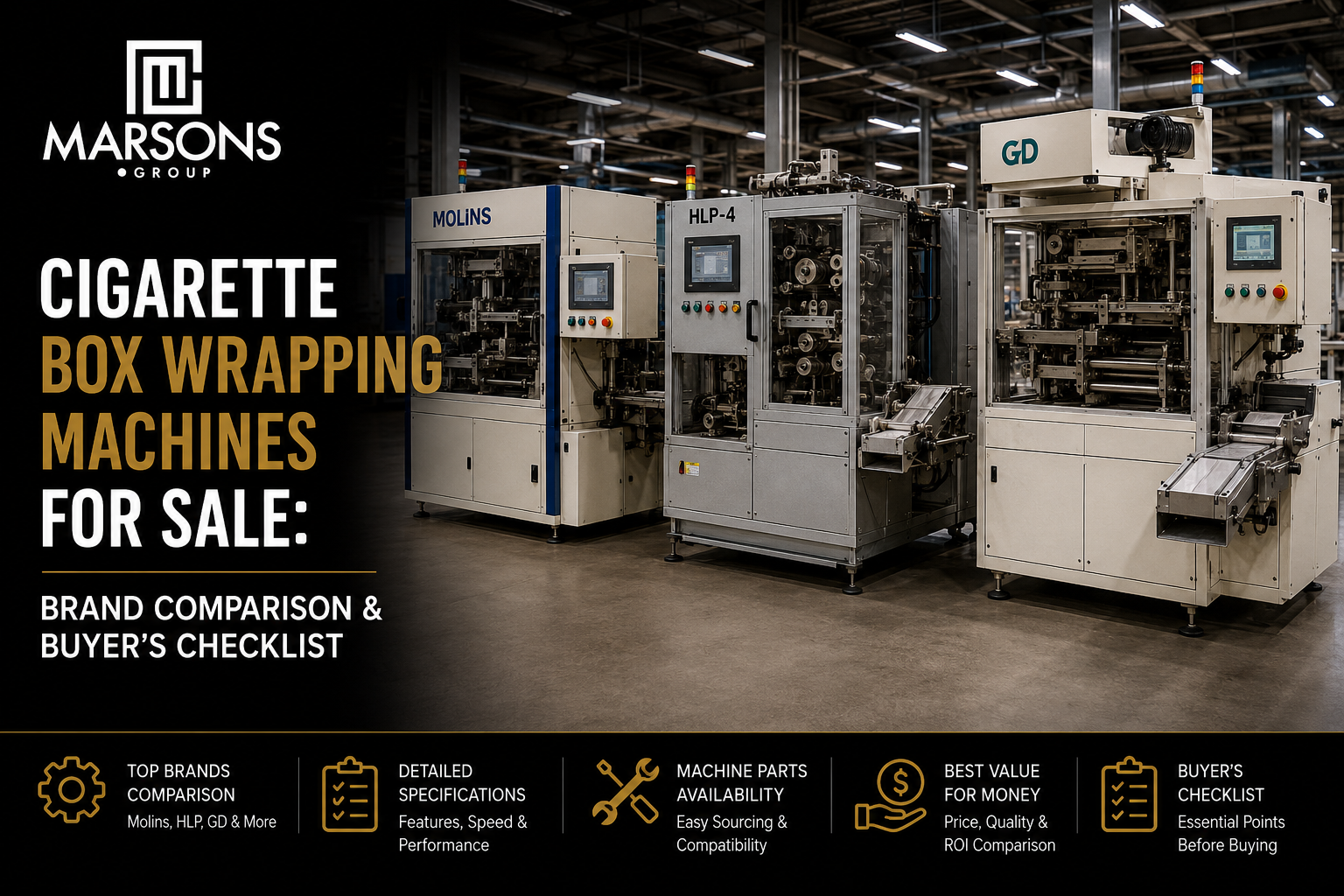
The wrapping stage sits at the very end of the line, and that is exactly why it deserves more attention than it usually gets. Everything your making and packing machines did well can be undone by a wrap that comes out loose, creased, or badly sealed. Buyers looking at Cigarette Box Wrapping Machines for sale often treat this purchase as an afterthought, and that is a mistake. The wrapping machine is the last thing to touch your product before it goes out the door, and the quality of its work is what your customer actually sees. This guide compares the main brands on the market and gives you a clear checklist to work through before you buy.
What a Wrapping Machine Actually Does?
A wrapping machine takes finished cigarette packs and covers them in the clear outer film that seals and protects the product. It pulls film from a reel, wraps it around the pack, folds the ends, and seals it with heat.
That sounds simple, but doing it well at speed, thousands of times an hour, is where the engineering matters. Film tension, sealing heat, cutting accuracy, and folding precision all have to stay right through a full shift. When any one of them drifts, the finished pack shows it straight away.
Some buyers confuse a wrapping machine with a cigarette box packing machine. They are different jobs. The packing machine builds the pack itself and puts the cigarettes inside. The wrapping machine comes after and applies the outer film. Both are needed on a full line, but they are not the same machine, and a supplier who blurs the two is not one to rely on.
The Main Brands on the Market
Cigarette Box Wrapping Machines come from a handful of established makers, and each has its own strengths.
Molins built some of the most widely used wrapping equipment in the industry. Their machines have a strong reputation for solid mechanical build and reliable sealing quality. Because they have been in service so long and in so many factories, most tobacco technicians know them well and parts are easy enough to find. For buyers who want proven, well-understood equipment, Molins is usually the safe starting point.
HLP equipment is another common choice, particularly for factories already running HLP packing machines. Keeping your line within one equipment family makes parts and servicing simpler, since your technicians work with familiar machines and your spare parts list stays shorter.
GD machines cover a range of packing and end-of-line equipment. They are engineered to fine tolerances and produce very clean results when properly maintained. They tend to suit larger factories with technical teams who can keep precision equipment in good shape.
Focke is known for precision engineering and consistently high pack quality. Their equipment holds tight tolerances, and the finished result reflects that. The tradeoff is that maintenance needs to be done properly, since the same precision that gives good results is less forgiving of neglect.
A regular cigarette wrapping machine from any of these brands will do the job if the specific unit is in good condition. That last part matters more than the badge on the side.
Comparing Brands the Right Way
Here is the honest truth about brand comparison in this market. Condition beats brand almost every time.
A well-maintained regular cigarette wrapping machine from a mid-tier maker will outperform a neglected machine from a top-tier brand. Buyers who focus only on the name miss this and end up disappointed. The questions that actually matter are how the specific unit has been treated, how many hours it has run, and whether parts are available for it.
That said, brand does affect a few practical things. Parts availability tends to be better for widely used brands. Technician familiarity is higher, which means faster fixes. And resale value holds up better if you ever need to move the machine on.
So use brand as one factor among several, not as the deciding one.
Buyer’s Checklist
Work through these points before committing to any purchase.
Check the wrap quality yourself: Ask for a video of the machine running at full speed and look closely at the packs it produces. Tight, smooth film with clean seals and neat folded ends means the machine is doing its job. Loose film, creases, or messy seals mean something needs work.
Ask for running hours and service history: A machine with proper records has usually been looked after. No records means you need a much closer physical inspection and a more careful approach to price.
Look at the sealing section: Heat sealing parts wear with use, and a worn sealing section gives weak or uneven seals. Ask when these parts were last replaced.
Check the cutting blades: Dull blades give rough cuts that show on every pack. Ask when they were last changed or sharpened.
Check film feed and tension parts: These control how tightly the film wraps. Worn parts here cause loose or creased wraps that are hard to fix by adjustment alone.
Confirm parts availability: Ask which spare parts your supplier stocks and what the wait is for anything they do not hold. A machine you cannot get parts for is a problem waiting to happen.
Confirm format compatibility: Make sure the machine handles the pack size and format you actually run. Ask what changing format involves if you run more than one.
Ask about setup support: Machines like this run far better when someone who knows them helps set them up on your floor. Remote advice is not the same thing.
Choosing the Right Supplier
The supplier matters as much as the machine. A good cigarette box packing machines supplier does more than send you a price. They inspect the machine, test it, tell you honestly what condition it is in, and stand behind the sale afterwards.
A poor supplier passes on whatever they can find, tells you what you want to hear, and disappears once payment clears. The difference between these two shows up the first time something goes wrong, which is exactly when you need help most.
Ask your supplier direct questions. Have they seen this machine run? What parts do they stock? Do they offer setup support? Can they help if the machine needs work six months from now? Clear, confident answers are a good sign. Vague ones are not.
For a full view of the wrapping equipment on offer right now, the cigarette box wrapping machines page on the Marsons Group website lists current stock with details. It is a useful place to compare what is actually available.
Buying From Marsons Group
Marsons Group has been in tobacco machinery since the 1960s. They supply Cigarette Box Wrapping Machines for sale across a range of brands, along with packing, making, and filter equipment, to factories in Pakistan, the Middle East, Africa, and beyond.
As a cigarette box packing machines supplier with decades in the trade, they inspect what they sell, stock the spare parts these machines need, and provide setup support and after-sales help. For any buyer who has dealt with a seller who vanished after payment, that ongoing support is worth a great deal.
Conclusion
Buying Cigarette Box Wrapping Machines for sale comes down to a few clear things. Check the actual condition of the specific unit rather than trusting the brand name alone. Look hard at wrap quality, sealing, and cutting. Confirm parts are available before you commit. And choose a supplier who stands behind what they sell. Get those right and your wrapping stage will quietly do its job every day, which is exactly what a good end-of-line machine should do. For more information, see Maintenance Best Practices for Cigarette Making and Packing Machines.