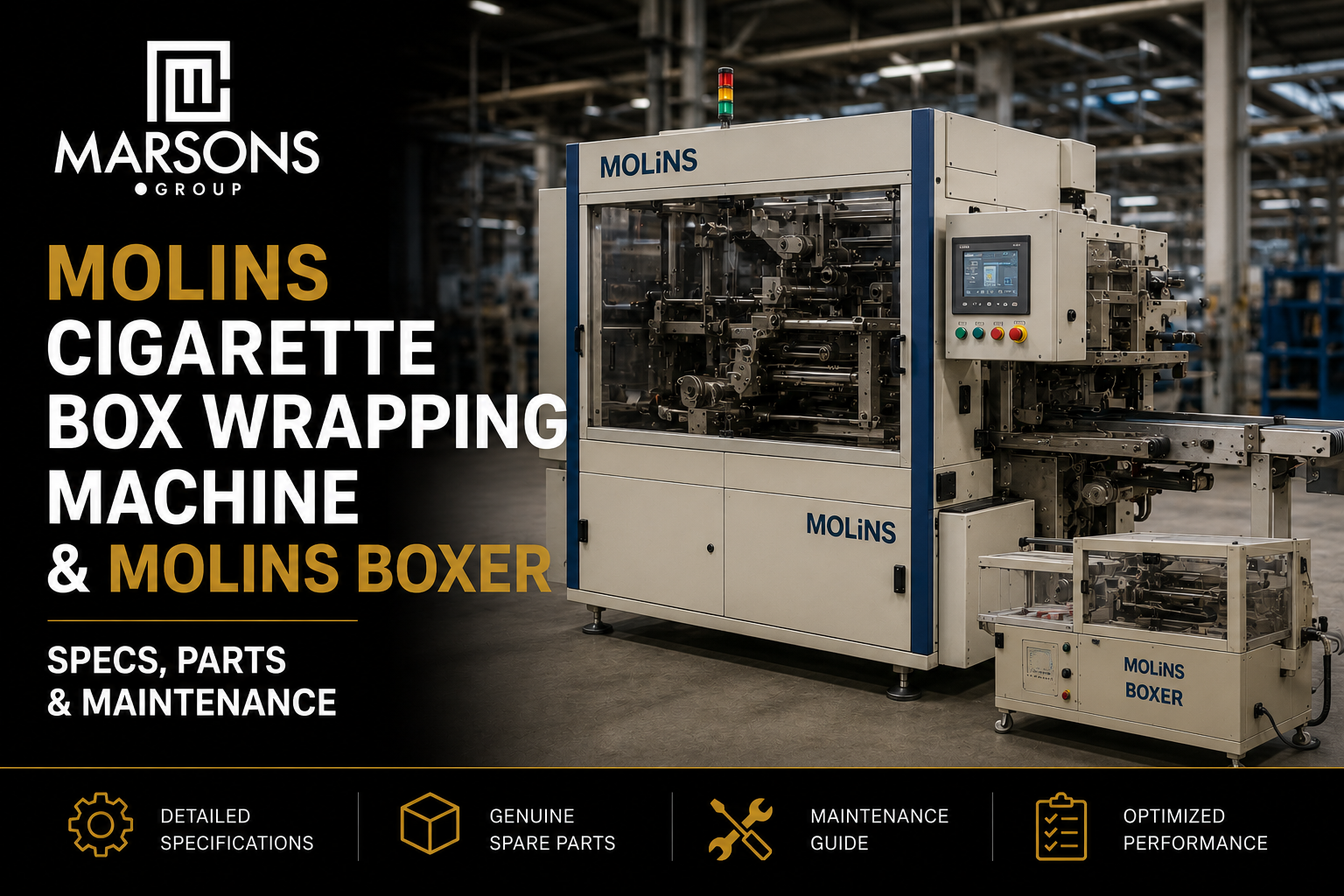
The end of a cigarette production line does not get much attention, but it is where a lot of factories quietly lose time and money. Packs come off the packing machine looking good, and then the wrapping and boxing stage slows everything down or turns out uneven work. The Molins Cigarette Box Wrapping Machine exists to solve that problem. It handles the final wrapping stage cleanly and at speed, and paired with a Molins Boxer it turns finished packs into properly wrapped, boxed products ready to ship. This guide covers what these machines do, the parts you need to know about, how to keep them running well, and what to check before you buy.
What does the Molins Box Wrapping Machine Do?
The molins Box Wrapping Machine takes finished cigarette packs and wraps them in the clear outer film that seals and protects the product. This is the last step that most buyers actually see and touch, so the quality of this wrap matters a great deal. A loose or wrinkled wrap makes a good pack look cheap, no matter how well the rest of the line performed.
The machine feeds film from a reel, wraps it around the pack, folds the ends neatly, and seals the film with heat. When it is set up properly and running well, the result is a tight, smooth, clean wrap on every single pack coming through.
Molins built this equipment for real commercial production, which means it is made to run all day without constant attention. The mechanical build is solid, and it is a design that most tobacco technicians already understand. That familiarity is worth more than people realise, because when something goes wrong you want someone who can fix it quickly rather than spend a day working out how the machine is put together.
Where the Molins Boxer Fits In?
The Molins Boxer works at the stage right after wrapping. Once packs are wrapped, they need to be grouped and placed into cartons or boxes for shipping. That is the job of the Molins Boxer.
It counts and groups the wrapped packs, then loads them into the correct box format. Doing this by hand at commercial volume is slow and leads to counting mistakes, so an automatic boxer saves both time and errors. Pairing a wrapping machine and a Molins Boxer gives you a complete end-of-line setup that takes packs straight through to shipping-ready boxes without manual handling in between.
For factories building or upgrading a line, buying these two machines together from one supplier makes sense. It means the speeds are matched, the handover between machines works properly, and you have one point of contact if something needs sorting out.
Related Machines You Will See
A few other machine names come up regularly alongside these, and it helps to know what they are.
The HLP1 wrapping machine is another wrapping option used widely in the industry. It does a similar job of applying the outer film wrap to finished packs. Factories running HLP packing machines often pair them with an HLP1 wrapping machine to keep the whole line from one family of equipment, which simplifies parts and servicing.
You will also come across the Molins Stamper machine for sale in listings and supplier catalogues. The stamper applies the tax stamp to packs, which is a legal requirement in most markets. If your production needs stamping, this is a machine you will need somewhere in your line, and it is worth sourcing it from the same supplier who handles your wrapping and boxing equipment.
Understanding how these machines fit together helps you plan a complete line rather than buying pieces that do not work well side by side.
Key Parts to Know
Every machine in this category has parts that wear out with use. Knowing which ones go first lets you plan ahead instead of scrambling when the line stops.
On a molins Cigarette Box Wrapping Machine, the sealing components take heavy use. Heat sealing parts wear and need replacing to keep seals tight and clean. The film cutting blades also dull over time, and dull blades give rough, untidy cuts that show clearly on the finished pack.
The film feed rollers and tension parts matter a lot too. If film tension is off, the wrap comes out loose or creased. These parts should be checked regularly rather than only when a problem appears.
On the Molins Boxer, the grouping and transfer parts do the most work. They move packs into position and load them into boxes, so they carry the mechanical load of the whole boxing cycle. Drive components across both machines also need attention over time.
Always confirm parts fit your exact machine version before ordering. Molins equipment has been built in different versions over the years, and a part that looks right may not fit your specific unit. A good supplier will check this for you.
Keeping the Machines Running Well
Good maintenance is mostly about doing simple things regularly rather than doing complicated things occasionally.
Keep the film path clean. Dust and glue build-up in the film feed area causes tension problems that show up straight away in wrap quality. Check the sealing temperature settings often, since heat that drifts too high or too low ruins the seal without any obvious mechanical fault to point at.
Check cutting blades on a set schedule instead of waiting for poor cuts to appear. Replacing a blade before it fails is far cheaper than running a shift of poor-quality packs. Keep an eye on film tension and adjust it as reels change, because different film reels do not always behave identically.
For the Molins Boxer, watch the grouping section for wear and make sure the transfer timing stays correct. Timing that slips slightly causes jams that stop the whole line.
Keeping a small stock of the most common wear parts on hand is one of the smartest things a factory can do. The cost of holding a few spare blades and sealing parts is nothing next to the cost of a line sitting still waiting for a delivery.
What to Check Before You Buy
Most units in this category are used or rebuilt, so checking condition carefully is essential. Ask for running hours and a service record. Ask for a video of the machine running at full speed, and look closely at the wrap quality on the packs it produces. Tight, smooth, clean seals mean the machine is working properly. Loose or creased wraps mean something needs fixing before it earns its price.
Ask which parts have been replaced or reconditioned, and confirm spare parts availability before you commit. Also ask about setup support, since a machine of this kind runs far better when someone who knows it helps get it going on your floor. For a full view of the wrapping equipment available right now, the cigarette box wrapping machines page on the Marsons Group website lists current stock with details. It is a good place to start when comparing what is out there.
Buying From Marsons Group
Marsons Group has been in tobacco machinery since the 1960s. They supply the Molins Cigarette Box Wrapping Machine, the Molins Boxer, the HLP1 wrapping machine, and related equipment including the Molins Stamper machine for sale to factories in Pakistan, the Middle East, Africa, and beyond.
They also stock the spare parts these machines need, so keeping a line running is simpler when the parts and the machine come from the same place. Their support covers setup, training, parts supply, and help after the sale, which is what turns a machine purchase into a line that actually works.
Conclusion
The Molins Box Wrapping Machine and the Molins Boxer handle the last and most visible stage of cigarette production, and getting that stage right protects everything the rest of your line worked to produce. Know your wear parts, keep up with simple maintenance, check any used machine carefully before buying, and work with a supplier who supports you after the sale. Do those things and your end-of-line stage will run quietly and reliably, which is exactly what you want from it. For more insights, read Maintenance Best Practices for Cigarette Making and Packing Machines.