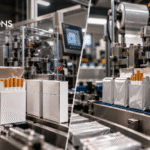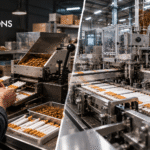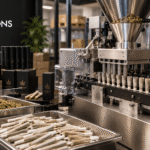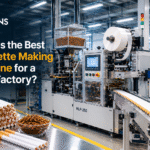
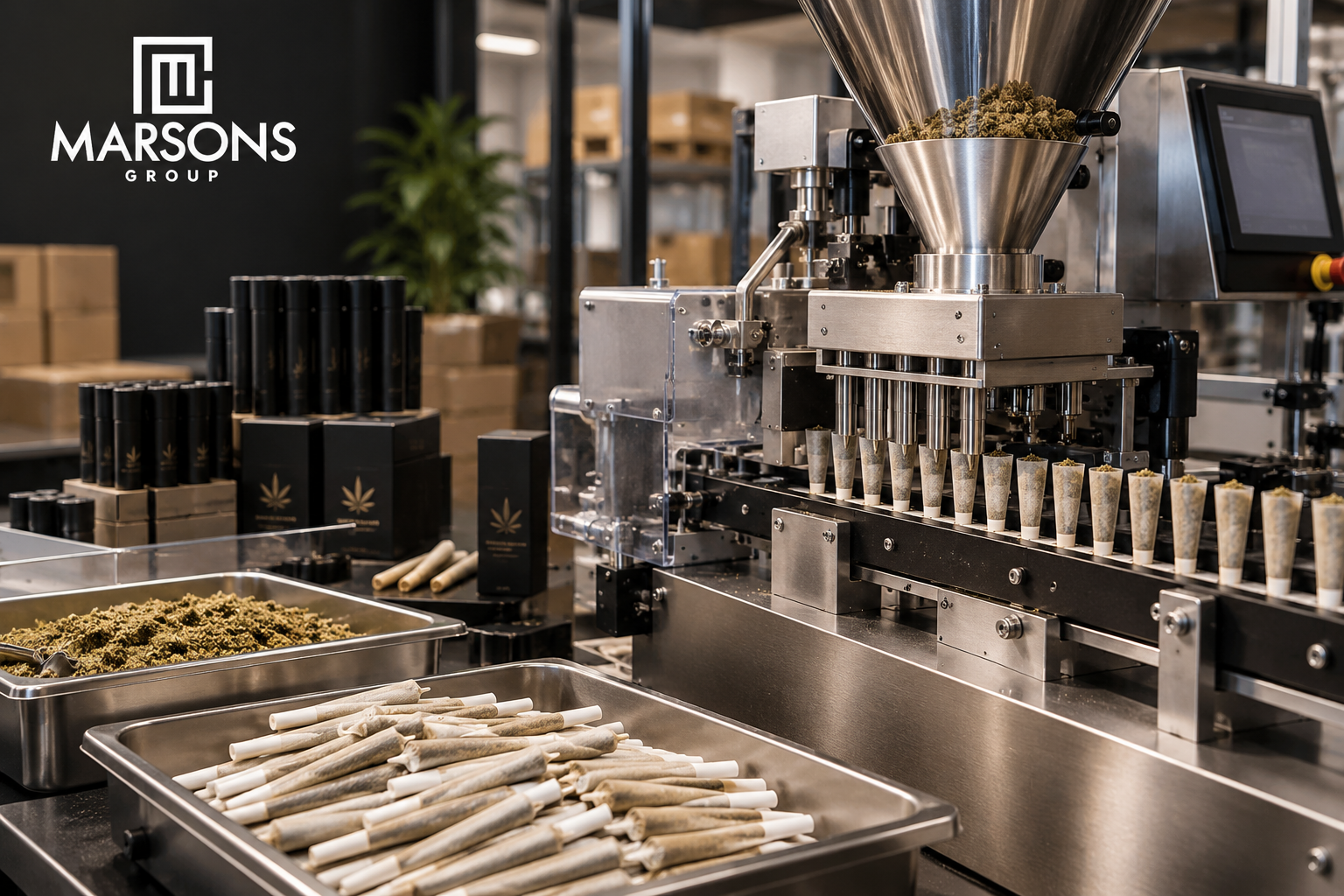
Choosing a pre roll packaging machine has become one of the most consequential equipment decisions a cannabis or hemp producer makes. The category is no longer a side product made from trim. Pre-rolls generated $3.6 billion in revenue in 2025 across more than 383 million units sold, taking a 15.9% market share and posting more growth than any other product category. That demand curve has exposed a hard truth on the production floor: hand filling cannot keep up, and the wrong machine creates bottlenecks that cost more than the equipment itself. Whether you are producing classic flower joints or expanding into hemp formats with a Hemp Cigarette Making Machine, the right choice depends less on brochure specifications and more on your honest daily output, your material behaviour and your labour cost per unit.
What a Pre Roll Packaging Machine Actually Does
Before comparing models, it helps to separate the stages most buyers lump together. A complete cone filling line performs four distinct jobs: grinding and sifting the material to a workable particle size, loading empty cones into trays, filling and densifying those cones, and then closing the open crown. Many machines marketed as all in one solutions actually handle only one or two of these stages. Most cone packers only handle the filling step, with manual twisting or crowning required afterward. If you buy a fast filler without matching downstream capacity, you simply move the bottleneck rather than removing it. Map your four stages first, then decide which ones you are automating now and which you are deferring. This single exercise prevents the most expensive mistake in pre-roll equipment buying.
Start With Output Volume, Not Features
Daily output is the variable that eliminates most of the market for you. Everything else is a refinement on top of it.
Under 1,000 Cones Per Day
At this level, tray based volumetric fillers deliver the best return. Machines in this class fill up to 169 pre-rolled cones per run and include attachments for 84mm, 98mm and 109mm sizes, with pricing starting around $1,749. Boutique brands, single dispensaries and craft producers rarely justify more. The limitation is labour: an operator still loads trays, tamps and closes each unit by hand, so your cost per joint stays tied to wages.
1,000 to 10,000 Cones Per Day
This is where semi automated knockbox class equipment earns its place. Units in this tier run 60 or 90 second filling cycles with a density control on the operator panel. Expect to pair the machine with a cone loader and a dedicated closer to keep the line balanced.
10,000 Cones and Above
High output systems change the economics entirely. Machines in this class are rated up to 3,000 pre-rolls per hour, though actual output depends on material preparation, cone loading speed and operator efficiency.
Why Weight Accuracy Decides the Rest of Your Line
A pre roll weighing machine is the component buyers most often skip and most often regret. Underfilled units invite compliance problems and customer complaints, while overfilled units quietly give away margin on every single joint produced. Modern check weighers use electromagnetic force restoration technology to hold tolerances as tight as 0.01 gram, and they pair with any semi automated or manual rolling process to verify weights before final packaging. There is a second reason accuracy matters that rarely appears in sales literature. Moisture escapes over time, so a pre-roll weighing exactly one gram on production day will be lighter weeks later on the shelf. Building a small positive offset into your target weight protects you from that drift, but you can only do that reliably if your weighing system is precise enough to measure it.
Fill Technology and What It Does to Burn Quality
Most commercial fillers use vibration and downward pressure to settle ground material into the cone. The alternative approach rolls the joint around the material instead of stuffing a pre-formed cone, which allows wetter, coarser input. One rolling system produces roughly 900 pre-rolled joints per hour using a scale accurate to 0.01g, in contrast to vibration and pressure based cone stuffing. Neither approach is universally better, but the input requirements differ sharply. Vibration systems want drier, finer material; rolling systems want tackier flower. If you are still mapping how these mechanisms differ in practice, this breakdown of the Cannabis Cigarette Machine: How It Works & Why You Need One explains the mechanical sequence in detail. Choose the technology that matches the material you already produce, not the one that forces you to re-engineer your cure.
Closing the Cone: Twist, Crown or Fold
Closing is the stage that quietly caps output in most facilities. Hand closing is time consuming and is ultimately the most costly component of pre-roll manufacturing, which is why a dedicated cone twisting machine cannabis producers can rely on usually pays back faster than a faster filler would. Automated closers can finish 72 joints in roughly 40 seconds, and folding the end into a crown or dimple rather than a twist produces a more professional looking unit that burns evenly. Entry level tabletop closers run 60 to 90 second cycles and handle up to 10,000 pre-rolls daily, while higher tier units reach up to 34,000. Match that number to your filler so neither machine sits idle waiting on the other.
Infused Products Change the Equation
If infused SKUs are part of your roadmap, verify this before purchase rather than after. Infused products generated $1.68 billion in 2025 and now account for 47% of all pre-roll sales, so most growing brands will face the question eventually. The complication is mechanical. Many machines handle dry infused flower such as kief, but sticky concentrates can clog standard fillers. Dedicated infusion equipment solves this at speed, with units running up to 1,200 joints per hour on distillate and 700 per hour on rosin. An automated cone filler built purely for dry flower will not become an infusion machine through settings adjustments, so plan the capability in from the start or budget for a separate module later.
Total Cost of Ownership and Realistic ROI
The purchase price is rarely the number that matters. Manual cone filling averages 40 to 60 cones per hour per person, which at $18 per hour works out to roughly $0.30 to $0.45 per pre-roll in wages alone. Run that against your volume and the payback period becomes obvious. Above 2,000 joints per shift, most facilities recover machine cost within 6 to 18 months depending on labour rates and utilisation. Factor in spare parts availability, changeover time between cone sizes, cleaning labour and warranty terms. A machine that waits two weeks on a replacement part carries a downtime cost that never appears on the invoice. Experienced equipment partners such as Marsons Group typically advise buyers to evaluate these ownership variables alongside throughput ratings rather than treating speed as the only benchmark.
Dial In Your Material Before You Blame the Machine
No pre roll packaging machine compensates for poorly prepared input. The recommended particle size is three to four millimetres: too fine and the material compacts like sand with no airflow, too coarse and you get air pockets that cause canoeing. Ideal moisture content sits between eight and fourteen percent. Operators who skip grinding and sifting consistency will see weight variance, jams and torn cone paper, then conclude the equipment is faulty. Standardise your grind, install a sifter to remove stems and dust, and only then judge machine performance.
Final Conclusion
Buy for the volume you will realistically run twelve months from now, not the volume on your best day. Under 1,000 units daily, a tray filler is sufficient. Between 1,000 and 10,000, invest in a semi automated filler plus a dedicated closer, because closing is where your line will choke. Above 10,000, high output automation with integrated weighing becomes the only sustainable path. Across every tier, verify cone size compatibility, confirm infusion capability if premium SKUs are planned, and insist on local parts support before you sign.