
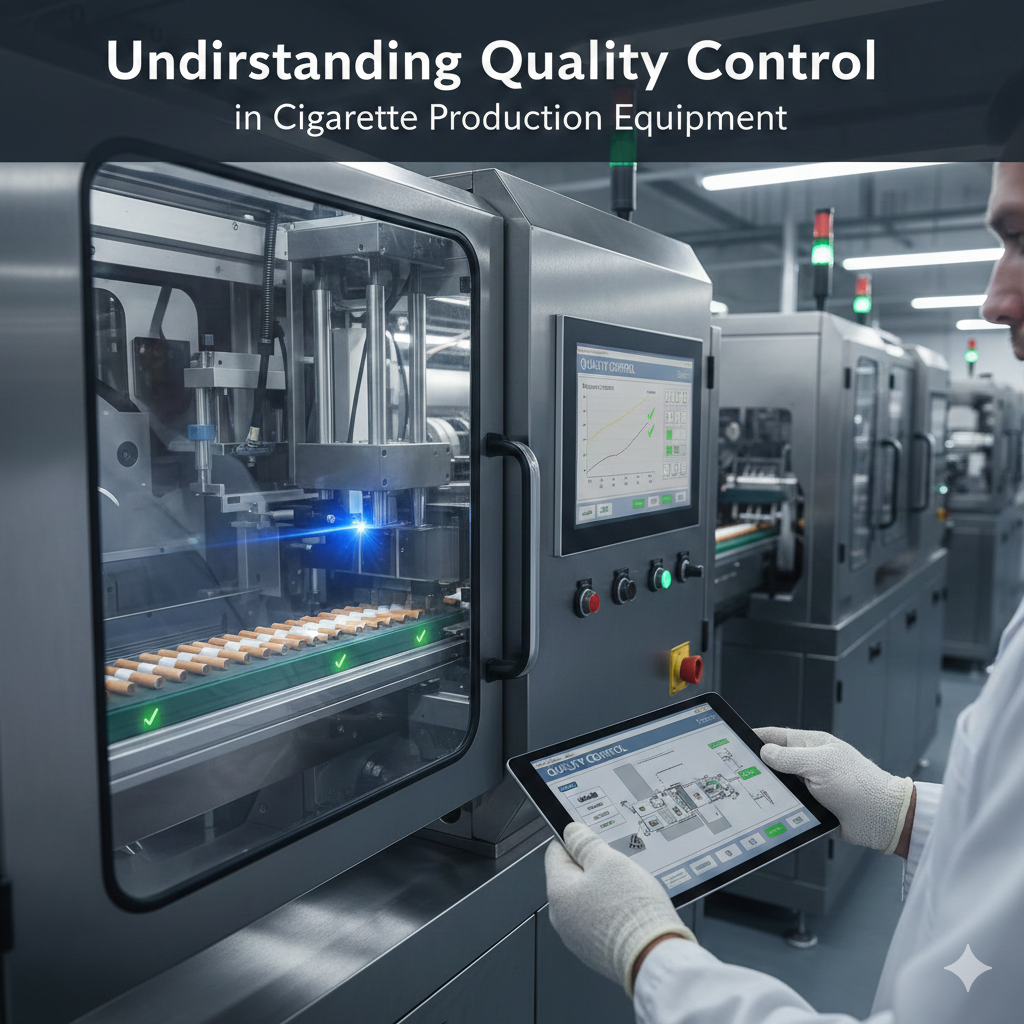
In the cigarette manufacturing industry, maintaining consistent product quality is critical for brand reputation, regulatory compliance, and customer satisfaction. Even minor deviations in weight, rod density, filter alignment, or packing can lead to rejected products, financial losses, and operational inefficiencies. Advanced cigarette production equipment from manufacturers like Marsons Group integrates sophisticated quality control systems to ensure that every cigarette meets the highest standards.
This article explores the importance of quality control in cigarette production and how modern machines help maintain precision and consistency.
Why Quality Control is Essential in Cigarette Production
Cigarette manufacturing involves multiple complex processes, including tobacco processing, rod formation, filter attachment, and packaging. Quality control ensures that each stage of production meets strict specifications. Key reasons for robust quality control include:
- Consistency: Uniform weight, density, and length across all products
- Compliance: Adherence to industrial and regulatory standards
- Customer Satisfaction: Providing reliable and consistent smoking experience
- Reduced Waste: Minimizing defective products and material loss
- Operational Efficiency: Identifying defects early to prevent production delays
Without proper quality control, manufacturers risk increased rejections, customer complaints, and higher operational costs.
Key Quality Control Features in Modern Cigarette Machines
Advanced cigarette production equipment integrates several quality control mechanisms to maintain product consistency and efficiency.
1. Tobacco Weight and Rod Density Monitoring
Precision in tobacco weight and rod density ensures uniform burning, draw resistance, and overall product quality.
Modern machines feature:
- Real-time weight sensors
- Automated density control systems
- Feedback mechanisms that adjust feed and compression during production
2. Filter Alignment and Tipping Accuracy
Misaligned filters or improperly attached tipping paper can compromise cigarette quality. Machines include:
- Optical sensors for filter positioning
- Automated tipping paper application
- Real-time adjustment mechanisms
These systems ensure accurate filter attachment and minimal defects.
3. Rod Length and Diameter Inspection
Cigarettes must meet strict size specifications to maintain consistency in packaging and consumer use.
Quality control systems include:
- Laser or optical measurement tools
- Automatic rejection of off-spec rods
- Continuous monitoring of production output
4. Packaging Verification
Packaging quality is as important as the cigarette itself. Machines include inspection features to:
- Detect missing or misaligned cigarettes in packs
- Verify foil wrapping and carton sealing
- Track batch numbers and apply regulatory stamps
5. Automated Defect Detection and Rejection
High speed lines require rapid defect identification to maintain efficiency. Modern machines can automatically:
- Identify underweight or overweight cigarettes
- Detect broken rods or misaligned filters
- Remove defective units from the production line
This reduces waste and ensures only high-quality products reach the market.
Benefits of Integrated Quality Control
| Benefit | Description |
|---|---|
| Consistent Product Quality | Ensures every cigarette meets specifications |
| Reduced Waste | Early detection prevents large-scale rejections |
| Higher Production Efficiency | Automated systems reduce manual inspection |
| Regulatory Compliance | Accurate tracking and inspection meet industry standards |
| Customer Satisfaction | Reliable products maintain brand reputation |
Best Practices for Maintaining Quality Control Systems
To maximize the effectiveness of quality control equipment:
- Calibrate sensors and inspection systems regularly
- Perform preventive maintenance on moving parts
- Train operators on interpreting quality data and responding to alerts
- Keep detailed production and defect records for analysis
- Upgrade software and hardware as technology advances
Regular attention to quality control systems ensures continuous high performance and consistent output.
Conclusion
Quality control is a critical component of cigarette production. Modern machinery equipped with automated inspection, real-time monitoring, and defect rejection systems helps manufacturers maintain product consistency, reduce waste, and comply with regulatory standards. Investing in advanced cigarette production equipment ensures reliable and efficient operations while delivering a superior product to customers.
For high performance and precise quality control in your cigarette production line, contact Marsons Group today to explore equipment solutions tailored to your factory requirements.